Bactris corossilla
H. Karst.
iNaturalist· cc-by
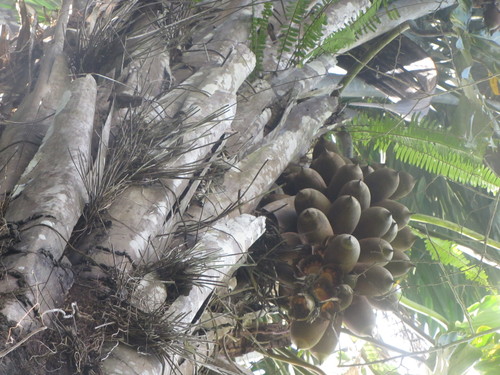
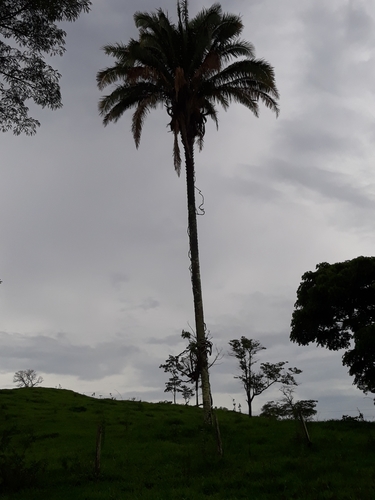
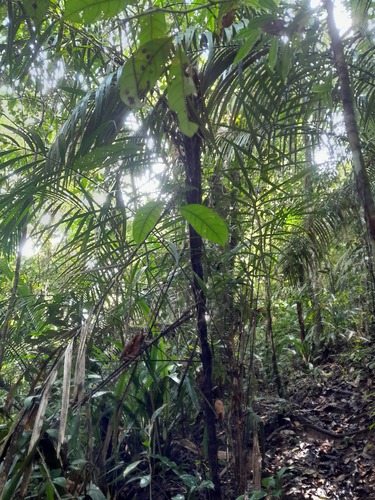
(c) Jens-Christian Svenning, some rights reserved (CC BY), uploaded by Jens-Christian Svenning
iNaturalist· cc-by-nc-sa
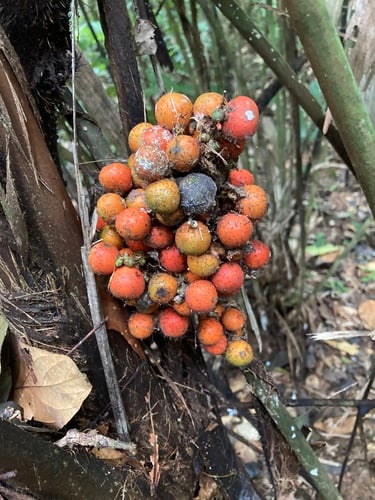
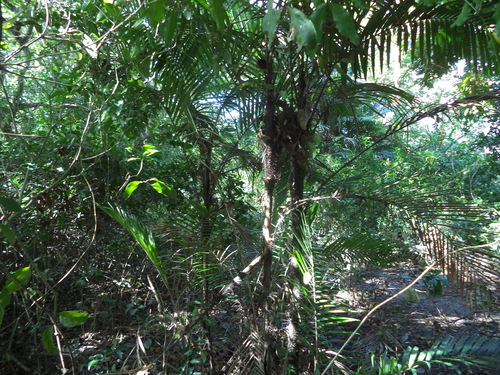
(c) Mateo Hernandez Schmidt, some rights reserved (CC BY-NC-SA), uploaded by Mateo Hernandez Schmidt
Description
A palm. It can form dense clumps with several stems. They are 2-4 m tall. The stems are 1-3 cm across. They have spines. There are 5-12 leaves in the crown. There are clusters of spines on the leaves.
Edible Uses
The palm heart, fruit, seeds, and stem are edible.
Distribution
It is a tropical plant. It grows in well drained slopes in rainforest between 100-1,400 m above sea level.
Where It Grows
Amazon, Andes, Brazil, Colombia, Ecuador, Peru, South America, Venezuela,
Synonyms
Also Known As
Antsinpira, Dabayo, Dageipemo, Dageipewe, Dageypemue, Doboyue, Kamancha, Mirikiri hanaki, Naweno, Urpi chunta
References (7)
- Caballero-Serrano, V., et al, 2019, Traditional ecological knowledge and medicinal plant diversity in Ecuadorian Amazon home gardens. Global Ecology and Conservation 17 (2019) e00524 p 8
- Grandtner, M. M. & Chevrette, J., 2013, Dictionary of Trees, Volume 2: South America: Nomenclature, Taxonomy and Ecology. Academic Press p 56
- Marcia, M. J., et al, 2011, Palm Uses in Northwestern South America: A Quantitative Review. Bot. Rev. (2011) 77:462-570
- Roa, J. A. G. & Boada, D. S. G., 2018, Fundación para el Fortalecimiento de la Fruticultura y Plantas Alimenticias no Convencionales en Colombia.
- Torre, de la L., et al, 2008, Enciclopedia de las Plantas Útiles del Ecuador. Herbario QCA. Pontificia Universidad Católica del Ecuador. p 196
Show all 7 references Hide references
- World Checklist of Useful Plant Species 2020. Royal Botanic Gardens, Kew
- www.proyanomami.org