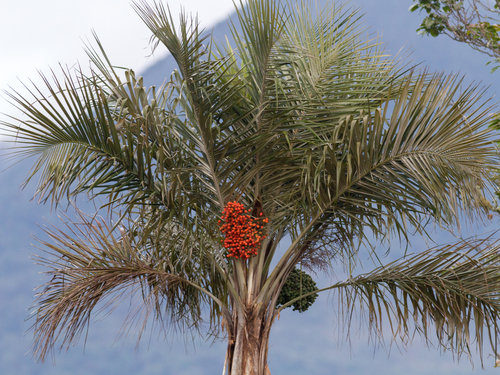
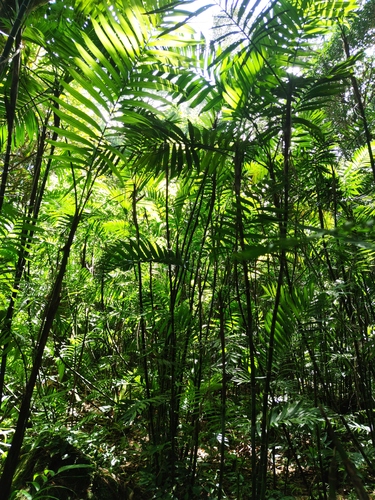
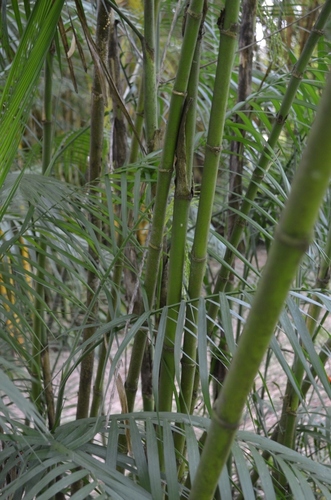
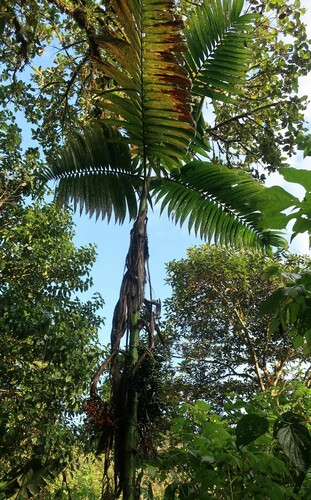
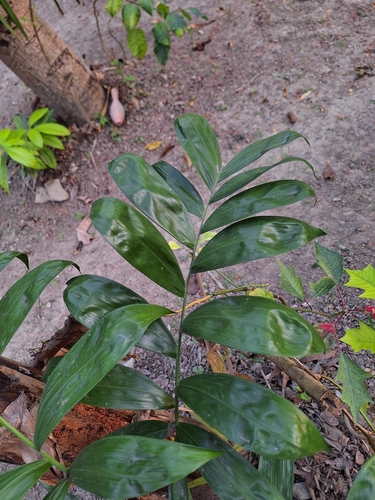
Aiphanes weberbaueri
Burret
gbif· cc-by-nc
M. A. Ríos Paredes : Universidad Nacional de la Amazónia Peruana
gbif· cc-by-nc
M. A. Ríos Paredes : Universidad Nacional de la Amazónia Peruana
gbif· cc-by-nc
M. A. Ríos Paredes : Universidad Nacional de la Amazónia Peruana
Description
A tropical palm in the family Arecaceae.
This description is brief — help expand it
Edible Uses
The fruit is eaten fresh and used to make drinks. The palm heart is also edible.
Traditional Uses
The fruit is eaten and also used for drinks.
This uses section is brief — help expand it
Medicinal Uses
Aiphanes species have a long history of human use. The remains of carbonised seeds thought to belong to A. horrida have been found in archaeological sites in Colombia dating back to about 2800 BP; seeds of this species are still consumed and are traded in local markets. Aiphanes horrida is also widely planted as an ornamental, as is A. minima. The fruit or seeds of A. deltoidea, A. eggersii, A. linearis and A. minima are all consumed locally. The palm heart of A. macroloba is consumed by the Coaiquer people of northwestern South America. Aiphanol, a compound isolated from A. horrida, has shown significant inhibitory activity against cyclooxygenases; inhibition of these enzymes can provide relief from the symptoms of inflammation and pain.
Distribution
It is a tropical plant.
Where It Grows
Andes, Ecuador, South America,
Synonyms
References (2)
- Marcia, M. J., et al, 2011, Palm Uses in Northwestern South America: A Quantitative Review. Bot. Rev. (2011) 77:462-570
- World Checklist of Useful Plant Species 2020. Royal Botanic Gardens, Kew