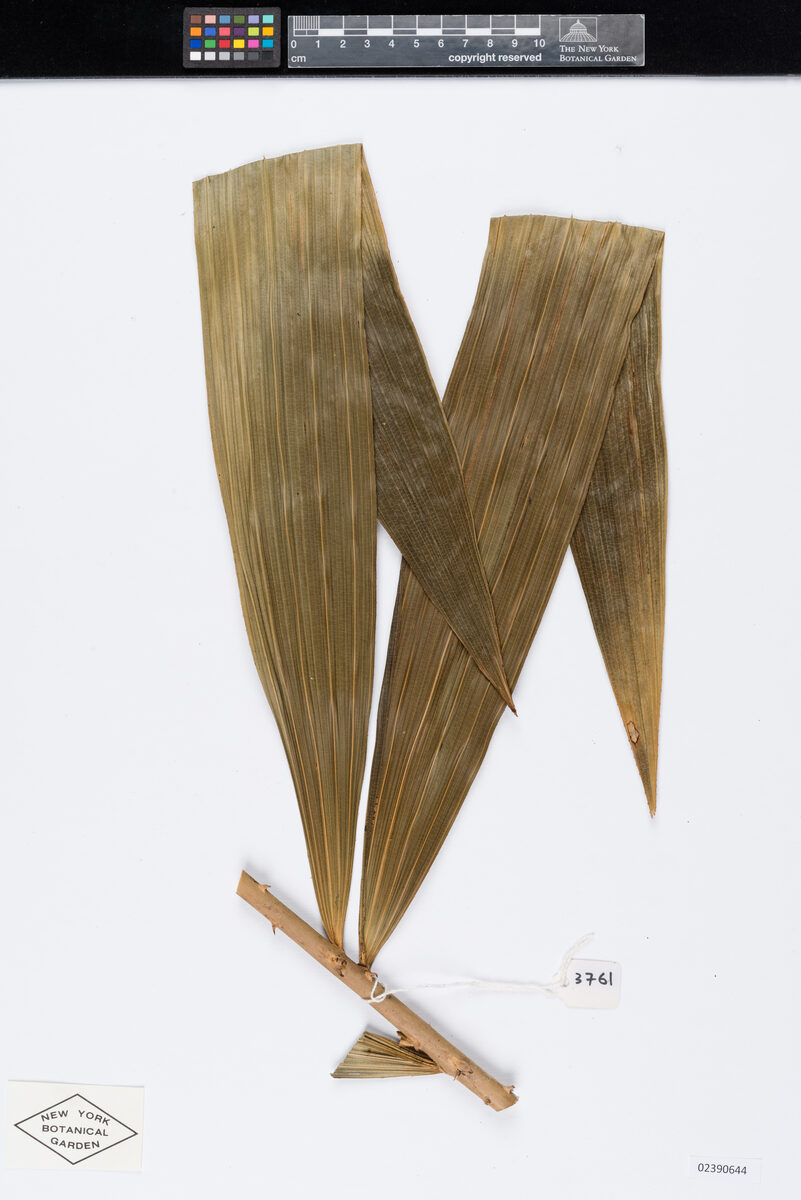
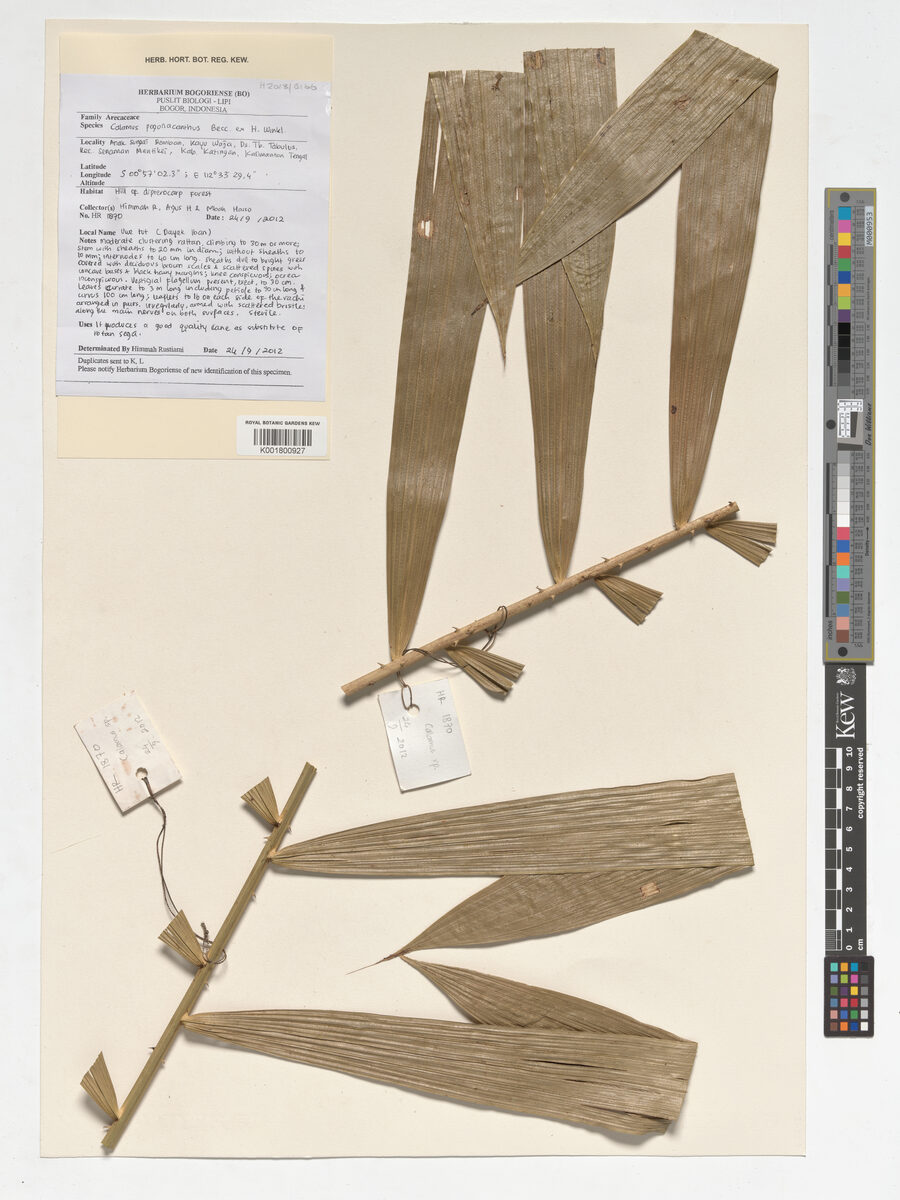
Hydriastele vitiensis
W. J. Baker & Loo
gbif· cc-by-nc-sa
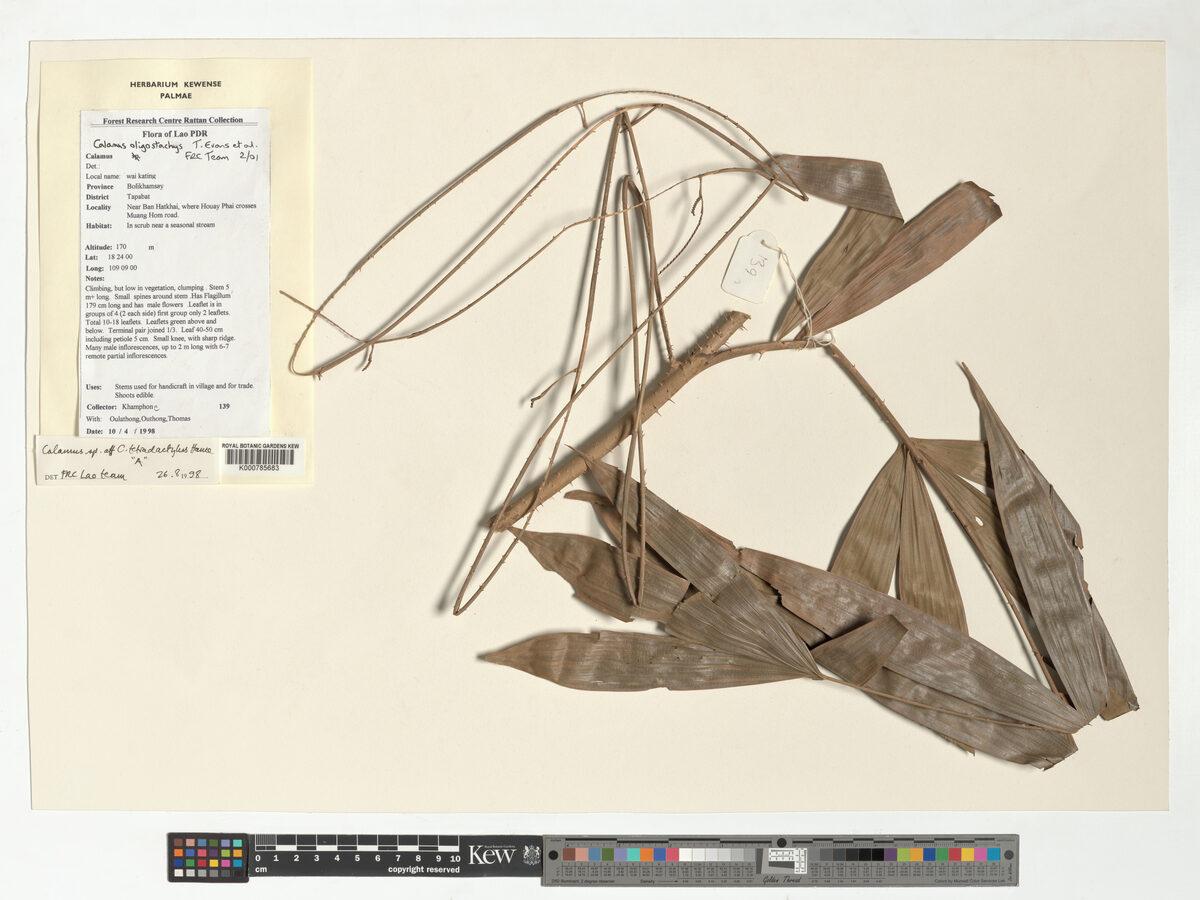
Fairchild Tropical Botanical Garden Herbarium (FTG)
gbif· cc-by
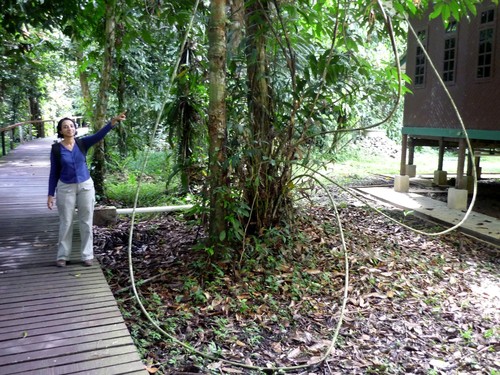
Royal Botanic Gardens, Kew
gbif· cc-by
Royal Botanic Gardens, Kew
Summary
Source: WikipediaHydriastele vitiensis is a species of palm endemic to Fiji. It is a tall palm which can grow up to 25 metres (82 ft) high. It is native to the islands of Viti Levu and Vanua Levu, where it grows in moist lowland forest from sea level to 600 metres (2,000 ft) elevation, often on ridge tops. On Viti Levu individuals or very small populations grow in the southern highlands across to Nakobalevu. The species is threatened with habitat loss, including from logging and conversion of habitat to plantations. The IUCN Red List assesses the species as Vulnerable.
Description
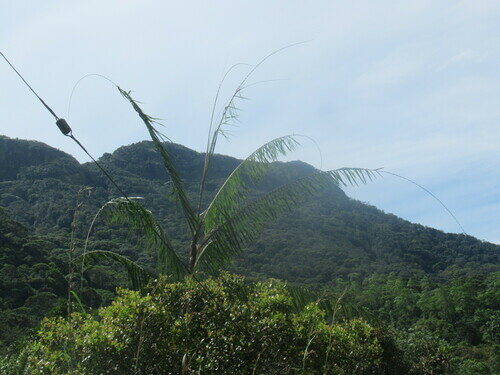
A tall palm. It grows 25 m high. The trunk is smooth and slender. It is grey-brown and 30 cm across. The crown has 20 or more fronds. The fronds arch over and the leaflets stick upwards. The fronds can be 2.5 m long. The crown-shaft is long and fattened. It is light green-brown. The flowers come out below the crown-shaft. The flower stalk is compact and fans out like a horse's tail. It is creamy-yellow. The young fruit are red and become yellow to white when ripe. The fruit are small and 10 mm long. They are slightly curved.
Edible Uses
The palm heart (cabbage) is eaten.
Traditional Uses
The palm heart is eaten.
This uses section is brief — help expand it
Distribution
A tropical plant. It grows naturally on Viti Levu in Fiji. It usually grows on ridges between 300-600 m altitude. It probably needs planty of moisture, good drainage and good soil.
Where It Grows
Fiji, Hawaii, Pacific,
Cultivation
Plants can be grown from seed. Seed germinate readily within 2 months.
Production
Seedlings grow slowly.
Notes
There are about 42 Hydriastele species with 32 in New Guinea.
Synonyms
References (1)
- Watling, D., 2005, Palms of the Fiji Islands. Environmental Consultants (Fiji) Ltd. p 102, 165