Hyospathe elegans
Mart.
iNaturalist· cc-by
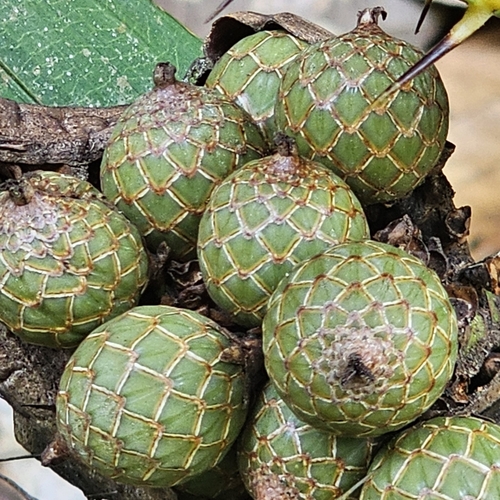
(c) Jens-Christian Svenning, some rights reserved (CC BY), uploaded by Jens-Christian Svenning
iNaturalist· cc-by-nc
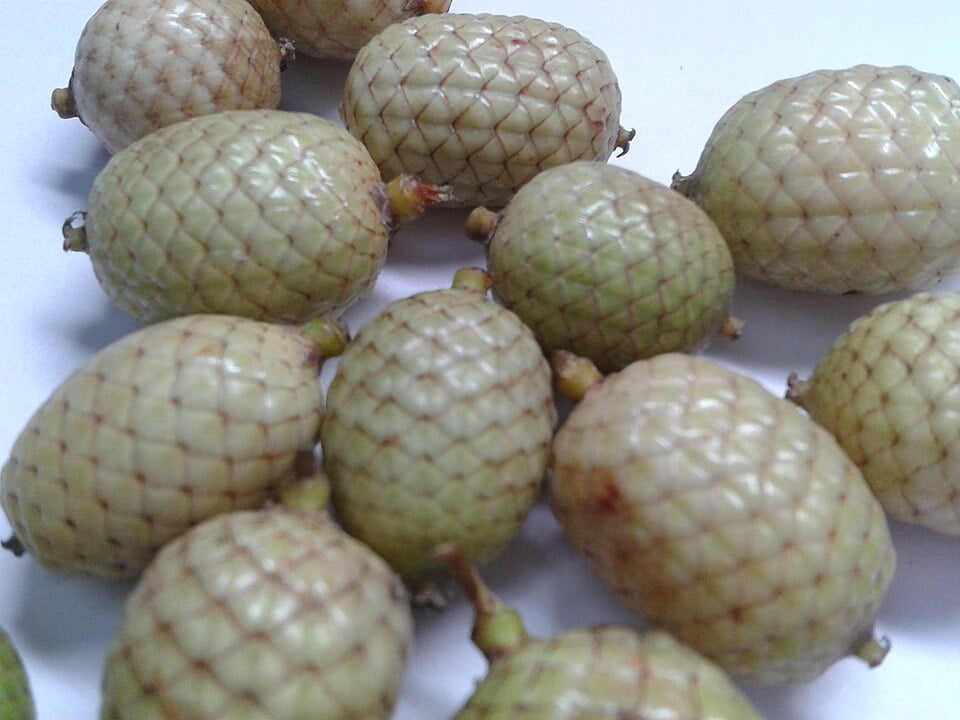
(c) Guillaume Léotard, some rights reserved (CC BY-NC)
iNaturalist· cc-by-nc
(c) Guillaume Léotard, some rights reserved (CC BY-NC)
Description
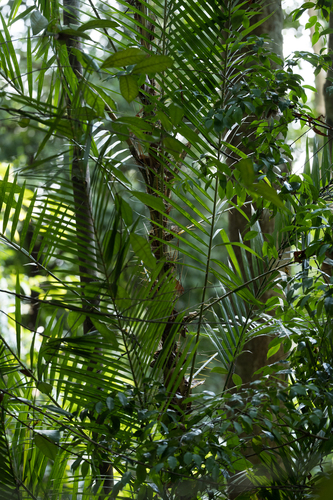
A palm. It grows up to 8 m tall. It can have one stem or a cluster of up to 8 stems. They are 1-3 cm across. The crown has 5-11 leaves up to 2 m long. The fruit are 1.2-1.6 cm long.
Edible Uses
Leaves - cooked. The apical bud, often known as a 'palm heart', is eaten as a vegetable. Eating this bud leads to the death of the individual stem because it is unable to make side shoots, however any other stems on the plant will continue to grow. The fruit is said to be edible, and has an acidulous watery quality.
Traditional Uses
The palm heart or cabbage is cooked and eaten as a vegetable.
This uses section is brief — help expand it
Medicinal Uses
The palm heart is chewed as a preventative of tooth decay. Mixed with the roots of Euterpe precatoria, it is used as a remedy for the flu.
Distribution
A tropical plant. It grows as an understorey plant in tropical rainforest. It grows up to about 1,000 m above sea level. It suits a warm, sheltered, moist position.
Where It Grows
Amazon, Bolivia, Brazil, Central America, Colombia, Costa Rica, Ecuador, French Guiana, Guyana, Panama, Peru, South America, Suriname, Venezuela,
Cultivation
Grows best in a warm, sheltered, moist position. Plants are often found in quite dense shade in the forest.
Other Uses
The leaves are are used for thatching huts. The stems are sharpened and used as spears.
Synonyms
References (6)
- Balick, M.J. and Beck, H.T., (Ed.), 1990, Useful palms of the World. A Synoptic Bibliography. Colombia p 57 (As Hyospathe elegans)
- Fern, K., 2012, Tropical Species Database http://theferns.info/tropical/
- Gertsch, J. et al, 2002, Use and Significance of Palms (Arecaceae) among the Yanomami in South Venezuela. Journal of Ethnobiology 22(2):219-246
- Grayum, M. H., 2000, MBG: Research: Manual de Plantas de Costa Rica: Draft Treatments p 13
- Kew Plants of the World On line
Show all 6 references Hide references
- Marcia, M. J., et al, 2011, Palm Uses in Northwestern South America: A Quantitative Review. Bot. Rev. (2011) 77:462-570