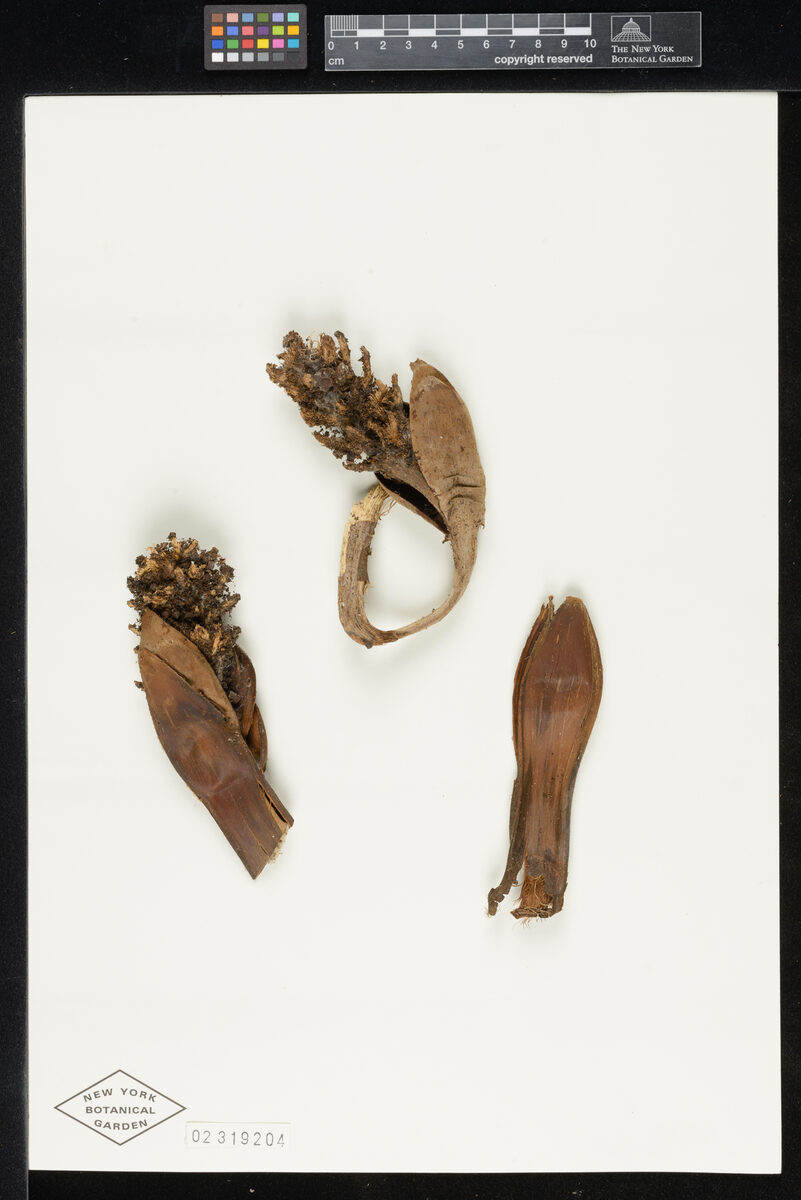
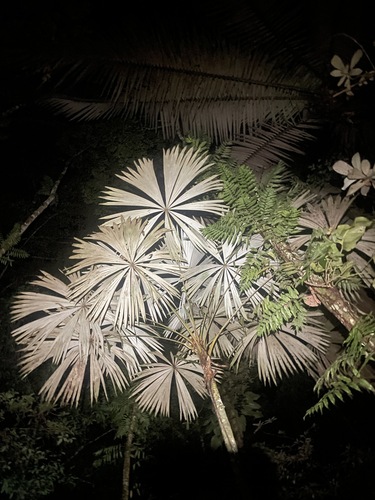
Hydriastele cylindrocarpa
(Becc.) W. J. Baker & Loo
Niniu
iNaturalist· cc-by
(c) Dominik Maximilián Ramík, some rights reserved (CC BY), uploaded by Dominik Maximilián Ramík
iNaturalist· cc-by
(c) Dominik Maximilián Ramík, some rights reserved (CC BY)
Description
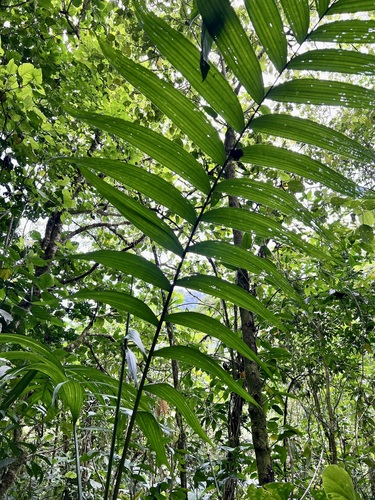
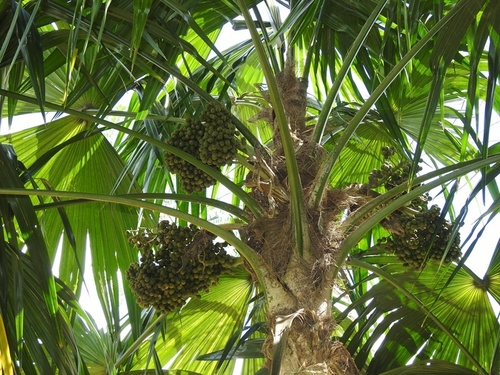
A tall palm. It grows 35 m high. The trunk is less than 25 cm across. The trunk is light grey to white. It has closely spaced rings of leaf scars. The trunk is expanded at the base. The crown-shaft is 1 m long and light or silvery green. It is slightly bulged at the base. The leaf crown is rounded with 15-18 leaves. The leaves are 2.3 m long with 25 cm long stalks. The leaves arch over and curve back at the tips. The leaflets are 1 m long and narrowly sword shaped. They are olive green above and greyish-green underneath. They are stiff and divide at the tips. They grow at an angle forming a V shape. The fruit are 2 cm long by 0.7-0.8 cm wide. They are orange or yellow.
Edible Uses
The fruit is eaten, especially by children. The palm heart is eaten. Edible portions include fruit, palm heart, and cabbage.
Traditional Uses
The fruit is eaten. The palm heart is eaten.
This uses section is brief — help expand it
Distribution
A tropical plant. It grows in mountainous rainforest. It grows between 100-1,060 m altitude.
Where It Grows
Pacific, Papua New Guinea, PNG, Solomon Islands, Vanuatu,
Other Information
The fruit are eaten especially by children.
Notes
There are 9 Gulubia species.
Synonyms
References (8)
- Baker, W.J. and Loo, 2004, Kew Bulletin 59(1): 64
- Dowe, J.L., 1989, Palms of the South-West Pacific. Palm and Cycad Society of Australia. p 86,
- French, B.R., 2010, Food Plants of Solomon Islands. A Compendium. Food Plants International Inc. p 282 (As Gulubia cylindrocarpa)
- Haynes, J., & McLaughlin, J., 2000, Edible palms and Their Uses. University of Florida Fact sheet MCDE-00-50-1 p 6 (As Gulubia cylindrocarpa)
- Johnson, D.V., 1998, Tropical palms. Non-wood Forest products 10. FAO Rome. p 79
Show all 8 references Hide references
- Lebot, V. & Sam, C., Green desert or ‘all you can eat’? How diverse and edible was the flora of Vanuatu before human introductions?. Terra australis 52 p 410 (As Gulubia cylindrocarpa Becc.)
- Riffle, R.L. & Craft, P., 2003, An Encyclopedia of Cultivated Palms. Timber Press. p 345
- World Checklist of Useful Plant Species 2020. Royal Botanic Gardens, Kew