Connarus semidecandrus
Jack
Decandrus connarus
iNaturalist· cc-by-nc
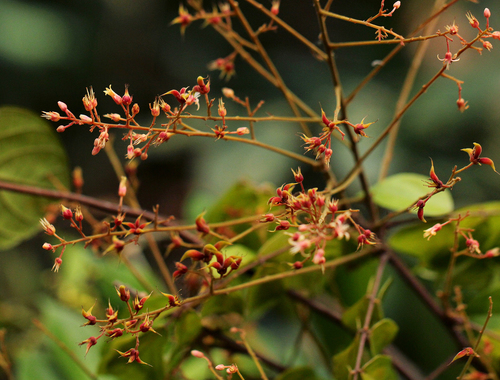
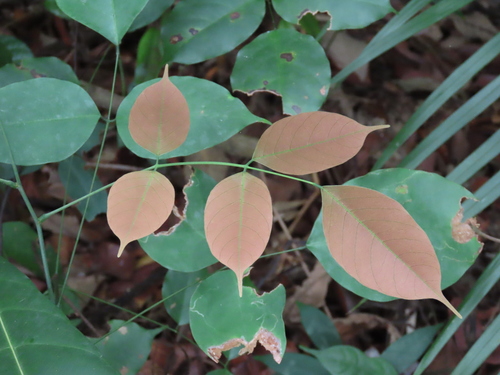
(c) guanhong, some rights reserved (CC BY-NC), uploaded by guanhong
iNaturalist· cc-by-nc
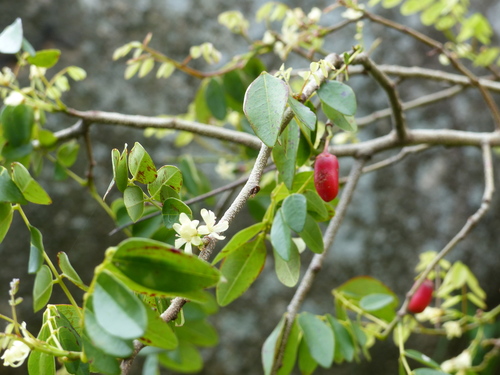
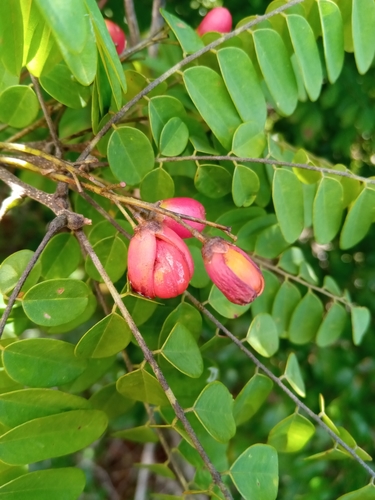
(c) Jarupa Panitchpakdi, some rights reserved (CC BY-NC)
iNaturalist· cc-by-nc
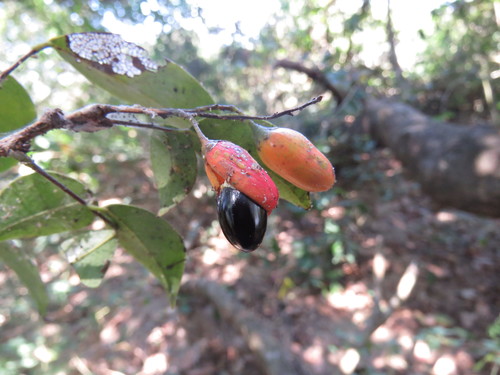
(c) Jarupa Panitchpakdi, some rights reserved (CC BY-NC)
Description
A shrub. It grows 1-2 m high. It can climb. The leaves are compound with leaflets along the stalk and one at the end. There are 3-7 leaflets. They are oval and 4-20 cm long by 2-7 cm wide. The flowers are on long stalks at the end of the plant. There are many flowers in a group. They are white but fade to brownish. The fruit is a follicle that turns orange when ripe. The seeds are black with an orange yellow aril of layer around them.
Edible Uses
The young leaves are eaten.
Traditional Uses
The young leaves are eaten.
This uses section is brief — help expand it
Medicinal Uses
It is used as a medicinal plant in Thailand.
Distribution
A tropical plant. It occurs in secondary forests and on plains below 1000 m altitude in tropical Asia.
Where It Grows
Asia, Cambodia, Indochina, Indonesia, Laos, Malaysia, SE Asia, Singapore, Thailand, Vietnam,
Notes
There are about 100 Connarus species. It is a medicinal plant in Thailand.
Synonyms
Also Known As
Akar kuayah, Akar tukar, Konarusa, Lopbop, Lumpu'ehs daek, Tenggek burung, Terung tenggek, Thopthaep khruea
References (6)
- Burkill, I.H., 1966, A Dictionary of the Economic Products of the Malay Peninsula. Ministry of Agriculture and Cooperatives, Kuala Lumpur, Malaysia. Vol 1 (A-H) p 659
- Kachenchart, B., et al, 2008, Phenology of Edible Plants at Sakaerat Forest. In Proceedings of the FORTROP II: Tropical Forestry Change in a Changing World. Bangkok, Thailand.
- Leenhouts, P.W., 1958, Connaraceae in Flora Malesiana 5(4) p 534
- Phon, P., 2000, Plants used in Cambodia. © Pauline Dy Phon, Phnom Penh, Cambodia. p 172
- Sukarya, D. G., (Ed.) 2013, 3,500 Plant Species of the Botanic Gardens of Indonesia. LIPI p 915
Show all 6 references Hide references
- Thoa P. T. K., et al, 2013, Biodiversity indices and utilization of edible wild plants: a case study of the Cham Island in Quang Nam Province, Vietnam. Journal of Research in Environmental Science and Toxicology 2(9) :167-174