Rourea minor
(Gaertner) Alston
Hongjiten
iNaturalist· cc-by-nc
(c) Klowitz Tsai, some rights reserved (CC BY-NC), uploaded by Klowitz Tsai
iNaturalist· cc-by-nc
(c) galanhsnu, some rights reserved (CC BY-NC), uploaded by galanhsnu
iNaturalist· cc-by-nc
(c) JODY HSIEH, some rights reserved (CC BY-NC), uploaded by JODY HSIEH
Summary
Source: WikipediaRourea minor is a large scandent shrub from the family Connaraceae. It has been recorded from Africa, tropical Asia and the Pacific.
Description
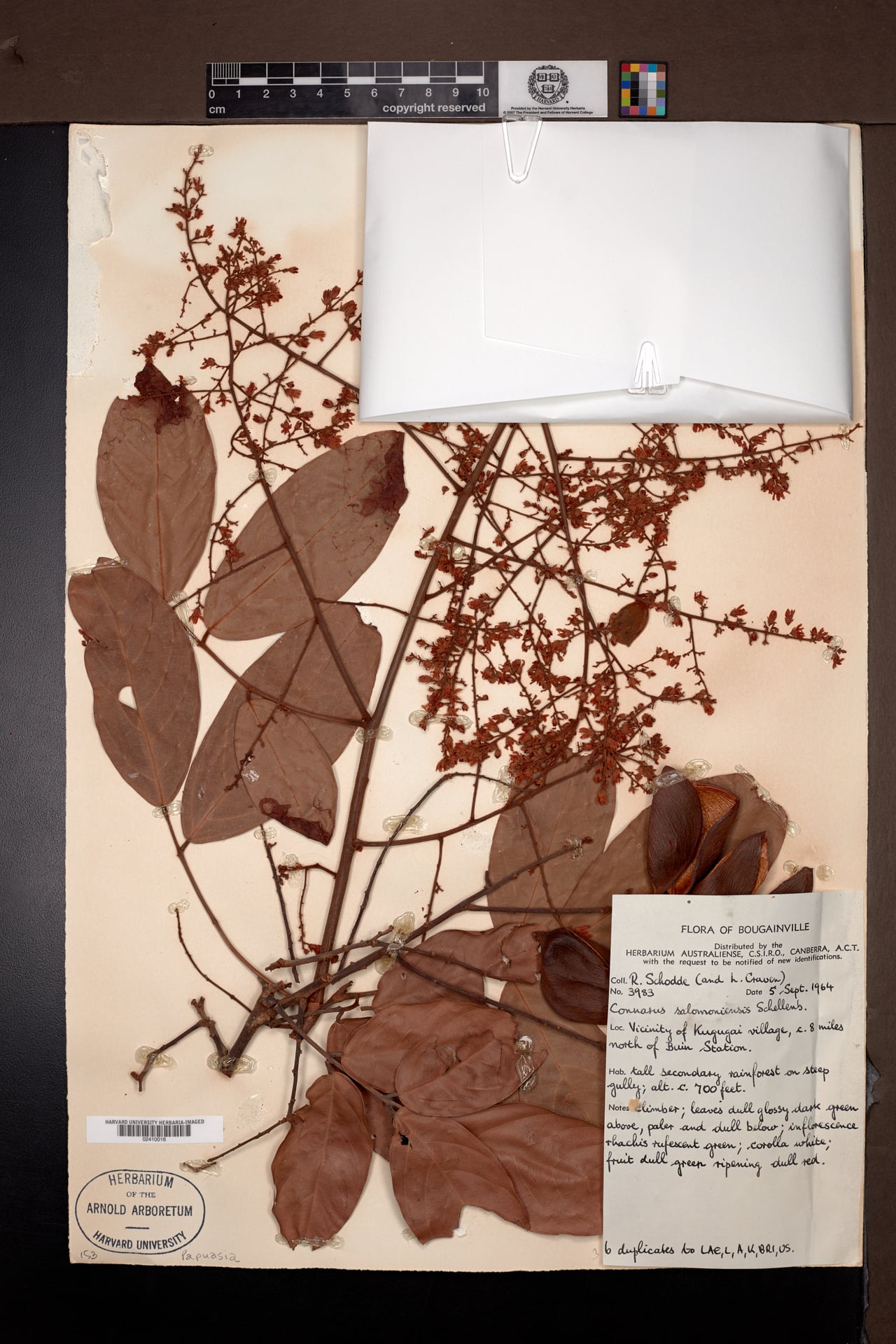
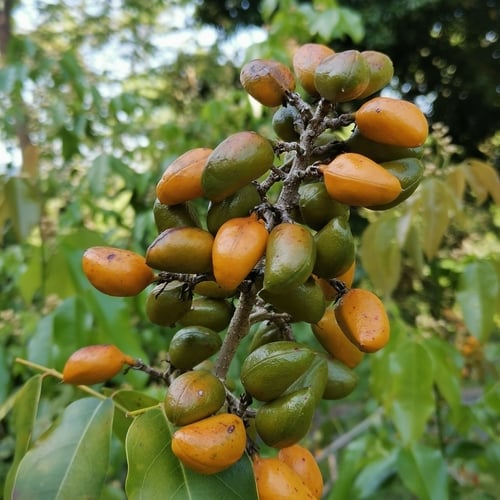
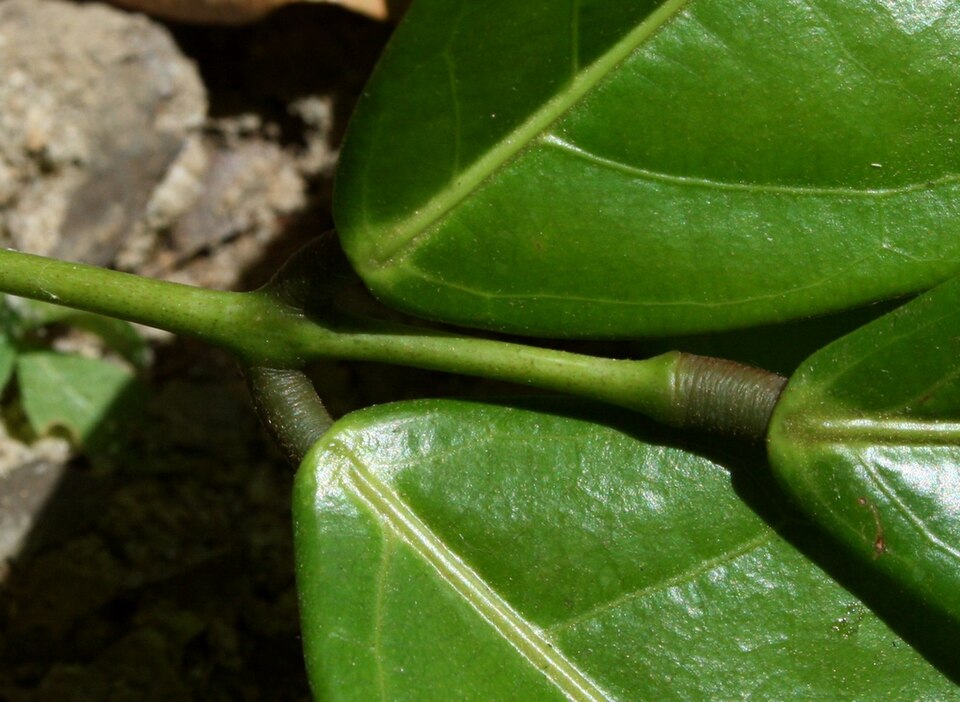
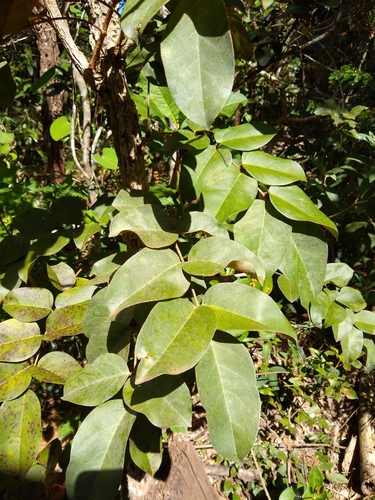
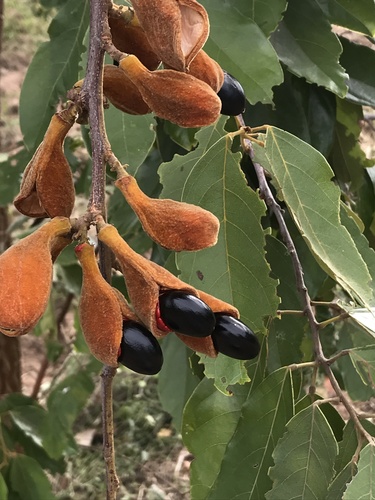
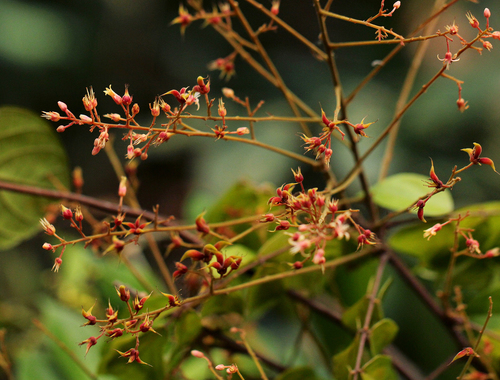
A shrub up to 2 m high or a woody climber up to 25 m tall. The leaves are compound and shiny. The flowers are small and white. The fruit are in pods about 3 cm long. They are curved. The seed is covered in a bright red aril.
Edible Uses
The bright red arils (seed coverings) are eaten raw. The fruit, seeds, and roots are also edible portions, and it is commonly used as a fruit in West Africa.
Traditional Uses
The arils or coverings around the seeds are eaten.
This uses section is brief — help expand it
Medicinal Uses
Although poisonous, a decoction of the wood and the roots is used in traditional medicine. In small doses, a decoction of the root acts as an emetic. Larger doses are poisonous. A decoction of from the roots in a dose of a teaspoonful or less is an emetic, but if this dose is exceeded, it is a poison. The roots and twigs are used as a bitter tonic and uterine tonic. They are prescribed for the treatment of rheumatism, scurvy, diabetes and pulmonary complaints. The roots are used as a mild aperient and in external applications for treating ulcers and skin complaints. A decoction of the fresh or dried leaves is used to cure gastralgia and are an absorbent.
Known Hazards
The wood and the roots are apparently poisonous, even though used medicinally. A decoction, mixed up with dog's food, is used for killing dogs.
Distribution
A tropical plant. It grows in hill lands, thickets, bamboo woods, dense mixed forests, up to 800 m altitude in southern China. In West Africa it grows in river banks in closed forest and savannah. In Yunnan, China it grows between 600-1300 m altitude. It occurs in the Western Ghats in India.
Where It Grows
Africa, American Samoa, Angola, Asia, Australia, Burkina Faso, Cambodia, Cameroon, Central Africa, Central African Republic, CAR, China, Congo DR, Côte d'Ivoire, East Africa, Gabon, Ghana, Guinea, Guinée, Guinea-Bissau, India, Indochina, Ivory Coast, Kenya, Laos, Madagascar, Mozambique, Niger, Nigeria, Northeastern India, Philippines, SE Asia, Senegal, Sierra Leone, Sri Lanka, Sudan, Taiwan, Thailand, Togo, Vietnam, West Africa, Zambia,
Cultivation
Plants can flower and produce fruit throughout the year.
Other Uses
The branches are used as ropes.
Other Information
It is a commonly used fruit in West Africa.
Notes
There are 40-70 Rourea species. They are tropical. There are 46 Rourea species in tropical America.
Synonyms
Also Known As
Botrobatra tiama, Chandrapudi, Deni m'bro, Ekapa, Ganganrisse, Hongjiten, Hong ye teng, Huleechalaballa, Humatarakwa, Huma-tarakwa, Kake, Kalavidhara, Kimbar mahalbaa, Konone soro, Kononi soro, Kowatothi, Kuriel, Makoi lata, Marisoma, Mbaching, Niania, Sessenkergu, Soppu, Taroli, Varadara, Varadharo, Vidhara, Vitaraka, Vudhadaki, Wakeri, Yangara buhili
References (25)
- Abbiw, D.K., 1990, Useful Plants of Ghana. West African uses of wild and cultivated plants. Intermediate Technology Publications and the Royal Botanic Gardens, Kew. p 48 (As Santaloides afzelii)
- Ambasta S.P. (Ed.), 2000, The Useful Plants of India. CSIR India. p 531
- Ambe, G., 2001, Les fruits sauvages comestibles des savanes guinéennes de Côte-d’Ivoire : état de la connaissance par une population locale, les Malinké. Biotechnol. Agron. Soc. Environ. 5(1), 43-48 (As Santaloides afzelii)
- Anderson, E. F., 1993, Plants and people of the Golden Triangle. Dioscorides Press. p 220
- Atato, A., et al, 2010, Diversity of Edible Wild Fruit Tree Species of Togo. Global Science Books. (As Santaloides afzelii)
Show all 25 references Hide references
- Atato, A., et al, 2012 Especes lianescentes a fruits comestibles du Togo. Fruits. 67(5): 353-368 (As Santaloides afzelii)
- Burkill, H. M., 1985, The useful plants of west tropical Africa, Vol. 1. Kew.
- Dalziel, J. M., 1937, The Useful plants of west tropical Africa. Crown Agents for the Colonies London.
- Dobriyal, M. J. R. & Dobriyal, R., 2014, Non Wood Forest Produce an Option for Ethnic Food and Nutritional Security in India. Int. J. of Usuf. Mngt. 15(1):17-37
- Flora of China @ efloras.org Volume 9
- Jardin, C., 1970, List of Foods Used In Africa, FAO Nutrition Information Document Series No 2.p 159 (As Rourea platysepala)
- Jin, Chen et al, 1999, Ethnobotanical studies on Wild Edible Fruits in Southern Yunnan: Folk Names: Nutritional Value and Uses. Economic Botany 53(1) pp 2-14 (As Santaloides roxburghii)
- JSTOR Global Plants edible (As Santaloides splendidum)
- Le Houerou, H. N., (Ed.), 1980, Browse in Africa. The current state of knowledge. International Livestock Centre for Africa, Ethiopia. p 162 (As Santaloides afzelii)
- Lu Lingdi, Connaraceae [Draft], Flora of China
- Morley, B.D., & Toelken, H.R., (Eds), 1983, Flowering Plants in Australia. Rigby. p 165
- Mutie, F. M., et al, 2023, Important Medicinal and Food Taxa (Orders and Families) in Kenya, Based on Three Quantitative Approaches. Plants 2023, 12, 1145
- Patiri, B. & Borah, A., 2007, Wild Edible Plants of Assam. Geethaki Publishers. p 36
- Peters, C. R., O'Brien, E. M., and Drummond, R.B., 1992, Edible Wild plants of Sub-saharan Africa. Kew. p 93
- Pullaiah, T., et al, Ethnobotany of India, Volume 1: Eastern Ghats and Deccan. (As Tali minor)
- Sarma, H., et al, 2010, Updated Estimates of Wild Edible and Threatened Plants of Assam: A Meta-analysis. International Journal of Botany 6(4): 414-423
- Singh, H.B., Arora R.K.,1978, Wild edible Plants of India. Indian Council of Agricultural Research, New Delhi. p 70
- Vivien, J., & Faure, J.J., 1996, Fruitiers Sauvages d'Afrique. Especes du Cameroun. CTA p 137 (As Santaloides afzelii)
- World Checklist of Useful Plant Species 2020. Royal Botanic Gardens, Kew
- www.efloras.org Flora of China Volume 9