Comptonia peregrina
(L.) J. M. Coult.
Sweet fern, Meadow Fern
iNaturalist· cc-by-nc
(c) Mark Kluge, some rights reserved (CC BY-NC), uploaded by Mark Kluge
iNaturalist· cc-by-nc
(c) guillaumevigneault, some rights reserved (CC BY-NC)
iNaturalist· cc-by-nc
(c) guillaumevigneault, some rights reserved (CC BY-NC)
Summary
Source: WikipediaComptonia peregrina is a species of flowering plant in the family Myricaceae native to eastern North America. It is the only extant (living) species in the genus Comptonia, although some extinct species are placed in the genus.
Description
A small suckering shrub. It loses its leaves during the year. It develops many stems. It grows 1.5 m high and spreads 2.4 m wide. It has feather like leaves which have lobes. The leaves are 5-10 cm long and the lobes are deep. The male and female flowers are on separate catkins. The male ones are slightly longer. They are red-brown. The female catkins enlarge as the seed ripens.
Edible Uses
The young fruits make a pleasant nibble; each bristly burr contains one to four edible nutlets. The aromatic leaves, used fresh or dried, brew into a palatable tea and can also be used as a seasoning.
Traditional Uses
The leaves both fresh and dried are used to make tea. The leaves and tops are chopped and used as a condiment. Young fruit are eaten.
This uses section is brief — help expand it
Medicinal Uses
Sweet fern was used medicinally by several Native North American Indian tribes, primarily as a poultice, and continues to be used for many of the same purposes in modern herbalism. The leaves are astringent, act as a blood purifier, expectorant, and tonic. A tea made from the leaves and flowering tops treats diarrhoea, headache, fevers, catarrh, vomiting of blood, and rheumatism. The infusion has also been used against ringworm. The leaves are applied as a poultice for toothaches and sprains. A cold water infusion of the leaves is used externally to counter the effects of poison ivy and to bathe stings and minor haemorrhages. Leaves are harvested in early summer and dried for later use.
Distribution
It is a temperate plant. It grows in fields and woodlands. It does best in moist, well-drained soil. It should be rich in humus and slightly acid. It can grow in full sun of light shade. It suits hardiness zones 4-9.
Where It Grows
Australia, Britain, Canada, Europe, North America, USA,
Cultivation
It can be grown from seed, layering or rooted suckers.
Propagation
The seed has a very tough coat and contains germination inhibitors, making it difficult to germinate. The best approach is to harvest seed while still green — after the seed has fully developed but before it dries on the plant — and sow immediately in a cold frame. Stored seed benefits from soaking in hot water for 24 hours to leach out inhibitors and soften the coat; scarification and a period of cold stratification also help. Prick seedlings into individual pots as soon as they are large enough to handle, overwinter them in a greenhouse or cold frame, and plant out in late spring or early summer. Root cuttings 4 cm long can be taken in December and placed horizontally in a frame, with a high success rate. Suckers can be removed during dormancy and potted up or planted directly. Layering in spring is also possible, though plants can be difficult to move successfully.
Other Uses
The leaves are used to line baskets and similar containers to help preserve fruit. Crushed leaves repel insects, and throwing them onto a campfire helps keep mosquitoes away. The dried leaves have also been burned as incense.
Notes
There is only one Comptonia species. The Myricaceae have nitrogen fixing bacteria (Frankia) in nodules on their roots.
Synonyms
Also Known As
Fern gale, Sugar fern
References (16)
- Beckstrom-Sternberg, Stephen M., and James A. Duke. "The Foodplant Database." http://probe.nalusda.gov:8300/cgi-bin/browse/foodplantdb.(ACEDB version 4.0 - data version July 1994)
- Bodkin, F., 1991, Encyclopedia Botanica. Cornstalk publishing, p 275
- Brown, D., 2002, The Royal Horticultural Society encyclopedia of Herbs and their uses. DK Books. p 177
- Cundall, P., (ed.), 2004, Gardening Australia: flora: the gardener's bible. ABC Books. p 406
- Elias, T.S. & Dykeman P.A., 1990, Edible Wild Plants. A North American Field guide. Sterling, New York p 174
Show all 16 references Hide references
- Esperanca, M. J., 1988. Surviving in the wild. A glance at the wild plants and their uses. Vol. 2. p 270
- Facciola, S., 1998, Cornucopia 2: a Source Book of Edible Plants. Kampong Publications, p 156
- Heywood, V.H., Brummitt, R.K., Culham, A., and Seberg, O. 2007, Flowering Plant Families of the World. Royal Botanical Gardens, Kew. p 221 (Family)
- Jackes, D. A., Edible Forest Gardens
- Kermath, B. M., et al, 2014, Food Plants in the Americas: A survey of the domesticated, cultivated and wild plants used for Human food in North, Central and South America and the Caribbean. On line draft. p 257
- Kiple, K.F. & Ornelas, K.C., (eds), 2000, The Cambridge World History of Food. CUP p 1862
- MacKinnon, A., et al, 2009, Edible & Medicinal Plants of Canada. Lone Pine. p 150
- Mem. Torrey Bot. Club 5:127. 1894
- Plants for a Future database, The Field, Penpol, Lostwithiel, Cornwall, PL22 0NG, UK. http://www.scs.leeds.ac.uk/pfaf/
- Toupal, R. S. & Hollenback, K., 2009, An Ethnobotany of Indiana Dunes National Lakeshore: Plant Uses of the Ojibwa People. Bureau of Applied Research in Anthropology. University of Arizona
- www.wildediblefood.com
More from Myricaceae
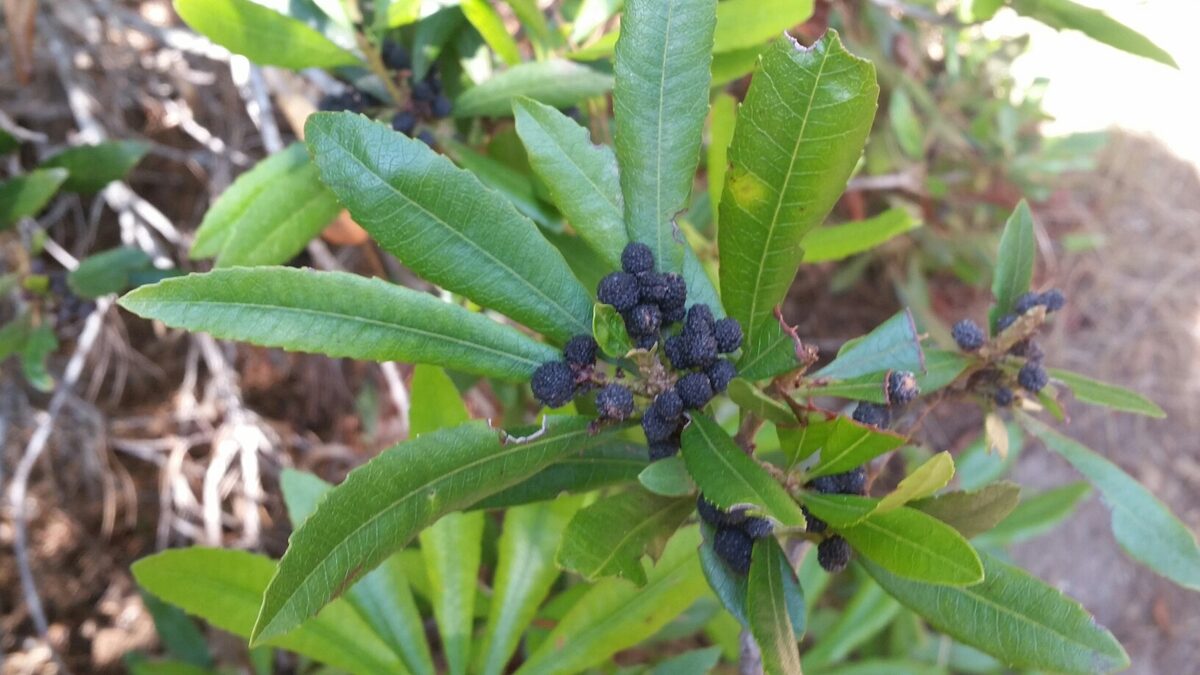
Myrica californica
Californian Bayberry, California Wax Myrtle, California Barberry
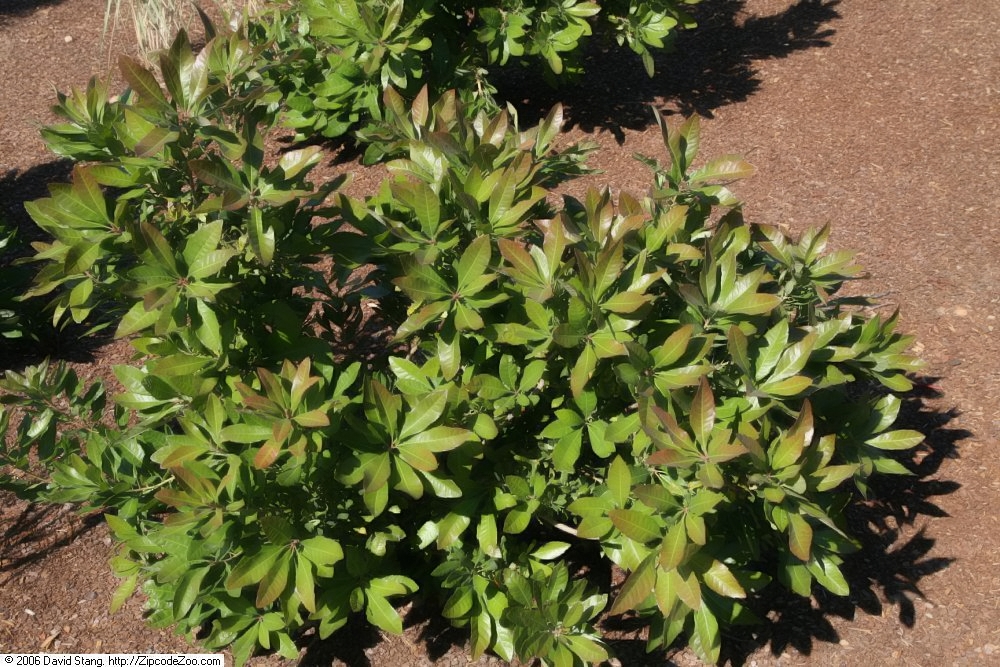
Myrica caroliniensis
Candleberry, Southern bayberry
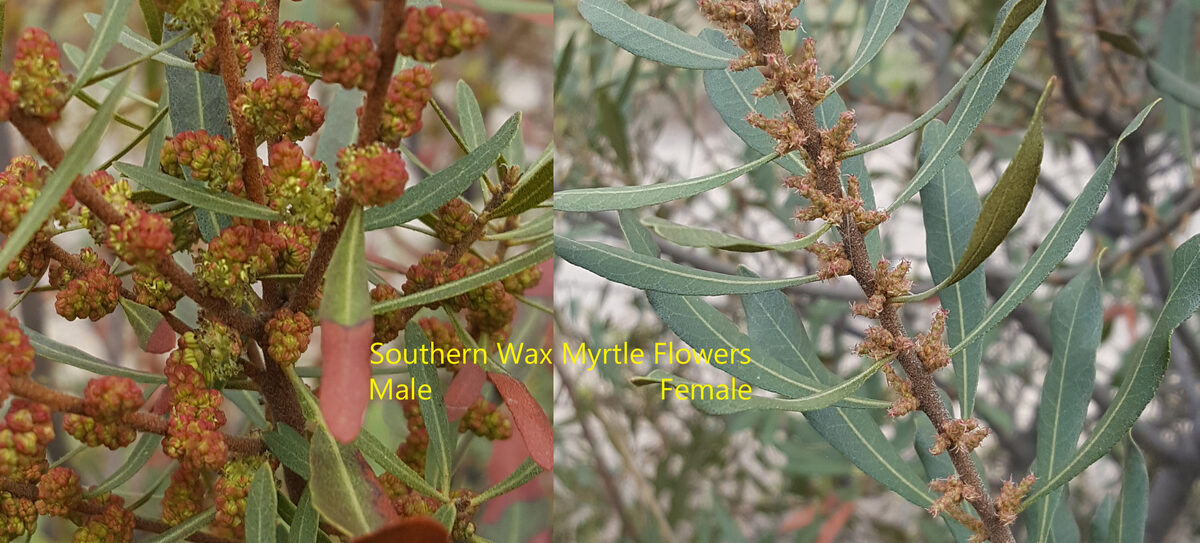
Myrica cerifera
Wax Myrtle - Bayberry Wild Cinnamon, Southern Bayberry, Wax Myrtle, Southern Wax Myrtle
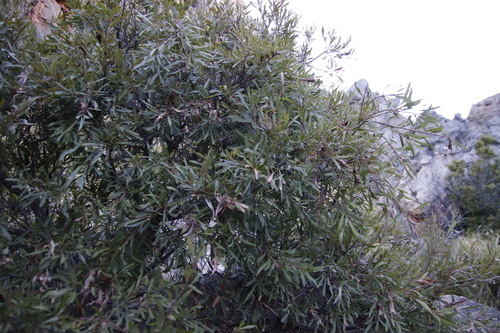
Myrica conifera
Myrica esculenta
Box myrtle, Bay berry
Myrica faya
Fire tree, Candleberry Myrtle