Myrica californica
Cham.
Californian Bayberry, California Wax Myrtle, California Barberry
wikimedia· cc-by
Alex (via Wikimedia Commons)
wikimedia· cc-by-sa
Wikimedia Commons (via Wikimedia Commons)
wikimedia· cc0
Daderot (via Wikimedia Commons)
Description
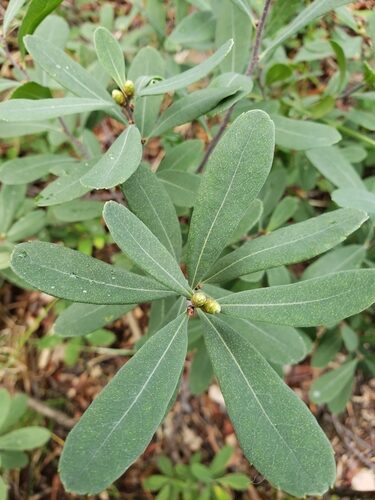
Myrica californica is an evergreen Shrub growing to 4 m (13ft 1in) at a medium rate. See above for USDA hardiness. It is hardy to UK zone 7. It is in leaf all year, in flower in May, and the seeds ripen from September to October. The species is monoecious (individual flowers are either male or female, but both sexes can be found on the same plant) and is pollinated by Wind. The plant is not self-fertile. It can fix Nitrogen. It is noted for attracting wildlife. Suitable for: light (sandy), medium (loamy) and heavy (clay) soils and prefers well-drained soil. Suitable pH: mildly acid and neutral soils and can grow in very acid soils. It can grow in semi-shade (light woodland) or no shade. It prefers moist soil. The plant can tolerates strong winds but not maritime exposure.
Edible Uses
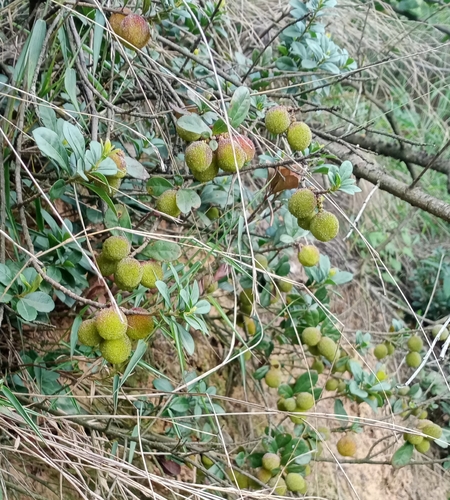
Fruit - raw or cooked. The fruit is about 6mm in diameter with a large seed. There is very little edible flesh and the flavour of this is poor.
Medicinal Uses
Stomachic. The bark and root bark is used in the treatment of gastrointestinal disorders and infections.
Known Hazards
Although no reports of toxicity have been seen for this species, there is a report for some members of this genus that some of the constituents of the wax might be carcinogenic.
Distribution
South-western N. America - Washington to California.
Where It Grows
NORTHERN AMERICA: United States, Oregon (west), Washington (west), California (west),
Cultivation
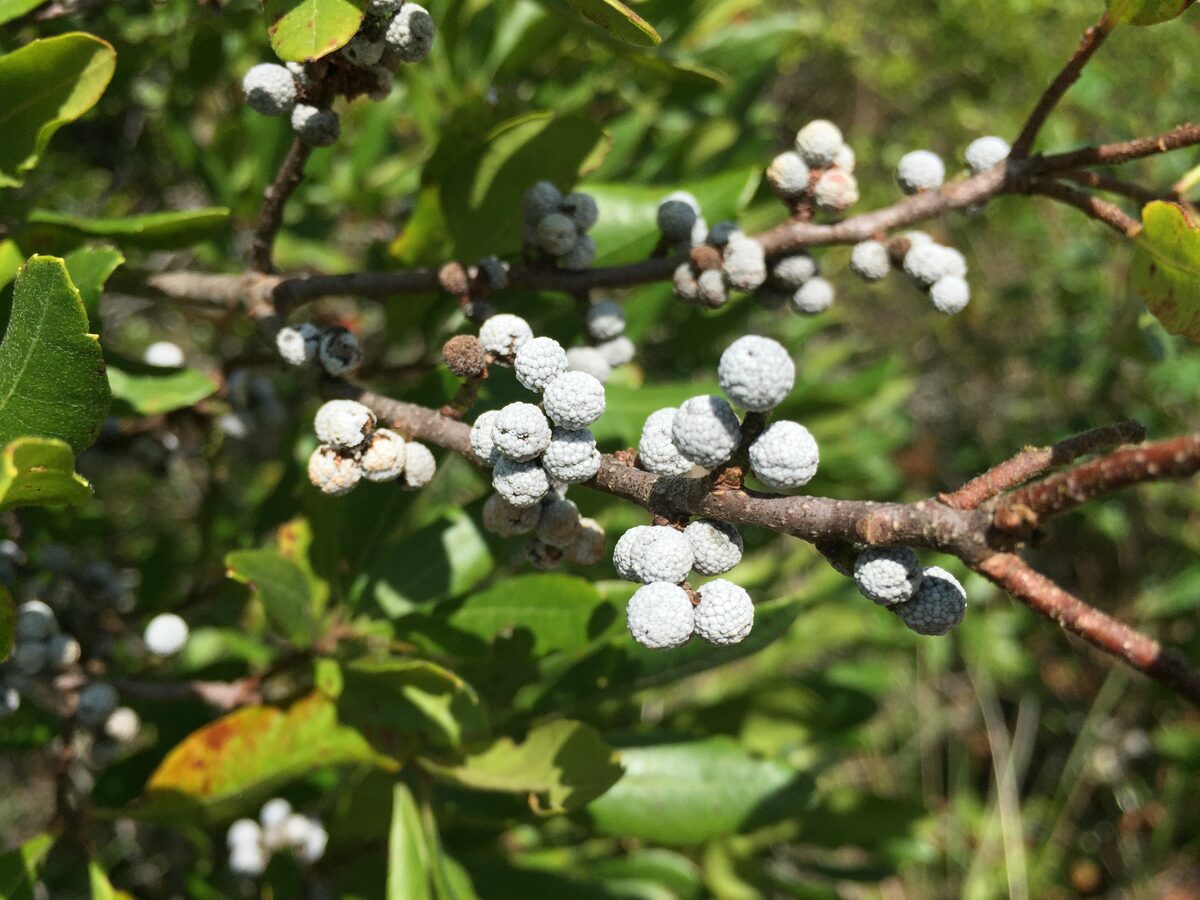
Prefers a moist soil. Grows well in an open position in a well-drained soil in sun or light shade. Thrives in any ordinary garden soil according to one report whilst another says that it thrives in an acid soil. Prefers a lime-free loamy or peaty soil. Plants can be cut back to the ground in severe winters in many parts of Britain, but they are well suited to the milder parts of the country where they are fast-growing and produce fruit within 5 years from seed. They succeed and fruit well on a south facing wall at Kew. Plants in this genus are notably resistant to honey fungus. The fruit is covered with a deposit of wax that has a balsamic odour. Many species in this genus have a symbiotic relationship with certain soil micro-organisms, these form nodules on the roots of the plants and fix atmospheric nitrogen. Some of this nitrogen is utilized by the growing plant but some can also be used by other plants growing nearby. Bayberry plants are typically dioecious, meaning that they have separate male and female plants. Therefore, they are not self-fertile and require both male and female plants for fruit production. The fruit is usually harvested in late summer to early autumn, depending on the species and local climate. Bayberry typically flowers in spring with the timing varying slightly by species and climate. Bayberry is a moderately fast-growing plant, often establishing itself quickly and reaching maturity within 3 to 5 years.
Propagation
Seed - best sown as soon as it is ripe in the autumn in a cold frame. Stored seed germinates more freely if given a 3 month cold stratification and then sown in a cold frame. Germination is usually good. Prick out the seedlings into individual pots when they are large enough to handle and grow them on in the cold frame for the first winter. Plant out in late spring or early summer. Cuttings of half-ripe wood, 5 - 8cm with a heel, July/August in a frame. Pot up and overwinter in a cold frame then plant out in late spring or early summer. Fair to good percentage. Layering in spring.
Other Uses
Dye Wax Wood Agroforestry uses: Bayberry is useful as a windbreak or hedge. Its dense foliage provides shelter for wildlife, and it can also help with soil stabilization due to its extensive root system. A wax covering on the fruit is extracted by scalding the fruit with boiling water and immersing them for a few minutes, the wax floats to the surface and is then skimmed off. The fruit is then boiled in water to extract the wax from the pulp and once more the wax is skimmed off. It is then strained through a muslin cloth and can be used to make aromatic candles. Candles made from this wax are quite brittle but are less greasy in warm weather. They are slightly aromatic and do not smoke when put out, making them much more pleasant to use that wax or tallow candles. The wax is also used in making soaps. To date (07/12/95) plants growing on our Cornish trial grounds have fruited freely but have not produced much wax. They produced somewhat more after the hot summer of 1995, but there was still not enough to make extraction worthwhile. A grey-brown and a maroon-purple dye are obtained from the fresh or dried berries. Wood - heavy, very hard, strong, brittle, close grained.