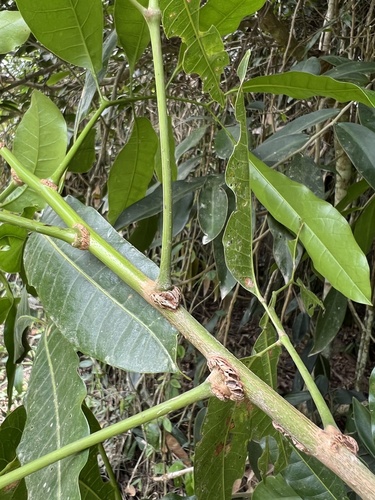
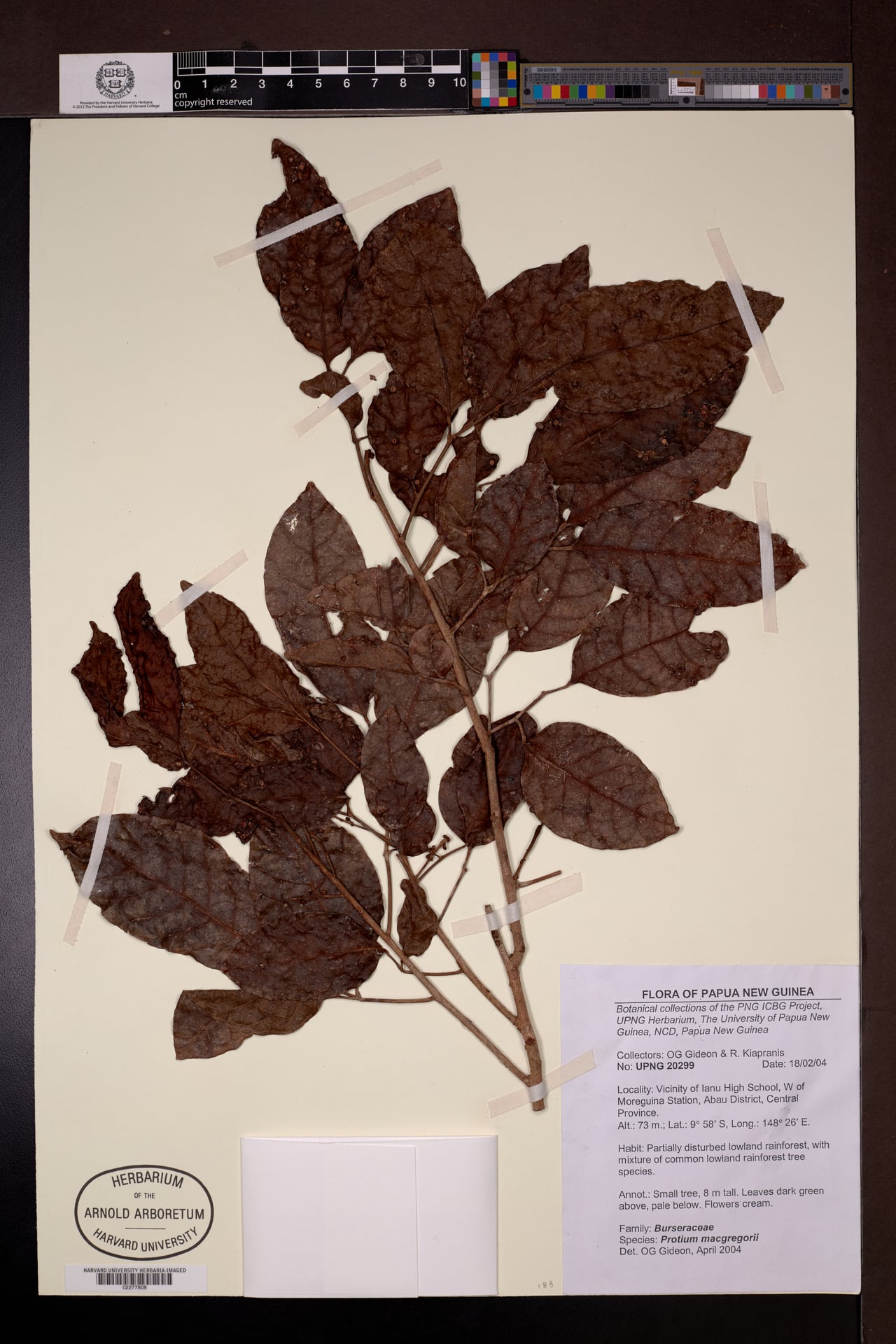
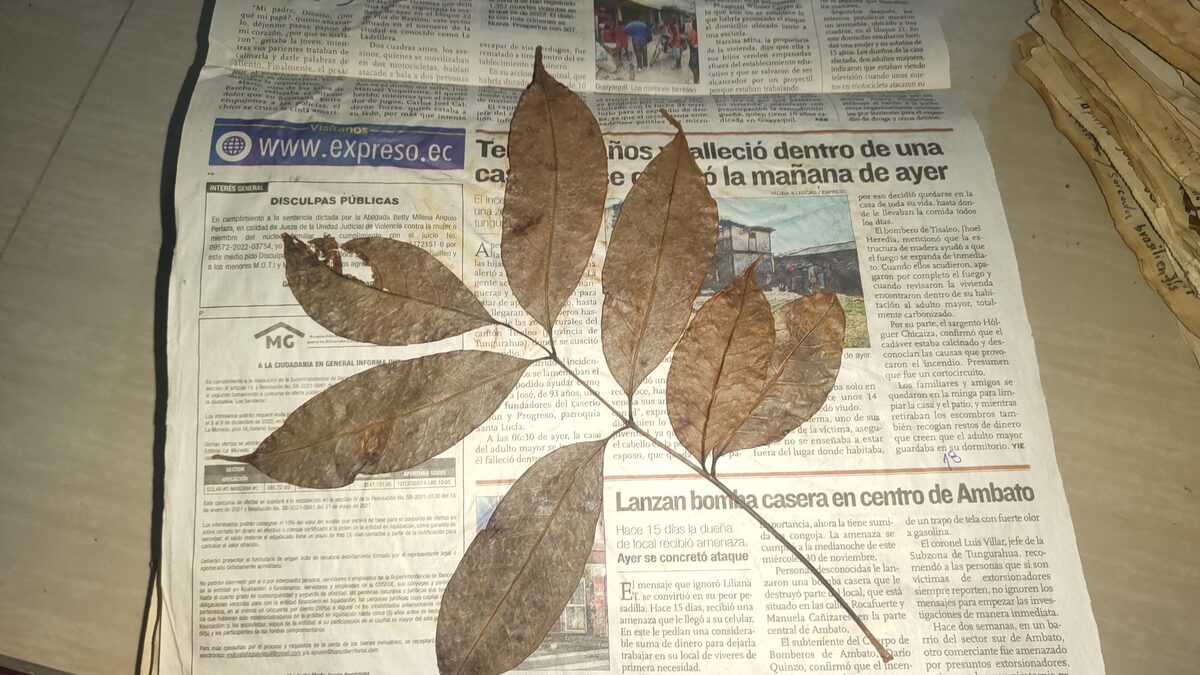
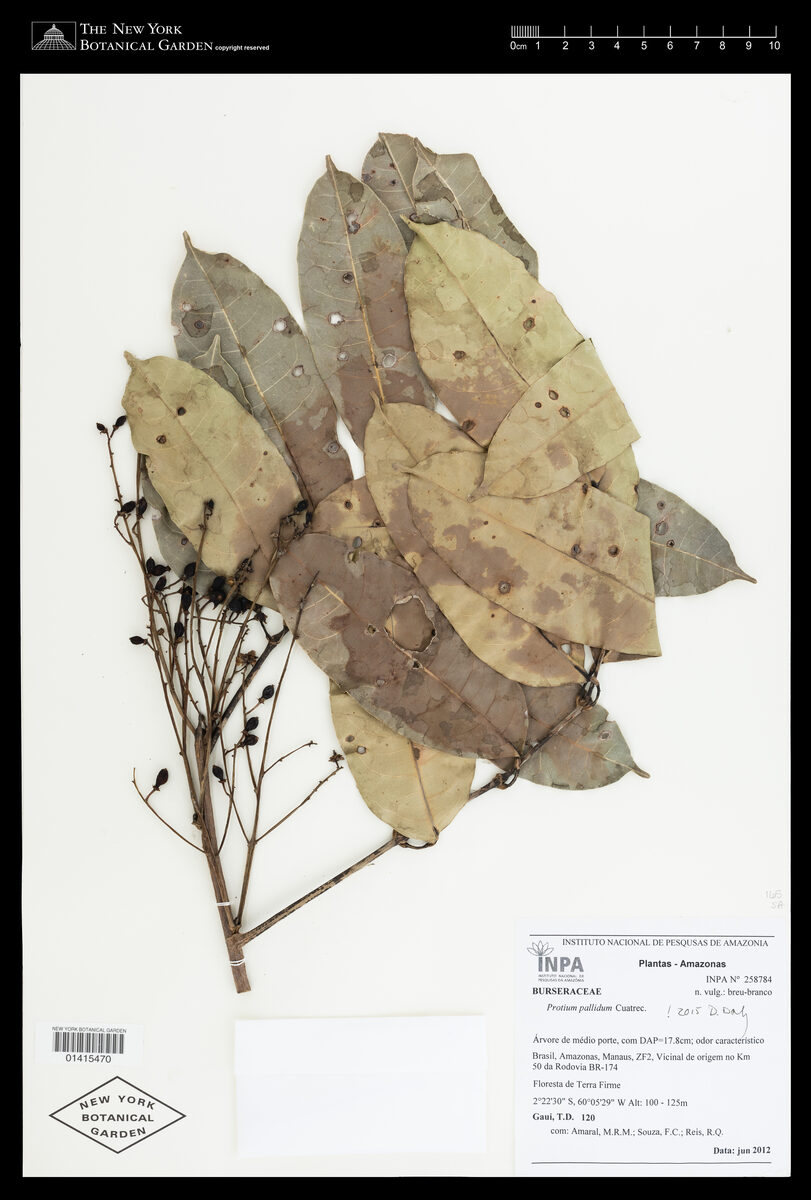
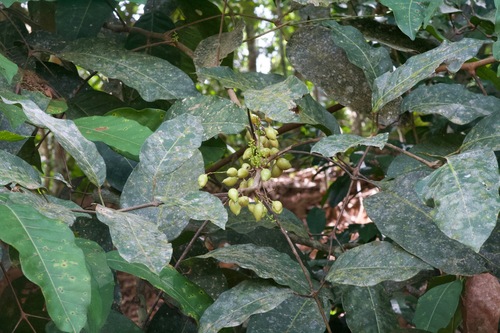
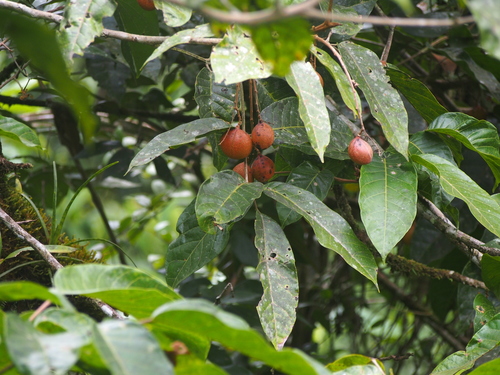
Dacryodes peruviana
(Loes.) H. J. Lam
Kumchai, Peru dacryodes
wikimedia· cc-by
Wikimedia Commons - Dick Culbert from Gibsons, B.C., Canada
Description
A tree. It grows 20 m tall. Trees are separately male and female. The fruit is black and fleshy with a hard stone inside. It is 25 mm long by 15 mm wide.
Edible Uses
Fruit. The fruit of this species is a blackish drupe up to 25mm long and 15mm wide. The flesh of the fruits in this genus usually adheres very strongly to the seed. When placed in hot (but not boiling) water at around 60 - 85°c the fruit softens and swells and all the flesh then slides easily off the seed.
Traditional Uses
The fruit are cooked and eaten. The seeds are eaten after removing the husk.
This uses section is brief — help expand it
Distribution
It is a tropical plant It grows up to about 700 m above sea level.
Where It Grows
Amazon, Asia, Bolivia, Brazil, Colombia, Ecuador, French Guiana, Guyana, Indonesia, Peru, SE Asia, South America*, Venezuela,
Cultivation
A dioecious species, both male and female forms need to be grown if fruit and seed are required.
Other Uses
The heartwood is cream white to pinkish white; it is not clearly demarcated from the 3 - 8cm wide band of greyish white sapwood. The texture is fine; the grain irregular and interlocked. The wood is light in weight, soft to moderately hard; it is not durable, being susceptible to fungi, dry wood borers and termites. The wood seasons normally, with only a slight risk of checking or distortion; once dry it is moderately stable in service. The fairly high silica content of the wood has a high blunting effect, stellite-tipped and tungsten carbide tools are recommended; there are also difficulties caused by the highly interlocked grain; nailing and screwing are good; gluing is correct; finishing is good. The wood is used for purposes such as interior joinery and panelling, boxes and crates, cheaper furniture, shingles and veneer.
Synonyms
Also Known As
Ccovi shasha, Copal, Cunchaya, Cunchei, Guiimonca, Huaqueneeo, Huyimonca, Ibupichuna, Juapiscuna, Kamawa, Kunchay, Numi Kunchai, Pampadek, Shirikip, Wichilla kupall, Wigonkawe, Witameno, Woda
References (13)
- Brako, L. and J.L. Zarucchi. 1993. Catalogue of the flowering plants and gymnosperms of peru.Catálogo de Angiospermas y Gimnospermas del Perú, Vol.45. Missouri Botanical Garden.
- Duchelle, A. E., 2007, Observations on Natural Resource use and Conservation by the Shuar In Ecuador's Cordillera del Condor. Ethnobotany Research & Applications 5:005-023
- Grandtner, M. M. & Chevrette, J., 2013, Dictionary of Trees, Volume 2: South America: Nomenclature, Taxonomy and Ecology. Academic Press p 192
- Hokche, O., P.E. Berry & O. Huber, 2008, Nuevo Catálogo de la Flora Vascular de Venezuela, 1-860
- Jernigan, K. A., 1997, An Ethnobiological Exploration of Sensory and Ecological Aspects of Tree Identification among the Aguaruna Kivaro (Peru). PhD thesis. Athens, Georgia. p 201
Show all 13 references Hide references
- Kermath, B. M., et al, 2014, Food Plants in the Americas: A survey of the domesticated, cultivated and wild plants used for Human food in North, Central and South America and the Caribbean. On line draft. p 295
- Kew Plants of the World onLine
- Lopez-Diago, D. & Garcia, N., 2021, Wild edible fruits of Colombia. Biota ColomBiana 22 (2) p 33
- Reis, S. V. and Lipp, F. L., 1982, New Plant Sources for Drugs and Foods from the New York Botanical Garden herbarium. Harvard. p 147
- Roa, J. A. G. & Boada, D. S. G., 2018, Fundación para el Fortalecimiento de la Fruticultura y Plantas Alimenticias no Convencionales en Colombia.
- Torre, de la, L., et al, 2008, Enciclopedia de las Plantas Útiles del Ecuador. Herbario QCA. Pontificia Universidad Católica del Ecuador. p 264
- Useful Tropical Plants
- Van den Eynden, V., et al, 2003, Wild Foods from South Ecuador. Economic Botany 57(4): 576-603