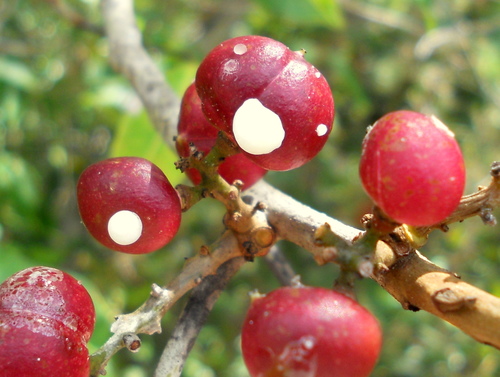
Dacryodes normandii
Aubrev. & Pellegr.
gbif· cc-by-nc-nd
Eric Akouangou, West & Central Africa programme
gbif· cc-by-nc-nd
Eric Akouangou, West & Central Africa programme
gbif· cc-by-nc-nd
Eric Akouangou, West & Central Africa programme
Description
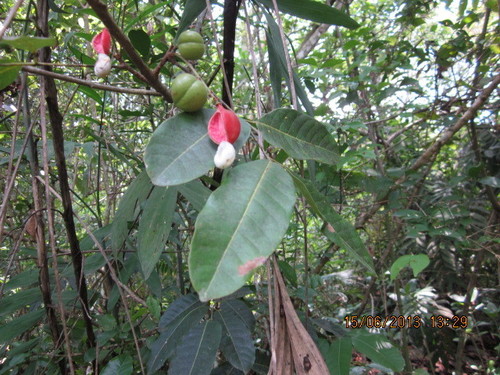
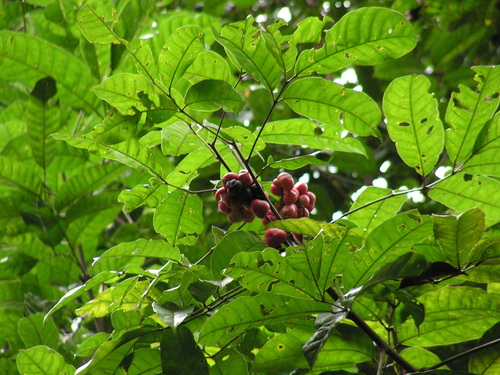
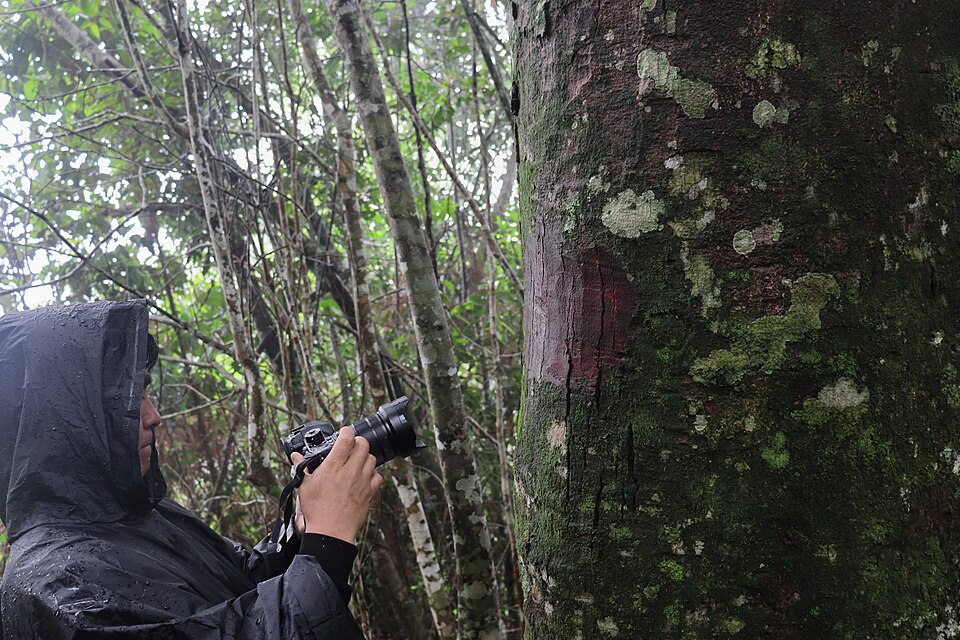
An evergreen tree. It grows 37 m tall. The trunk is straight and 90 cm across. It can have small buttresses at the base. Male and female flowers are on separate plants. The fruit are oval and 3.5 cm long.
Edible Uses
Fruit - cooked. The fruit is an obovoid drupe about 35mm long. I'm not sure that the report of the fruit being cooked is fully accurate, since boiling is said to harden the flesh. Instead, it is probably treated as below. The flesh of the fruits in this genus usually adheres very strongly to the seed. When placed in hot (but not boiling) water at around 60 - 85°c the fruit softens and swells and all the flesh then slides easily off the seed.
Traditional Uses
The fruit are cooked and eaten or at least put in hot water to help remove the flesh from the seeds.
This uses section is brief — help expand it
Distribution
It is a tropical plant. It grows in evergreen forests between 50-450 m above sea level.
Where It Grows
Africa, Central Africa, Congo R, Equatorial Guinea, Gabon,
Cultivation
Plants are grown from seeds.
Other Uses
A fragrant resin exudes from the cut inner bark. No uses are recorded. The heartwood is pink-buff with an occasional grey tinge; it is not distinctly demarcated from the 2 - 4cm wide band of sapwood. The grain can be straight, but is often interlocked; the texture medium to coarse. The wood is medium-weight, soft to moderately hard; moderately durable, it is very resitant to termites, moderately resistant to fungi but susceptible to dry wood borers. It seasons normally, with only a slight risk of checking or distortion; when dry it is moderately stable in service, It is moderately easy to saw when green; works well with hand and machine tools, but causes blunting due to the presence of silica - stellite-tipped and tungsten carbide tools are recommended; it has good nailing and screwing properties, and it glues, sands, paints and varnishes well. Peeling characteristics are satisfactory. The wood is suitable for light construction, flooring, interior trim, joinery, ship and boat building, vehicle bodies, furniture, cabinet work, toys, novelties, turnery, poles, piles, veneer and plywood. It can also be used for paper making.
Synonyms
Also Known As
Diganga, Eyemediome, Ossabel
References (4)
- Fern, K., 2012, Tropical Species Database http://theferns.info/tropical/
- Onana, J. M., 2008, A synoptic revision of Dacryodes (Burseraceae) in Africa, with a new species from Central Africa. KEW BULLETIN VOL. 63: 385–400
- PROTA
- World Checklist of Useful Plant Species 2020. Royal Botanic Gardens, Kew (As Pachylobus normandii)