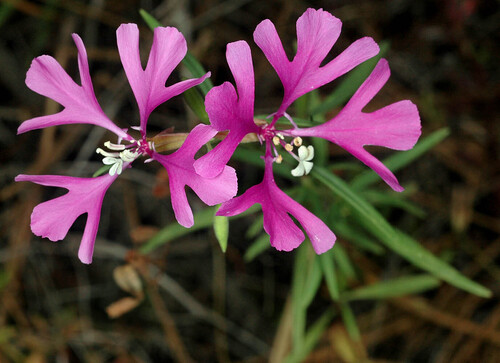
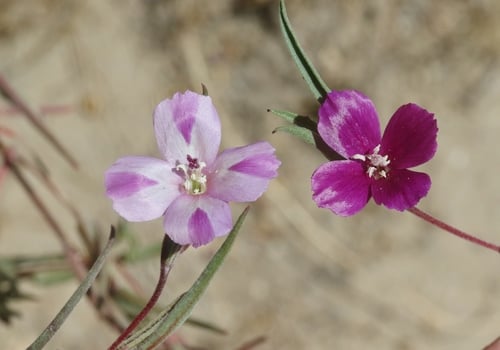
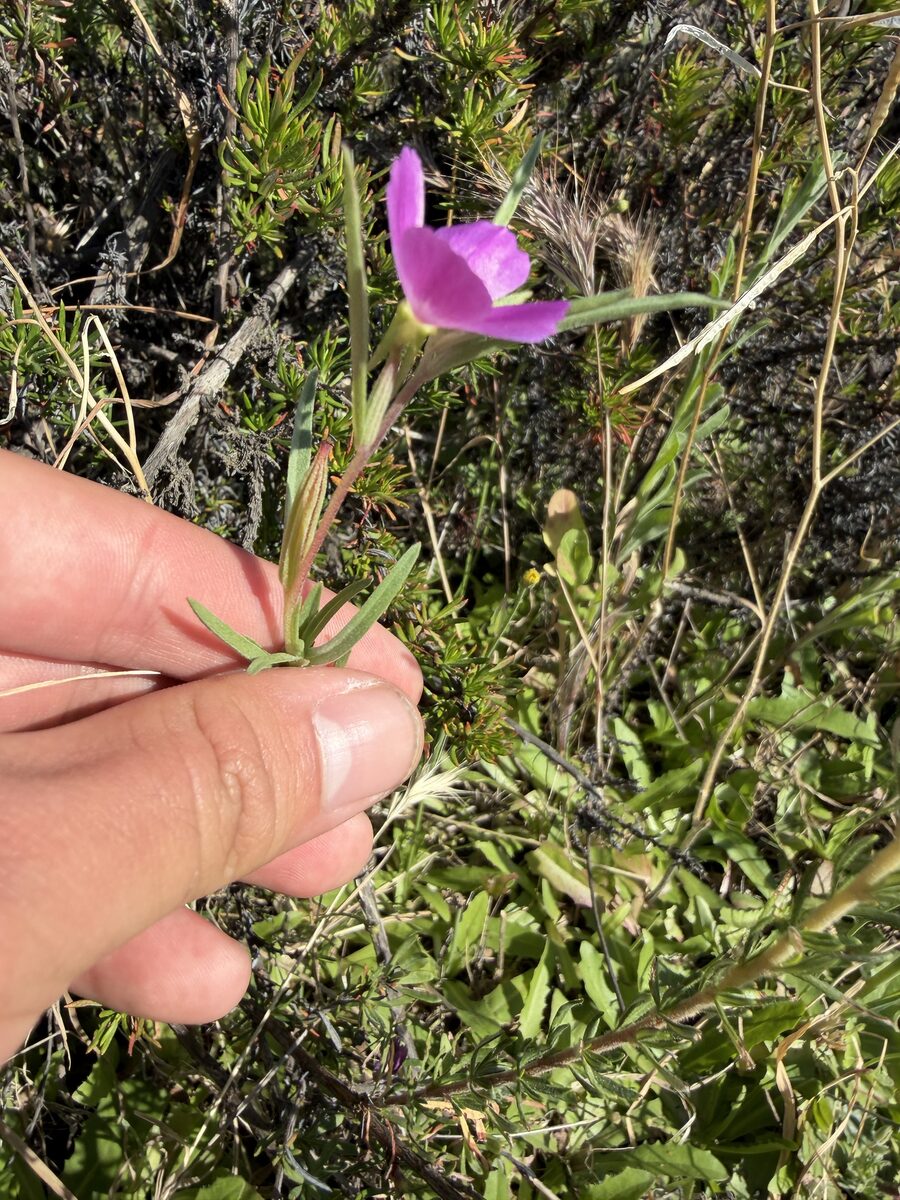
Clarkia biloba
(Durand) A. Nelson & J. F. Macbr.
Twolobe clarkia
iNaturalist· cc-by-nc-sa
(c) Dan and Raymond, some rights reserved (CC BY-NC-SA)
iNaturalist· cc-by-nc
(c) Morgan Stickrod, some rights reserved (CC BY-NC)
Summary
Source: WikipediaClarkia biloba is a species of flowering plant in the evening primrose family known by the common name twolobe clarkia and two lobed clarkia. Clarkia biloba is endemic to California, where it is known from the Sierra Nevada foothills; one subspecies can also be found in the San Francisco Bay Area. It grows in chaparral, oak woodlands, and yellow pine forest habitats. As the putative progenitor species of Clarkia lingulata it is often used in examples of evolution outside the usual model of allopatric speciation. As such this plant is one of the best plant examples when considering "quantum speciation", a concept closely aligned with peripatric speciation, parapatric speciation and sympatric speciation.
Description
Annual plant reaching 0.9m tall with hermaphroditic flowers. Grows in light sandy to heavy clay soils, tolerating mildly acid to mildly alkaline pH. Adapts to semi-shade or full sun and prefers moist soil.
Edible Uses
The seed is edible.
Medicinal Uses
The plant has ophthalmic uses.
Distribution
It is a temperate plant.
Where It Grows
America, North America, USA,
Propagation
Seed -
Other Uses
None known Special Uses
Synonyms
References (1)
- Anderson, M. K., 2012, Edible Seeds and Grains of California Tribes and the Klamath Tribe of Oregon in the Phoebe Apperson Hearst Museum of Anthropology Collections, University of California, Berkeley. USDA p 25