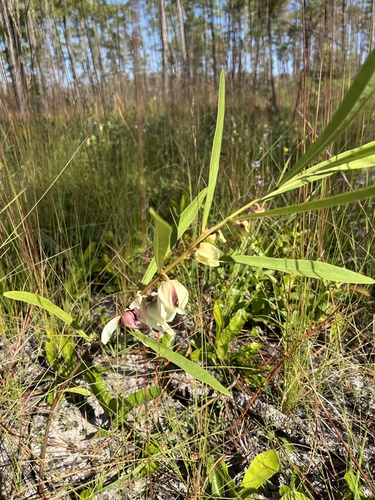
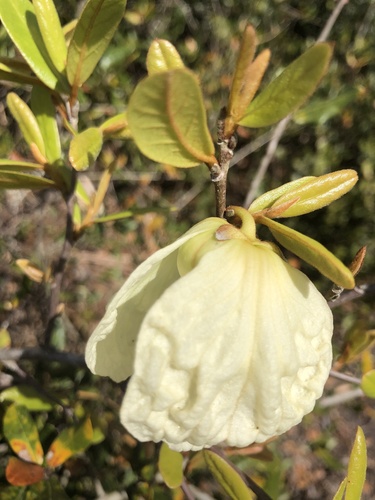
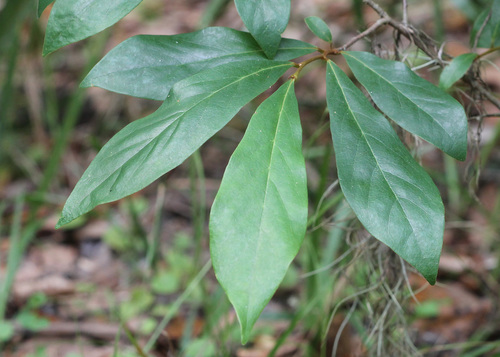
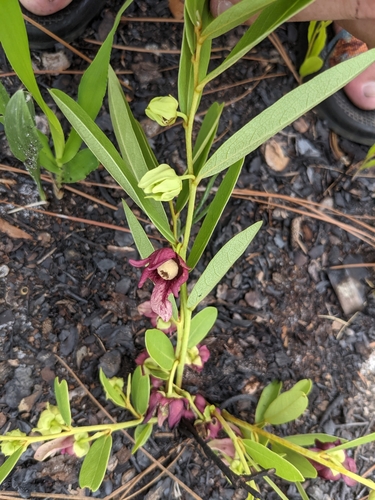
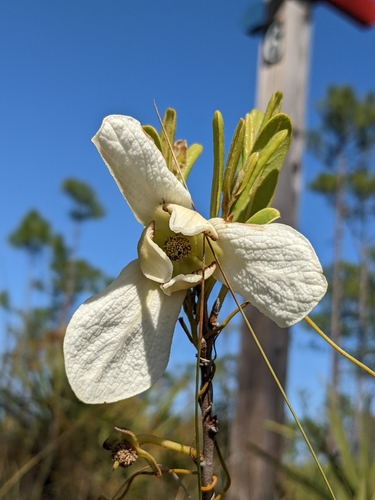
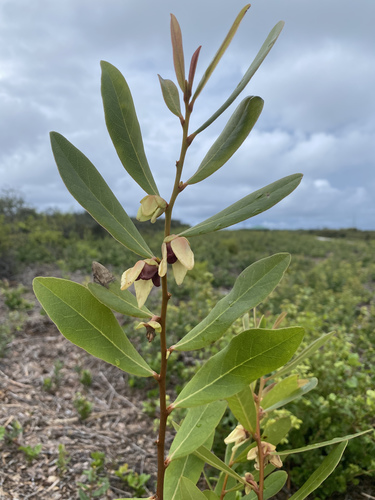
Annona senegalensis subsp. oulotricha
Le Thomas
gbif· cc-by-nc-nd
Davy Ikabanga, West & Central Africa programme
gbif· cc-by-nc-nd
Davy Ikabanga, West & Central Africa programme
gbif· cc-by-nc-nd
Davy Ikabanga, West & Central Africa programme
Summary
Source: WikipediaAnnona senegalensis, commonly known as African custard-apple, wild custard apple, wild soursop, abo ibobo (Yoruba language), sunkungo (Mandinka language), and dorgot (Wolof language) is a species of flowering plant in the custard apple family, Annonaceae. The specific epithet, senegalensis, translates to mean "of Senegal", the country where the type specimen was collected. A traditional food plant in Africa, the fruits of A. senegalensis have the potential to improve nutrition, boost food security, foster rural development and support sustainable land care. Well known where it grows naturally, it is largely unheard of elsewhere.
Description
A tropical shrub in the family Annonaceae growing 2-6 m tall, found in savannah and semi-arid to sub-humid regions.
This description is brief — help expand it
Edible Uses
The fruit flesh is eaten with seeds removed.
Traditional Uses
The flesh of the fruit is eaten. The seeds are removed.
This uses section is brief — help expand it
Medicinal Uses
The primary use of this versatile plant is for food, but it has applications in numerous aspects of human endeavor, and every part of the plant has unique properties and uses. The flowers, leaves and fruit are edible and culinary: white fruit pulp has a mild, pineapple-like flavor. Flowers are added to spice or garnish meals; leaves are eaten by humans as vegetables, or grazed by livestock. Leaves are also part of the diet of the West African giraffe. The leaves are also used to create a general health tonic, in the treatment of pneumonia, and as mattress and pillow stuffing. Specific to Sudan, leaves are boiled in the making of perfume. Bark can be processed to produce yellow-brown dye, insecticide, or medicine for treating a wide array of ailments, including worms parasitic on the intestines or flesh (notably guinea worms), diarrhea, gastroenteritis, lung infections, toothaches, and even snakebites. Natural gum in the bark is used to close open wounds. Roots are also used medicinally in treating a gamut of conditions, from dizziness and indigestion to chest colds to venereal diseases. Suckering shoots provide binding fibers, and the malleable, pale brown to white wood is used to carve tool handles, or fashioned into poles. Wood ash is an admixture to chewing tobacco and snuff, and also in soap production as solvent. The essential oils in the fruits and leaves are valued for their organic chemical constituents: car-3-ene (in fruit) and linalool (from leaves). Certain parts of A. senegalensis are used in treating skin or eye disorders. Many South Africans believe the roots can cure insanity. Some Mozambicans feed them to infants to wean them from their mother's breast.
Distribution
It is a tropical plant. It grows in the savannah. It grows in semi-arid and sub-humid region.
Where It Grows
Africa, Central Africa, Congo DR,
Cultivation
It can be grown from seed or root suckers. Seeds need to be fresh. Established trees resist fire and re-grow from the stumps.
Production
It is slow growing.
Synonyms
Also Known As
Kilolo
References (3)
- Latham, P., 2004, Useful Plants of Bas-Congo province. Latham & DFID p 33
- Latham, P. & Mbuta, A. K., 2014, Useful Plants of Bas-Congo Province, Democratic Republic of Congo. Volume 1. p 50
- Latham, P. & Mbuta, A. K., 2017, Plants of Kongo Central Province, Democratic Republic of Congo. Volume 1. 3rd ed p 55