Cleistopholis patens
(Benth.) Engl. et Diels
Salt and Oil tree
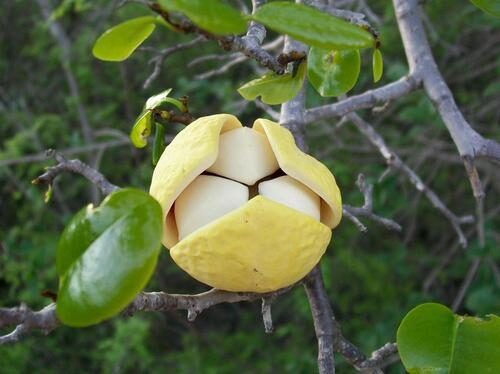
iNaturalist· cc-by-nc-sa
(c) Marco Schmidt, some rights reserved (CC BY-NC-SA), uploaded by Marco Schmidt
iNaturalist· cc-by-nc-sa
(c) Marco Schmidt, some rights reserved (CC BY-NC-SA)
Description
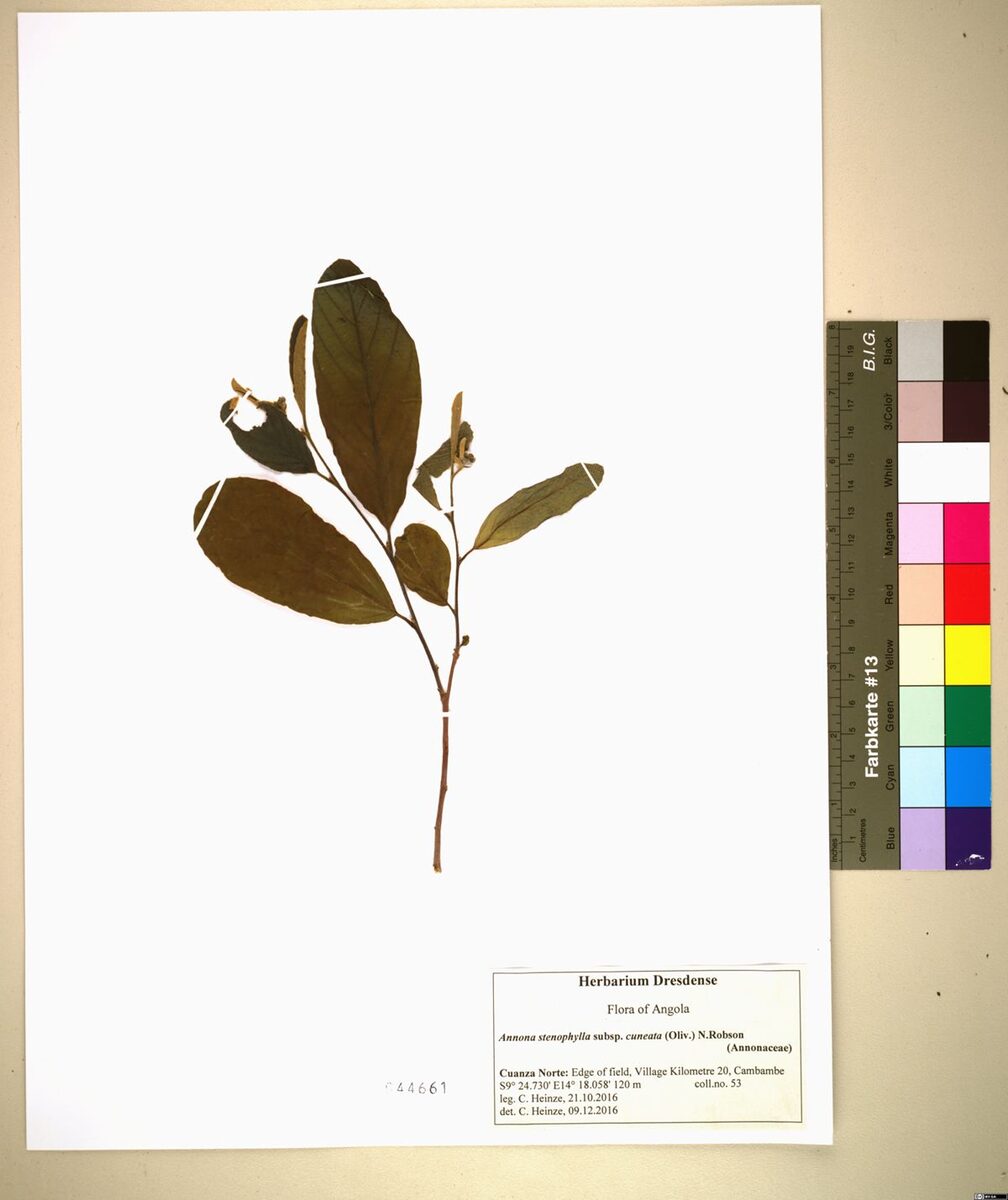
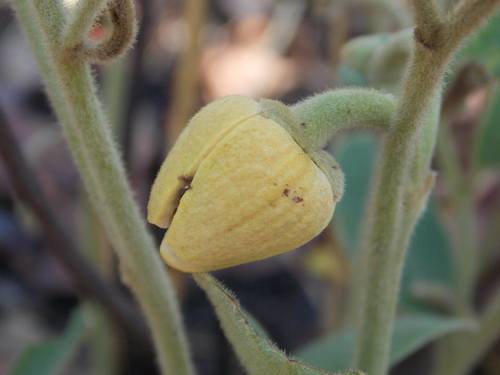
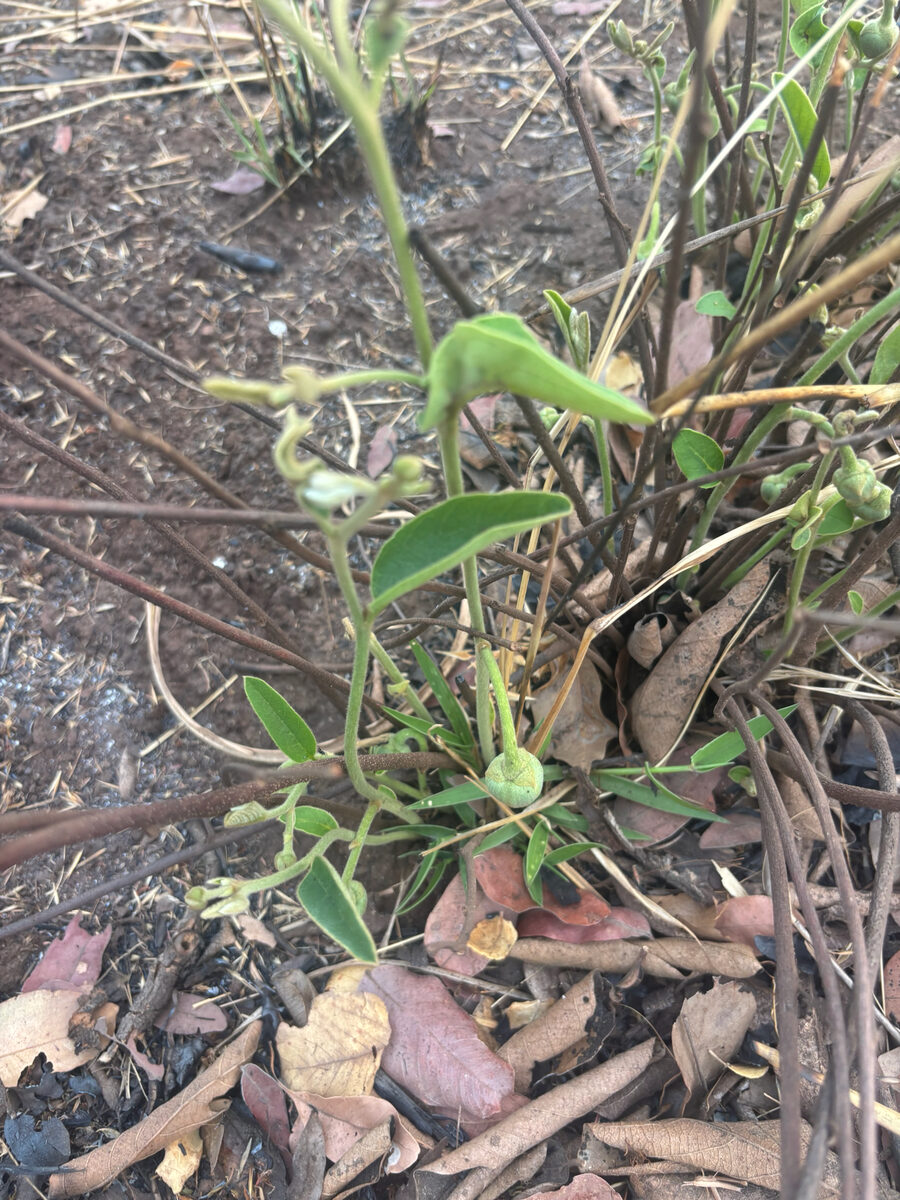
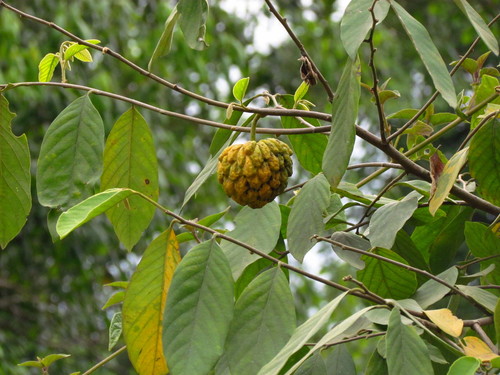
A medium sized tree. It grows up to 27 m high. The trunk can be 3 m across. The branches are horizontal. The leaves are very glossy and elongated. They are in 2 rows. The leaves are 10-25 cm long by 3-6 cm wide. They are leathery. There are 10-15 pairs of thin curving veins. The flowers are greenish-yellow. A few flowers occur in a cluster in the axils of leaves. The fruit are long and spread out from one point. They are 2.5 cm long by 1.2 mm thick. They are woody and have 2 seeds.
Edible Uses
The leaves are chewed with kola. The bark and sap-wood are turgid with sap. The bark is said to yield water when cut. The sap is reddish and looks like palm-oil and has a salty taste.
Medicinal Uses
The leaves are febrifuge and vermifuge. An infusion is used in the treatment of fevers. The infusion is sometimes combined with lemon grass (Cymbopogon spp.), papaya (Carica papaya) or other plants and used in the treatment of infective hepatitis. A decoction of the leaves is drunk and also used as a wash in the treatment of sleeping sickness. The sap is reddish and looks like palm-oil, it has a salty taste. The sap from the pounded bark, or a bark-decoction, is drunk as a treatment for tuberculosis and simple bronchial affections. The bark is steeped in cold water and taken as a purgative and to sooth colic. The pulp from the crushed bark, combined with pieces of Costus stem, is applied as a poultice on whitlows and oedemas332]. A bark-decoction is drunk, used in washes, vapour-baths and topical friction as a treatment for hunchbacks and rachitic children. The bark sap is used as a nasal instillation for treating headaches. The widespread use of the bark and leaves in local medicine merits investigation for the presence of active substances. However, bark tested for action on avian malaria showed no activity.
Distribution
It is a tropical plant. It often grows near water. It is often in swamp forests but can be in drier areas.
Where It Grows
Africa, Angola, Benin, Burkina Faso, Cameroon, Central Africa, Central African Republic, CAR, Congo R, Côte d'Ivoire, East Africa, Gabon, Ghana, Guinea, Guinée, Ivory Coast, Liberia, Nigeria, Sierra Leone, Togo, Uganda, West Africa,
Cultivation
Plants are grown from seeds. It is fast growing.
Other Uses
The bark is very fibrous and peels readily from the wood. The inner-bark yields a lace-like material which is remarkably strong, and is made into matting onto which cacao beans are spread for drying. Cordage and matting are made from the bark throughout the tree’s distribution. It is used for the brow-bands and shoulder-straps used by local people when carrying palm hampers. The bark is sometimes used to make hut-walls, partitions and sandals. The slash emits a strong spicy scent. The seeds are used as beads. The light-coloured timber is a bit woolly-textured, straight-grained, soft, light, not durable. It can be easily cut and finished smoothly. Both sap- and heart-wood have a sheen. The wood generally has properties similar to those of balsa (Ochroma sp.) and it should be suitable for the same purposes. Tree trunks are used to float heavy timber down rivers. The wood has been used as floats, to make drums, canoes and roof-beams, and is said to be suitable for joinery. At the present time there appears to be no commercial use for the timber, though it may be of value as plywood. Its capacity for very rapid growth might lend it to exploitation for pulp or cellulose production. A natural pioneer species within its native range, where it is common in disturbed forests, and rapidly colonizes abandoned areas. It is almost certainly suitable for use as a pioneer species when establishing woodland.
Synonyms
Also Known As
Am-bobel, Am-bok, Apako, Bontole, Fubamane, Igbo, Ijaw, Karakil-keng, Lupo, Moigbamei, Ojo, Otu, Pipagha, Siopiando
References (13)
- Abbiw, D.K., 1990, Useful Plants of Ghana. West African uses of wild and cultivated plants. Intermediate Technology Publications and the Royal Botanic Gardens, Kew. p 42
- Dalziel, J. M., 1937, The Useful plants of west tropical Africa. Crown Agents for the Colonies London.
- FAO Corporate Document Repository. The Major Significance of 'Minor' Forest Products. Appendix 3
- Harris, D. J., 2002, The vascular plants of the Dzanga-Sangha Reserve, Central African Republic. National Botanic Garden of Belgium, 2002. – 274 pages p 42
- Jardin, C., 1970, List of Foods Used In Africa, FAO Nutrition Information Document Series No 2.p 67
Show all 13 references Hide references
- Keay, R.W.J., 1989, Trees of Nigeria. Claredon Press, Oxford. p 19 (Drawing)
- Martin, F.W. & Ruberte, R.M., 1979, Edible Leaves of the Tropics. Antillian College Press, Mayaguez, Puerto Rico. p 175
- Monogr. afrik. Pflanzen-Fam. 6:35. 1901
- Okigbo, B.N., Vegetables in Tropical Africa, in Opena, R.T. & Kyomo, M.L., 1990, Vegetable Research and development in SADCC countries. Asian Vegetable Research and development Centre. Taiwan. p 38
- Peters, C. R., O'Brien, E. M., and Drummond, R.B., 1992, Edible Wild plants of Sub-saharan Africa. Kew. p 54
- Raponda-Walker, A & Sillans, R., 1961, Les Plantes Utiles du Gabon. Editions Paul Lechevalier, Paris. p 62 (Drawing)
- Savill, P. S. & Fox, J. E. D., Trees of Sierra Leone. p 41
- Vivien, J. & Faure, J.J., 1985, Abres des forets dense d'Afrique Centrale. Agence de Cooperation Culturelle et Technique. Paris. p 12