Combretum micranthum
G. Don
iNaturalist· cc-by-nc
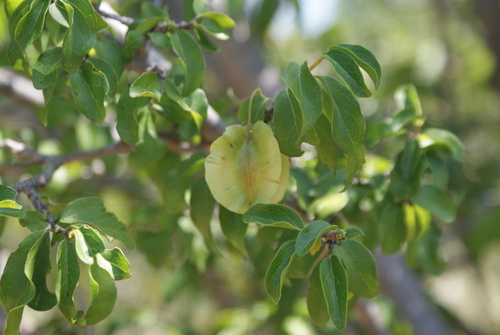
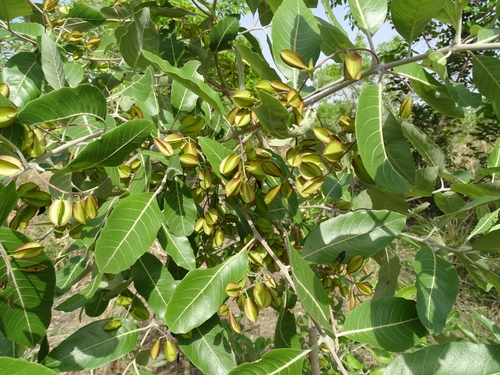
(c) Sylvain Piry, some rights reserved (CC BY-NC), uploaded by Sylvain Piry
iNaturalist· cc-by-nc
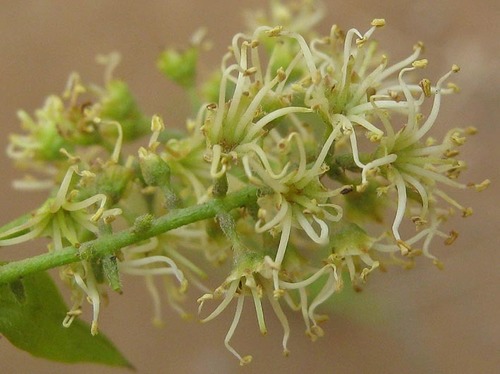
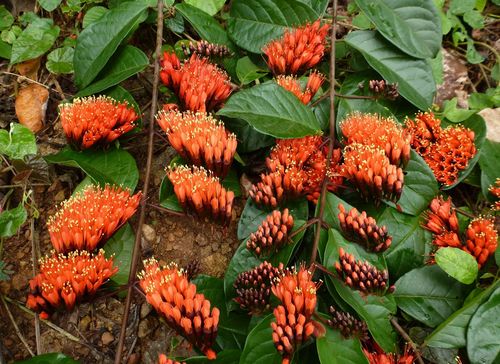
(c) Sylvain Piry, some rights reserved (CC BY-NC), uploaded by Sylvain Piry
iNaturalist· cc-by-nc-sa
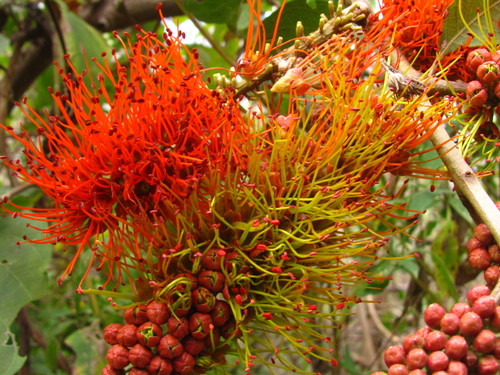
(c) Marco Schmidt, some rights reserved (CC BY-NC-SA)
Summary
Source: WikipediaCombretum micranthum is a species of flowering plant in the family Combretaceae. It is a shrub known as kinkeliba in Guinea, Benin, Burkina Faso, Senegal, Mali and the Gambia across multiple regional dialects, where it is often found in tiger bush and on hills in West Africa. It is used for making tea and has uses in traditional medicine, and is used by many West African Muslims during Ramadan to break their fast. The name kinkeliba is believed to come from the Fulani language. It is referred to as sekhew in the Wolof language and ŋɔlɔbɛ in the Bambara language.
Description
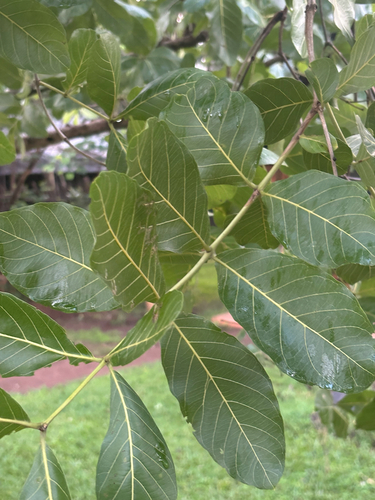
A shrub in rocky locations and a tree in woodlands. It can also be a woody creeper or vine 15-20 m long. The stem can be 10 cm across. The leaves are alternate and shiny light green when young. The leaf shape varies They are oval and taper to the tip. They are 10 cm long. The flowers are small and white. They are along stalks 2-5 cm long. The fruit are brown and have 4 wings. They are 1.5 cm across.
Edible Uses
The leaves are boiled and eaten, and the seeds are commonly eaten, particularly by children. The leaves are also used to make tea.
Traditional Uses
The leaves are boiled and eaten and used as medicine. They are also used to make tea. The seeds are eaten.
This uses section is brief — help expand it
Medicinal Uses
The branches are quite strong, and are a useful material for building stools, beds, tool handles. A tea made by steeping the leaves in boiling water is a traditional tonic drink in tropical savannah countries such as Senegal, Mali and Burkina Faso. Among West African Muslims, especially Wolofs, Fulas, and Mandinkas, the leaves, bark, and twigs of kinkeliba are harvested and sold in bundles during the dry season leading up to and during the month of Ramadan. Kinkiliba is used daily to brew a strong tea that is mixed with sugar and milk and is drunk with bread at sundown as a means of breaking the daily fast.
Distribution
A tropical plant. It grows in the Sahel and savannah in west Africa. It is drought and fire resistant. It grows in areas with a rainfall between 300-1,500 mm each year. It grows from sea level to 1,000 m altitude. It can grow in arid places.
Where It Grows
Africa, Asia, Benin, Burkina Faso, Cambodia, Central Africa, Côte d'Ivoire, Gabon, Gambia, Ghana, Guinea, Guinée, Guinea-Bissau, Indochina, Ivory Coast, Madagascar, Mali, Mauritania, Niger, Nigeria, Sahel, SE Asia, Senegal, Sierra Leone, Sudan, Vietnam, West Africa,
Cultivation
Plants can be grown by seeds and by layering.
Propagation
Seed - pre-soaking for 24 hours in water increases the rate of germination. Removing the covering structures from the seed can also improve the level of germination. Germination rates are usually high, up to 100%. The seed can be stored long-term. More than 96% germination rate was achieved from dried seeds 4 years old that had been stored at 4°C.
Other Uses
The inner bark fibres are used for binding and ropes. The timber is used like a rattan, for roof frames, for huts and lofts, basket manufacture, furniture and walking sticks. The wood is used for fuel and to make charcoal. The plant is often seen as an indicator of poor, low nutrient soils in the wild.
Other Information
The seeds are commonly eaten by boys.
Notes
There are about 255 Combretum species.
Synonyms
Also Known As
Ambate, Barcolomo, Bok, Bsala, Buchicabu, Buco, Bueco, Buok, Buoque, Butique, Cafe-bravo, Cafe, Cancaliba, Canqueliba, Cha-de-buco, Kantalma, Kinkelib, Kinkeliba, Kinkiliba, Kwando, N'babass, N'golobe, P'sangla, Quem-queleba, Tade, Upatocuma, Vor khnos
References (11)
- Belem, M., et al, 2017, Strategy of Conservation and Protection of Wild Edible Plants Diversity in Burkina Faso. ANADOLU 27 (2) 2017, 82- 90
- Burkill, H. M., 1985, The useful plants of west tropical Africa, Vol. 1. Kew.
- Catarino, L., et al, 2016, Ecological data in support of an analysis of Guinea-Bissau's medicinal flora. Data in Brief 7 (2016):1078-1097
- Diarra, N. et al, 2016, Etude ethnobotanique des plantes alimentaires utilisées en période de soudure dans les régions Sud du Mali. Int. J. Biol. Chem. Sci. 10(1): 184-197
- Edinburgh Philos. J. 11:347. 1824
Show all 11 references Hide references
- Le Houerou, H. N., (Ed.), 1980, Browse in Africa. The current state of knowledge. International Livestock Centre for Africa, Ethiopia. p 162
- Martin, F.W. & Ruberte, R.M., 1979, Edible Leaves of the Tropics. Antillian College Press, Mayaguez, Puerto Rico. p 183
- Maydell, H. von, 1990 Trees and shrubs of the Sahel: their characteristics and uses. Margraf. p 237
- Royal Botanic Gardens, Kew (1999). Survey of Economic Plants for Arid and Semi-Arid Lands (SEPASAL) database. Published on the Internet; http://www.rbgkew.org.uk/ceb/sepasal/internet [Accessed 10th April 2011]
- Turreira Garcia, N., et al, 2017, Ethnobotanical knowledgeof the Kuy and Khmer people in Prey Lang, Cambodia. Cambodian Journal of Natural History 2017 (1): 76-101
- World Checklist of Useful Plant Species 2020. Royal Botanic Gardens, Kew