Cryptocarya citriformis
(Vell.) P. L. R. Moraes
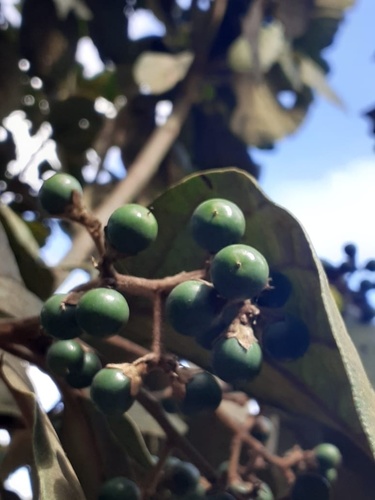
iNaturalist· cc-by
(c) Diogo Luiz, some rights reserved (CC BY)
gbif· cc-by-nc
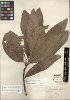
Field Museum of Natural History - Botany Department | GDI 2013-2015
gbif· cc-by-nc
Field Museum of Natural History - Botany Department | GDI 2013-2015
Description
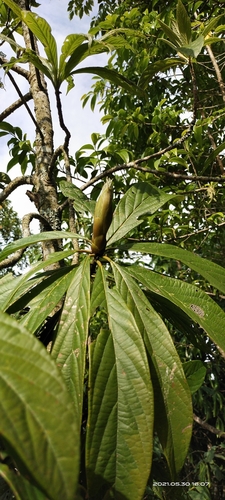
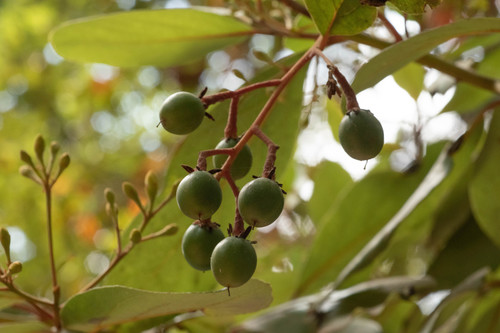
A tree. It grows 4-12 m tall. It can grow 35 m tall and the trunk be 21-56 cm across. The bark is rusty brown and rough. The leaves are alternate and oval to sword shaped. They are 5-17 cm long by 2-6 cm wide. The flowers are greenish yellow. The fruit are brown and oval. They are 4-11 cm long by 3-6 cm wide. They have broad ribs along them.
Edible Uses
The fruit is eaten.
Traditional Uses
The fruit have a sharp taste.
This uses section is brief — help expand it
Medicinal Uses
A decoction of the bark is used for washing ulcers. A decoction of the leaves is used for washing ulcers and wounds. The seeds are tonic. The powdered seeds are used in the treatment of leucorrhoea. The flesh of the fruit is very astringent.
Distribution
It is a tropical plant.
Where It Grows
Brazil, South America,
Other Uses
The wood is used for construction, general purposes etc.
Synonyms
Also Known As
Canela-abacate, Canela-branca, Canelo-do-brejo, Lombo-de-jacare, Louro-abacate
References (2)
- de Moraes, P. L. R., 2006, Taxonomy of Cryptocarya species of Brazil. State University of Campinas, Brasil. p 60
- www.colecionandofrutas.org