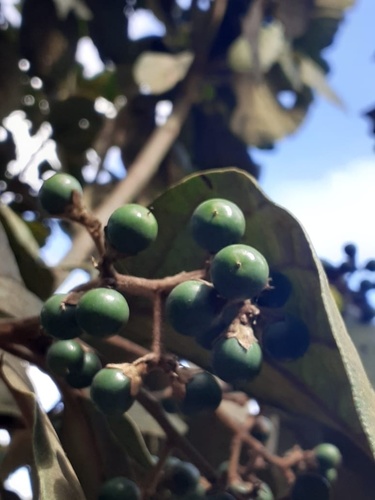
Litsea pipericarpa
(Miquel) Kosterm.
gbif· cc0
President and Fellows of Harvard College
Description
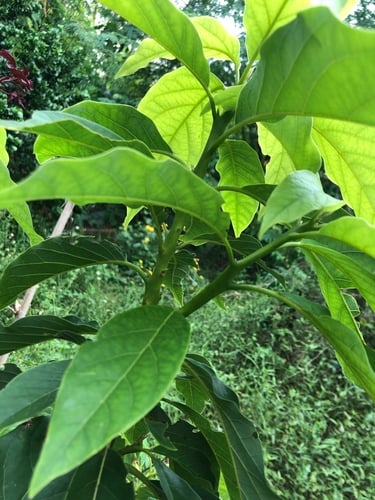
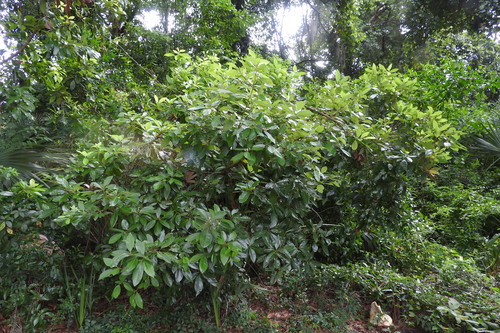
A small tree. It grows 18 m tall. It loses its leaves during the year. The bark is grey or green and smooth. The leaves are alternate. The leaf stalk is 1-2 cm long. The leaves are narrowly oval and 7-12 cm long by 2-5 cm wide. They are pointed at the base and the tip. The flowers on in stalks from the same point and in clusters in the axils of leaves. There are 1-6 flowers in each group. The fruit is a round one-seeded berry.
Edible Uses
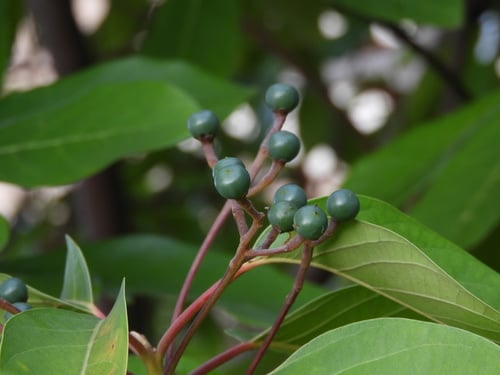
The fruits resemble peppercorns and are used similarly as a flavouring. The fruit is a 1-seeded, globose berry around 5mm in diameter, green but turning black at maturity.
Traditional Uses
The peppercorn like fruit are used as a spice or flavouring.
This uses section is brief — help expand it
Medicinal Uses
The fruits are used medicinally like cubebs (Piper cubeba) as a tonic, against indigestion, as antiseptic and diuretic.
Distribution
A tropical plant. It grows in the mountains. It often grows on land exposed from land slides. It grows in forest clearings up to 3,000 m above sea level.
Where It Grows
Asia, India, Indonesia, Malaysia, SE Asia,
Cultivation
A fast-growing species. The crushed parts of the plant (especially the bark) smell strongly of citronella or eucalyptus. A dioecious species, both male and female forms need to be grown if fruit and seed are required.
Other Uses
All parts of the plant contain an essential oil consisting of citral, citronellal, cineole and geraniol. Water distillation of the leaves yielded 1.0% of a colourless oil with a spicy-piney odour. The oil is composed predominantly of sesquiterpene hydrocarbons with the major components comprising beta-caryophyllene (32.1%) and alpha-copaene (31.4%). Water distillation of the wood yielded 0.4% of a colourless oil with a lemon-like odour. The oil was mainly made up of monoterpenes, which accounted for 89.9% of the oil. The most abundant compound, limonene, was present at a concentration of 55.4%. The seed and bark are used to make face powder. The aromatic wood can be used to make small objects. The tree has been suggested for reafforestation purposes and as a shade tree in tea plantations.
Synonyms
Also Known As
Hawa-biwa, Ki lemo, Krangeyan, Kulit antarsa, Kulit pulaga, Medang melukut, Medang serai
References (2)
- Burkill, I.H., 1966, A Dictionary of the Economic Products of the Malay Peninsula. Ministry of Agriculture and Cooperatives, Kuala Lumpur, Malaysia. Vol 2 (I-Z) p 1371
- PROSEA handbook Volume 13 Spices. p 277