Cola millenii
K. Schum.
Monkey cola
iNaturalist· cc-by-nc-sa
(c) Marco Schmidt, some rights reserved (CC BY-NC-SA), uploaded by Marco Schmidt
Description
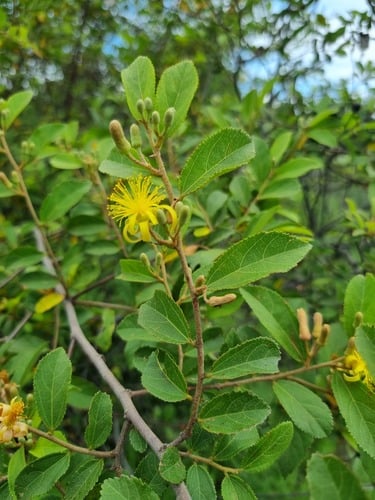
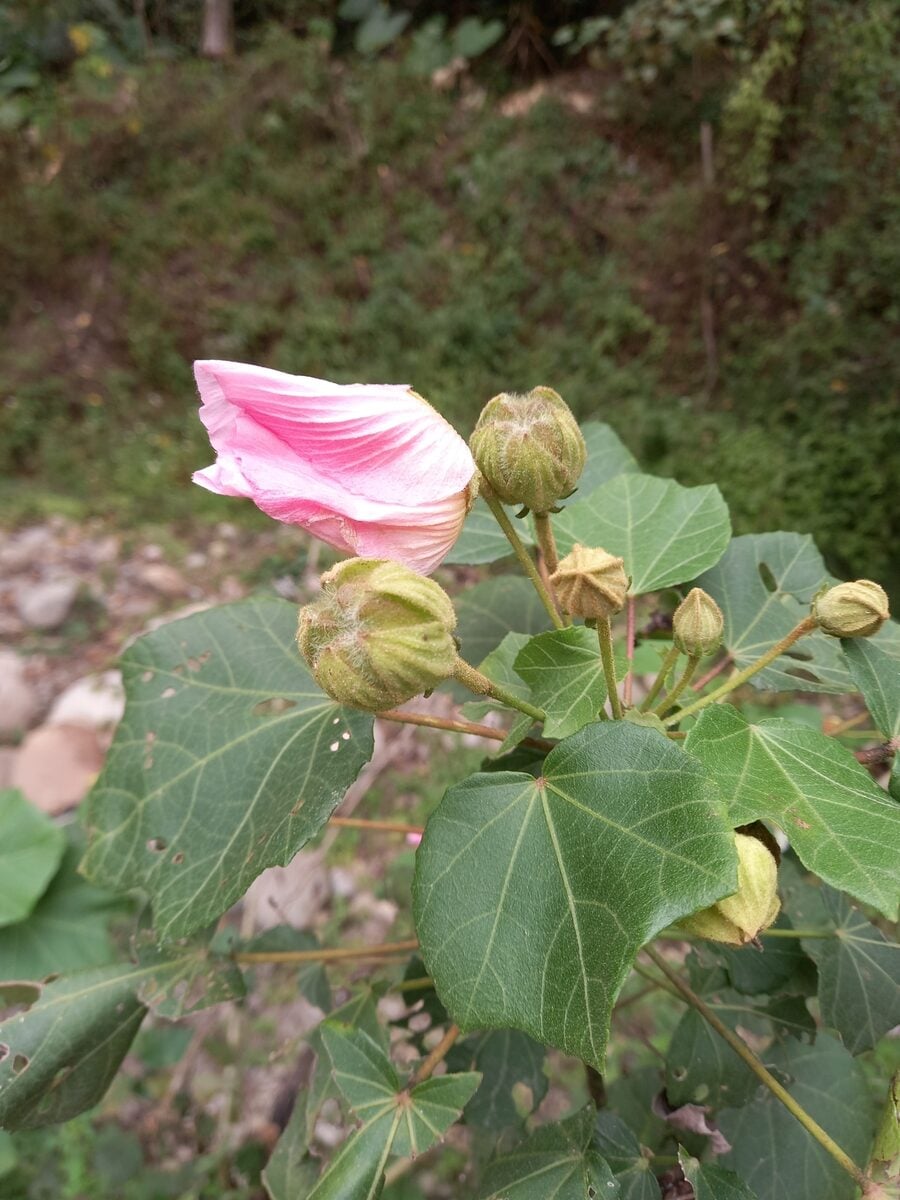
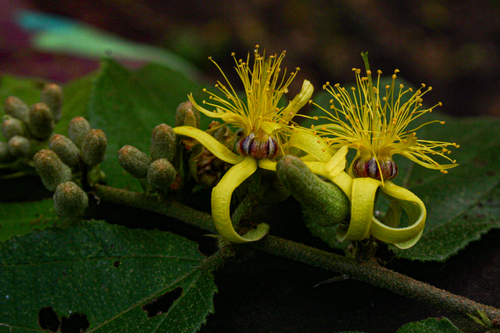
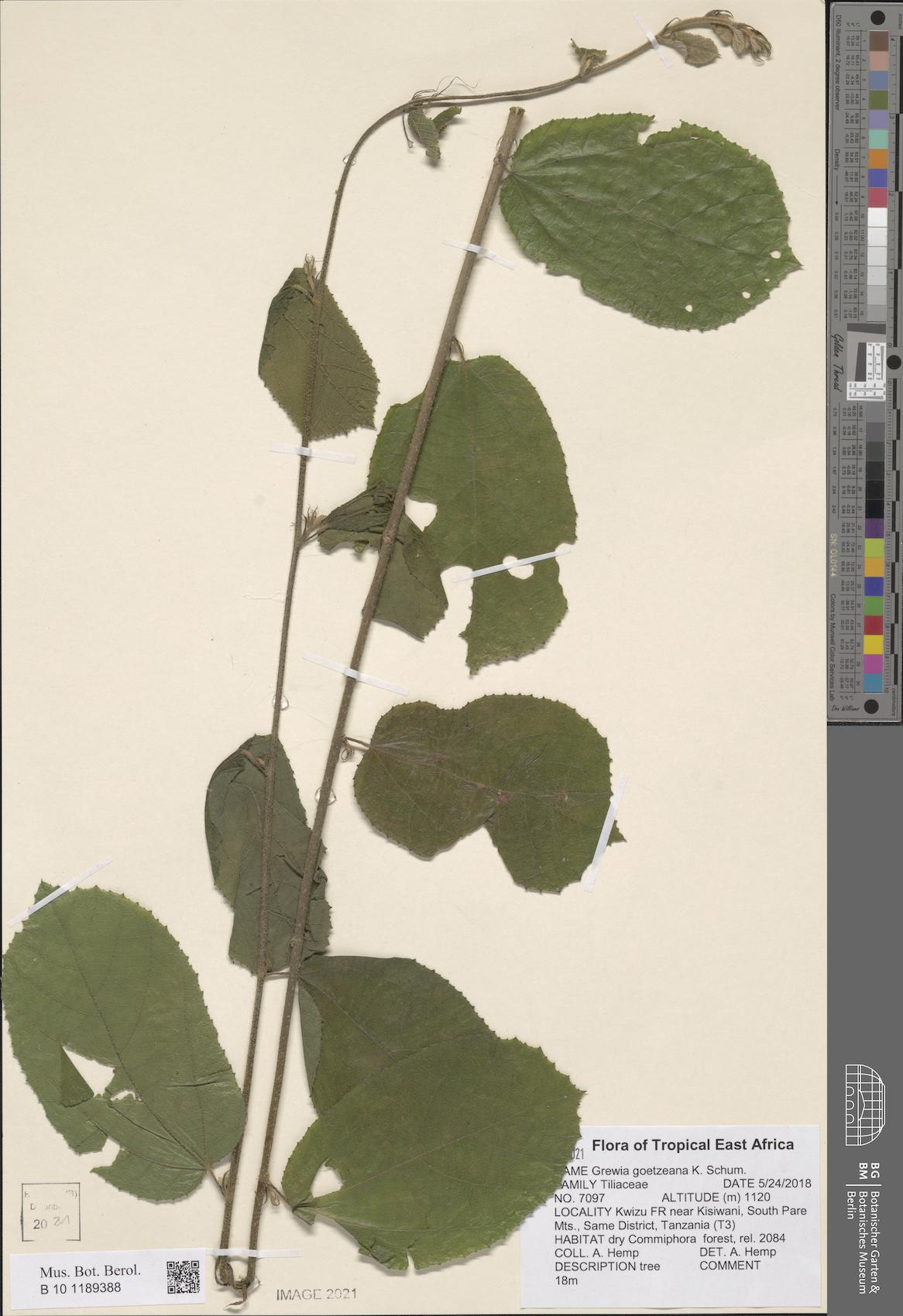
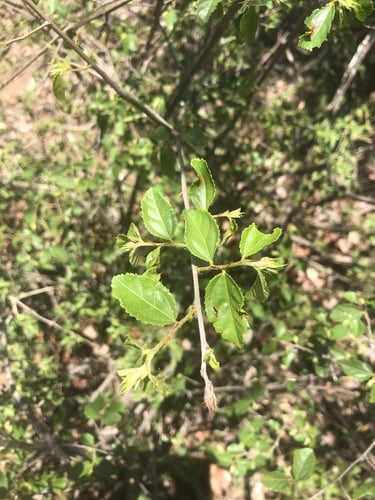
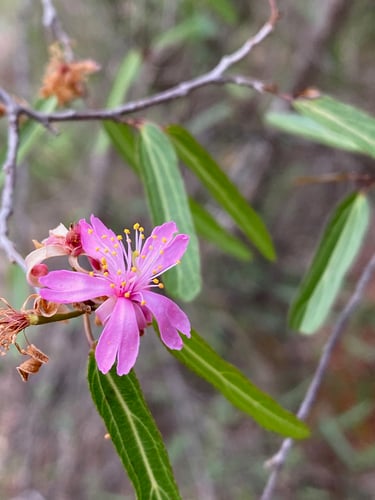
A small tree. It grows to 4-12 m high. It can be 1.5 m round. It loses its leaves during the year. The small branches are green with brown hairs. The leaves are simple and with lobes like fingers on a hand. There are usually 5 lobes. The leaves are 10-30 cm long and 10-40 cm wide. They are widely heart shaped at the base. The lobes are broad and taper to the tip. The leaf stalks are 5-32 cm long. The flowers are in short clusters in the axils of leaves. They are often red-brown outside and orange-red inside. The fruit are composed are 6-11 rich orange or pink cells. They are 8.5 cm long and 3-5 cm broad. There are 8-10 seeds in each cell.
Edible Uses
The fruit pulp is eaten fresh. The seeds, fruit, and leaves are edible portions.
Traditional Uses
The pulp of the fruit is eaten fresh.
This uses section is brief — help expand it
Medicinal Uses
The plant (part not specified) is used to treat icter and many shin diseases.
Distribution
A tropical plant. It grows in drier types of the lowland rainforest. It suits humid locations. It grows in secondary forest.
Where It Grows
Africa, Benin, Cameroon, Central Africa, Côte d'Ivoire, Ghana, Ivory Coast, Nigeria, Togo, West Africa,
Other Uses
The wood is used for carpentry and tool handles.
Notes
Also put in the family Sterculiaceae.
Nutrition
| Part | Moisture | kJ | kcal | Protein | Vit A | Vit C | Iron | Zinc |
|---|---|---|---|---|---|---|---|---|
| Seeds | 10 | — | — | 9.2 | — | — | — | — |
| Fruit | 19 | — | — | 7.4 | — | — | — | — |
Synonyms
Also Known As
Efok, Obi-edun
References (16)
- Achigan-Dako, E, et al (Eds), 2009, Catalogue of Traditional Vegetables in Benin. International Foundation for Science.
- Assogbadjo, A. E. et al, 2013, Specific Richness and Cultural Importance of Wild Edible Trees in Benin. Acta Hort. 979, ISHS 2013
- Atato, A., et al, 2010, Diversity of Edible Wild Fruit Tree Species of Togo. Global Science Books.
- Boateng, S. K., et al, 2007, Wet Season of Edible Wild Fruits in Three Regions of Ghana. Journal of Plant Sciences 2(3): 353-357
- Burkill, H. M., 1985, The useful plants of west tropical Africa, Vol. 5. Kew.
Show all 16 references Hide references
- Codjia, J. T. C., et al, 2003, Diversity and local valorisation of vegetal edible products in Benin. Cahiers Agricultures 12:1-12
- Dansi, A., et al, 2008, Traditional leafy vegetables and their use in the Benin Republic. Genet Resour Crop Evol (2008) 55:1239–1256
- Dansi, A., et al, 2009, Traditional leafy vegetables in Benin: folk nomenclature, species under threat and domestication. Acta Bot. Gallica 156(2), 183-199
- FAO Corporate Document Repository. The Major Significance of 'Minor' Forest Products. Appendix 3
- Keay, R.W.J., 1989, Trees of Nigeria. Clarendon Press, Oxford. p 133
- Menninger, E.A., 1977, Edible Nuts of the World. Horticultural Books. Florida p 41
- Nyadanu, D., et al, 2015, Agro-biodiversity and challenges of on-farm conservation: the case of plant genetic resources of neglected and underutilized crop species in Ghana. Genet. Resourc. Crop Evol. 62(7):
- Udo, E. S., et al, 2009, Life-form and Density of Valuable Non-timber Plants in Ukpom Community Forest, Akwa Ibom State, Nigeria. African Research Review 3(3) p 8
- Vivien, J., & Faure, J.J., 1996, Fruitiers Sauvages d'Afrique. Especes du Cameroun. CTA p 341
- Wickens, G.E., 1995, Edible Nuts. FAO Non-wood forest products. FAO, Rome. p154
- World Checklist of Useful Plant Species 2020. Royal Botanic Gardens, Kew