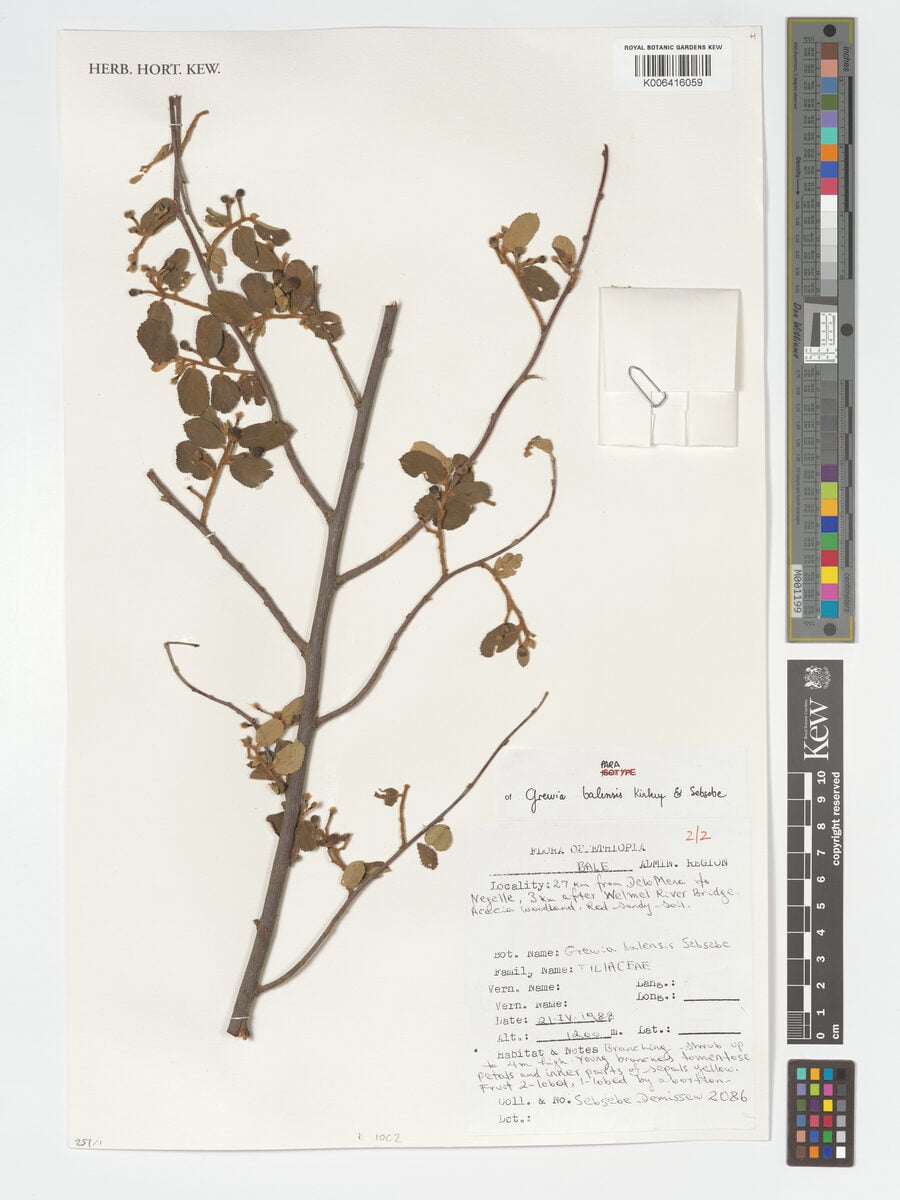
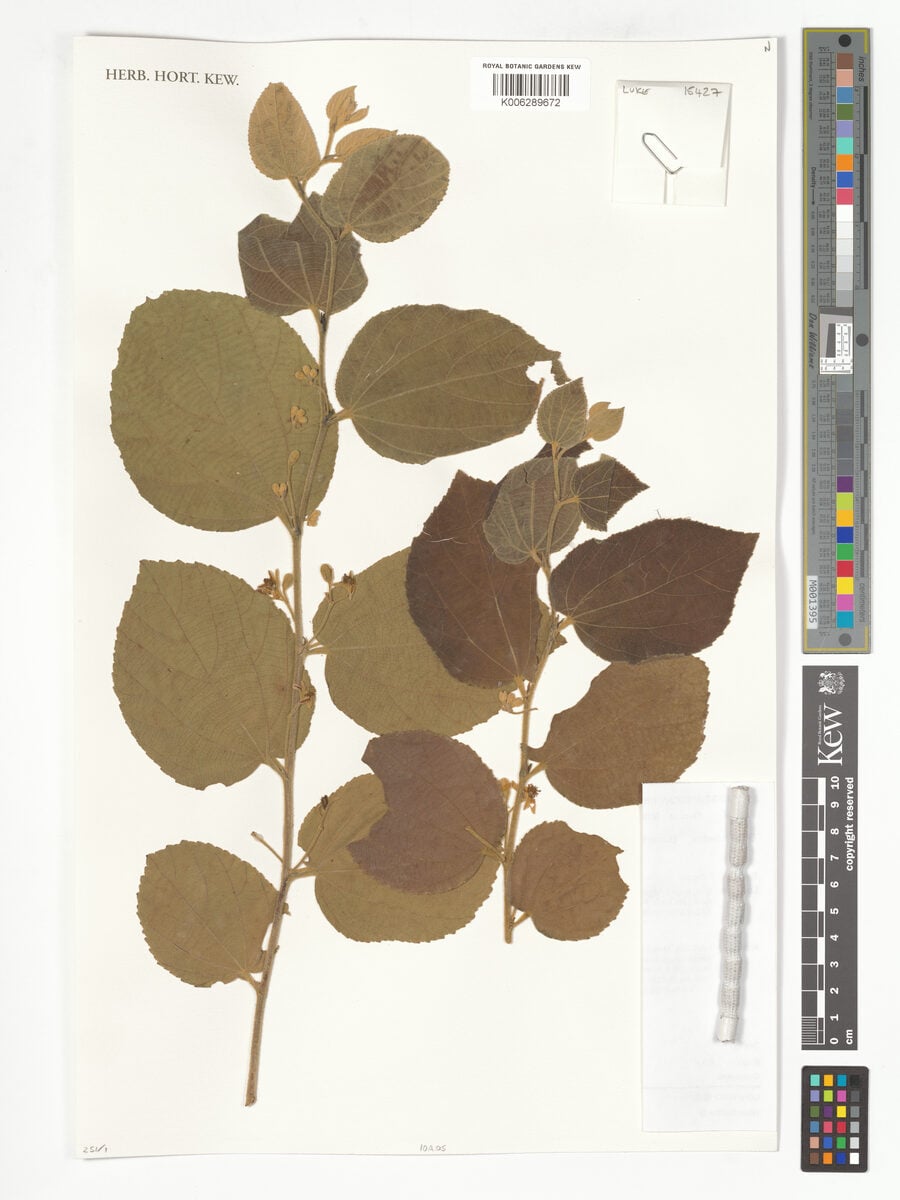
Brachychiton tuberculatus
(W. Fitzg.) C. Gardner
Bush peanut, Bush nut, Largeleaf kurrajong
iNaturalist· cc-by-nc
(c) Robyn Davies, some rights reserved (CC BY-NC)
iNaturalist· cc-by-nc
(c) Robyn Davies, some rights reserved (CC BY-NC)
iNaturalist· cc-by-nc
(c) Robyn Davies, some rights reserved (CC BY-NC)
Description
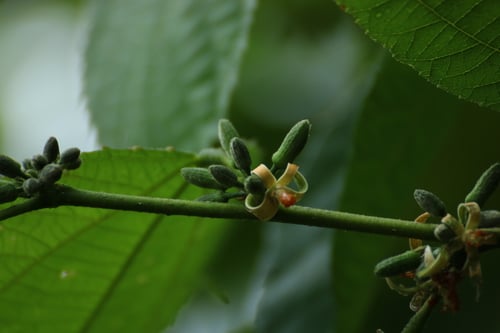
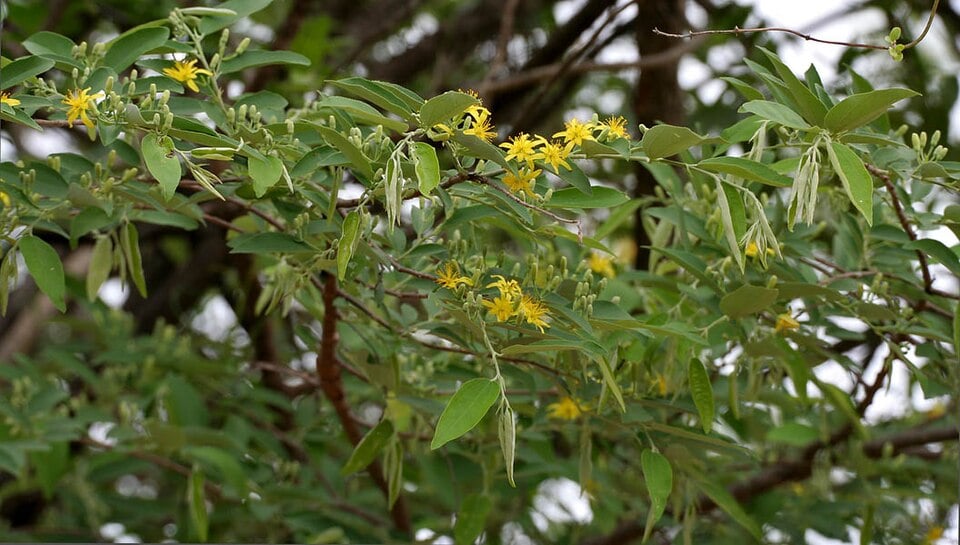
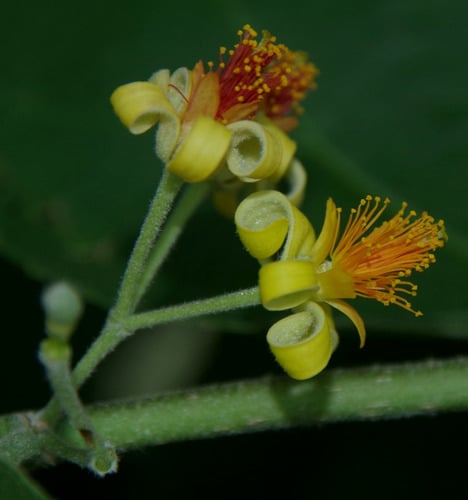
A medium sized shrub. It grows 2-7 m high and spreads 2-4 m wide. The young shoots are slightly hairy. The leaves are 11-22 cm long by 11-23 cm wide. They are fattened oval shaped or kidney shaped. They are dull green. It flowers in the dry season when the tree is leafless. The flowers are 3-4 cm across and bell shaped. They are cream-green with red blotches. The follicles are 5-7 cm long by 4-5 cm wide. They are oval and lumpy.
Edible Uses
The seeds are edible, and a gum can be harvested from the plant.
Distribution
A tropical plant. In the Kimberleys in Australia it grows on red sandy soils. It suits arid inland and tropical regions. They need a well drained soil and a sunny position.
Where It Grows
Australia*,
Cultivation
Plants are grown from seed.
Production
Plants are slow growing when young.
Notes
There are about 30 Brachychiton species. Most are in Australia. Also put in the family Sterculiaceae.
Nutrition
| Part | Moisture | kJ | kcal | Protein | Vit A | Vit C | Iron | Zinc |
|---|---|---|---|---|---|---|---|---|
| Seeds | 8.9 | 29 | 7 | — | — | 2 | — | — |
| Sap | — | — | — | — | — | — | — | — |
Synonyms
References (5)
- Bindon, P., 1996, Useful Bush Plants. Western Australian Museum. p 58
- Elliot, W.R., & Jones, D.L., 1982, Encyclopedia of Australian Plants suitable for cultivation. Vol 2. Lothian. p 367
- Paczkowska, G . & Chapman, A.R., 2000, The Western Australian Flora. A Descriptive Catalogue. Western Australian Herbarium. p 540
- Petheram, R. J. and Kok, B., 2003, Plants of the Kimberley Region of Western Australia. UWA Press p 385
- Wheeler, J.R.(ed.), 1992, Flora of the Kimberley Region. CALM, Western Australian Herbarium, p 186