Cochlospermum fraseri
Planch.
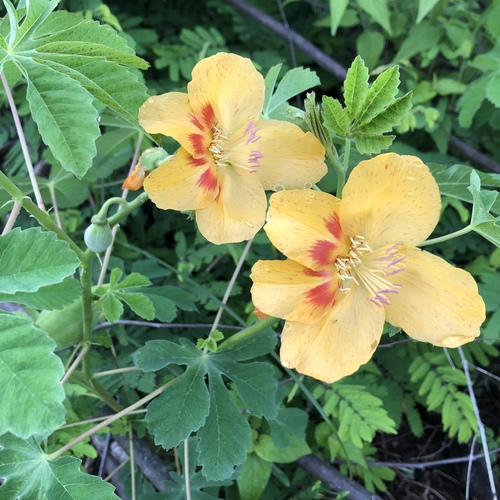
Kapok bush flowers, Yellow flowered kapok
iNaturalist· cc-by-nc
(c) Mark Hura, some rights reserved (CC BY-NC), uploaded by Mark Hura
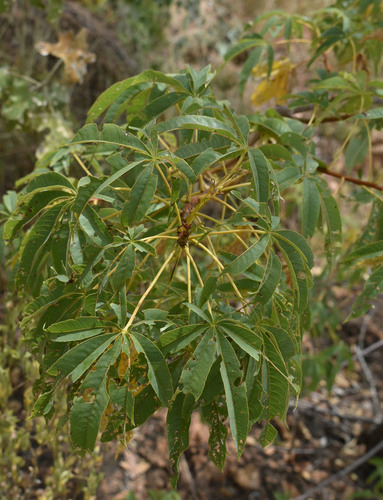
iNaturalist· cc-by
(c) Thomas Mesaglio, some rights reserved (CC BY), uploaded by Thomas Mesaglio
iNaturalist· cc-by-nc
(c) mary-a-crawf, some rights reserved (CC BY-NC)
Summary
Source: WikipediaCochlospermum fraseri is a tree in the family Bixaceae with common names cotton tree, kapok bush, and kapok tree. It is native to northwestern Australia from the Kimberly region of Western Australia to the northern parts of the Northern Territory.
Description
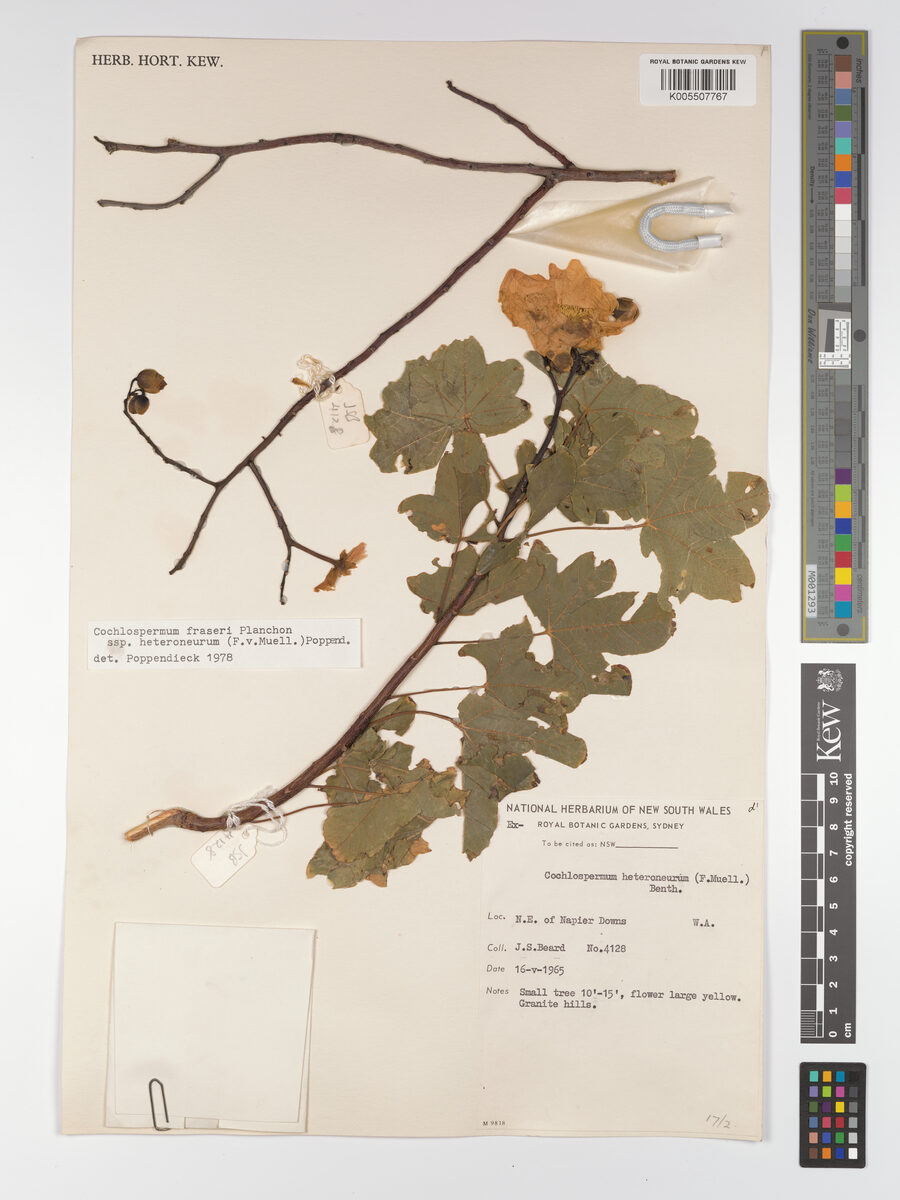
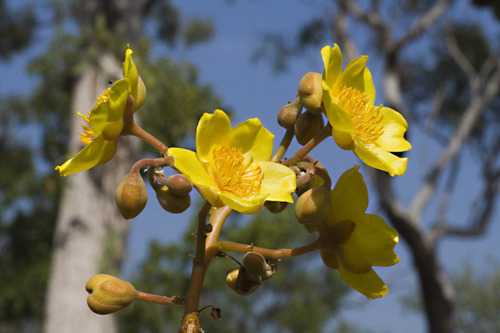
A shrub or small tree. It grows up to 6 m high. It loses its leaves during the year. The leaves have 2 lobes at the base. The blade is 5-10 cm long by 7-15 cm wide. It has 3-7 broad lobes which vary in shape. The edges of the leaf have shallow teeth. The leaf stalk is 6-13 cm long. The flowers are large and yellow. They are 5.5-8 cm across. They occur at the ends of branches in bunches 30 cm long. The fruit is a smooth long woody capsule. It is 5.5-8 cm long by 3.5-4 cm wide. It is brown and splits when ripe. There are many seeds which are kidney shaped. These are amongst a mass of cotton fibres.
Edible Uses
The indigenous people of northern Australia would eat the flowers, either raw or cooked, and the roots of young plants. They also used to use the fluff from the seeds as body decoration. This plant is a "calendar" plant of the Jawoyn people: flowering indicates when freshwater crocodiles are laying eggs, fruiting the time for collecting them.
Traditional Uses
The fattened roots or tubers of young plants are eaten. Flowers are eaten raw or cooked.
This uses section is brief — help expand it
Distribution
A tropical plant. It grows as an understorey plant in open forest. It needs well-drained soil. It grows in the tropics in Australia. It suits hardiness zones 10-12.
Where It Grows
Australia*,
Cultivation
It can be grown from seed. Seed take 1-3 months to germinate. They can also be grown from tubers. Tubers produce a number of shoots.
Propagation
Seed - best sown as soon as ripe, it can take up to 3 months to germinate. Plants quickly produce a deep taproot and so the seedlings need to be transferred to deep pots as soon as they are large enough to handle. Cuttings of leafy shoots.
Notes
There are about 12 Cochlospermum species. Also put in the family Cochlospermaceae.
Nutrition
| Part | Moisture | kJ | kcal | Protein | Vit A | Vit C | Iron | Zinc |
|---|---|---|---|---|---|---|---|---|
| Flower | 86.7 | 243 | 58 | 1.4 | — | 35 | 4.8 | 1.6 |
Also Known As
Gulun, Malindjarr
References (29)
- Brock, J., 1993, Native Plants of Northern Australia, Reed. p 124
- Cherikoff V. & Isaacs, J., The Bush Food Handbook. How to gather, grow, process and cook Australian Wild Foods. Ti Tree Press, Australia p 198
- Crawford, I. M., 1982, Traditional Aboriginal Plant Resources in the Kalumburu Area: Aspects in Ethno-economics. Records of the Western Australian Museum Supplement No. 15
- Cundall, P., (ed.), 2004, Gardening Australia: flora: the gardener's bible. ABC Books. p 398
- Elliot, W.R., & Jones, D.L., 1984, Encyclopedia of Australian Plants suitable for cultivation. Vol 3. Lothian. p 54
Show all 29 references Hide references
- Etherington, K., & Imwold, D., (Eds), 2001, Botanica's Trees & Shrubs. The illustrated A-Z of over 8500 trees and shrubs. Random House, Australia. p 219
- Flora of Australia, Volume 8, Lecythidales to Batales, Australian Government Publishing Service, Canberra (1982) p 87
- Hearne, D.A., & Rance, S.J., 1975, Trees for Darwin and Northern Australia. AGPS, Canberra p 47, Pl 11
- Hibbert, M., 2002, The Aussie Plant Finder 2002, Florilegium. p 71
- Hiddins, L., 1999, Explore Wild Australia with the Bush Tucker Man. Penguin Books/ABC Books. p 154
- Kenneally, K.E., Edinger, D. C., and Willing T., 1996, Broome and Beyond, Plants and People of the Dampier Peninsula, Kimberley, Western Australia. Department of Conservation and Land Management. p 86
- Lazarides, M. & Hince, B., 1993, Handbook of Economic Plants of Australia, CSIRO. p 62
- London J. Bot. 6:307. 1847
- Low, T., 1991, Wild Food Plants of Australia. Australian Nature FieldGuide, Angus & Robertson. p 145
- Morley, B.D., & Toelken, H.R., (Eds), 1983, Flowering Plants in Australia. Rigby. p 95
- Norrington, L., & Campbell, C., 2001, Tropical Food Gardens. Bloomings Books. p 66
- Paczkowska, G. & Chapman, A.R., 2000, The Western Australian Flora. A Descriptive Catalogue. Western Australian Herbarium. p 215
- Petheram, R.J. and Kok, B., 2003, Plants of the Kimberley Region of Western Australia. UWA Press p 299
- Smith, M & Kalotas, A. C., 1985, Bardi Plants: An Annotated List of Plants and Their Use by the Bardi Aborigines of Dampierland, in North-western Australia. Rec. West Aust. Mus. 1985, 12(3): 317-359
- Smith, Nicholas et al. 1993, Ngarinyman Ethnobotany: Aboriginal Plant Use from the Victoria River Area Northern Australia. Northern Territory Botanical Bulletin No 16. Parks and Wildlife Commission of the Northern Territory. p 16, 15
- Tiwi Plants and Animals. 2001, Aboriginal flora and fauna knowledge from Bathurst and Melville Islands, northern Australia. Northern Territory Botanical Bulletin; No. 24 p 39
- Townsend, K., 1994, Across the Top. Gardening with Australian Plants in the tropics. Society for Growing Australian Plants, Townsville Branch Inc. p 137
- Vigilante, T., et al, 2013, Island country: Aboriginal connections, values and knowledge of the Western Kimberley islands in the context of an island biological survey. Records of the Western Australian Museum Supplement 81: 145-182
- Wheeler, J.R.(ed.), 1992, Flora of the Kimberley Region. CALM, Western Australian Herbarium, p 241
- Wightman, Glenn et al. 1991.Alawa Ethnobotany: Aboriginal Plant Use from Minyerri, Northern Australia. Northern Territory Botanical Bulletin No 11. Parks and Wildlife Commission of the Northern Territory. p 10, 12
- Wightman, Glenn et al. 1992, Mangarrayi Ethnobotany: Aboriginal Plant Use from the Elsey Area Northern Australia. Northern Territory Botanical Bulletin No 15. Parks and Wildlife Commission of the Northern Territory. p 16, 17
- Wightman, Glenn et al. 1994, Gurindji Ethnobotany: Aboriginal Plant Use from Daguragu Northern Australia. Northern Territory Botanical Bulletin No 18. Parks and Wildlife Commission of the Northern Territory. p. 16, 18
- Wightman, G. & Brown, J., 1994, Jawoyn Plant Identikit, Common Useful Plants in the Katherine Area of Northern Australia. Conservation Commission Northern Territory. p 42
- Yunupinu Banjgul, Laklak Yunupinu-Marika, et al. 1995, Rirratjinu Ethnobotany: Aboriginal Plant Use from Yirrkala, Arnhem Land, Australia. Northern Territory Botanical Bulletin No 21. Parks and Wildlife Commission of the Northern Territory. p 29