Cochlearia danica
L.
Danish scurvy grass
iNaturalist· cc-by-nc
(c) Butor and Gogol, some rights reserved (CC BY-NC), uploaded by Butor and Gogol
iNaturalist· cc-by-nc-nd
(c) Bastiaan, some rights reserved (CC BY-NC-ND)
Summary
Source: WikipediaCochlearia danica, or Danish scurvygrass, is a flowering plant of the genus Cochlearia in the family Brassicaceae. A salt-tolerant (normally) coastal plant which is now flourishing along roads and motorways in Europe, especially under the crash barriers in the central reservation. Its success has been attributed to its ability to survive the effects of salts distributed by gritters in winter and its small seeds being spread by the high speed of cars in the fast lane. Full of vitamin C, it gets its name from sailors chewing it to avoid scurvy. The mauve flowers are 4-5mm in diameter.
Description
A cabbage family herb. It can grow for several years or complete its life-cycle over 2 years. It lies along the ground and has stems 20 cm long. The leaves are dark green and shiny. The leaves at the base are heart shaped with long stalks. The flowers are small and 4-5 mm across. The seed pods are round.
Edible Uses
The leaves can be eaten raw or cooked and used as a flavouring in salads. They are considered superior to C. officinalis for this purpose, though the pungent flavour is off-putting to most people. The leaves are rich in vitamin C.
Traditional Uses
The young leaves are used as a salad plant. They are also used as a potherb.
This uses section is brief — help expand it
Medicinal Uses
The leaves are a rich source of vitamin C and are used as an antiscorbutic.
Distribution
It is a temperate plant.
Where It Grows
Arctic, Britain, Europe, Ireland, Mediterranean, Portugal, Spain,
Cultivation
Prefers a damp well-drained soil. Avoids acid soils in the wild. Prefers a sandy or gritty well-drained soil. Hybridizes with C. officinalis.
Propagation
Sow seed in spring or autumn in situ. Germination usually takes place within 2–3 weeks at 15°c.
Other Uses
None known Special Uses
Synonyms
References (6)
- Facciola, S., 1998, Cornucopia 2: a Source Book of Edible Plants. Kampong Publications, p 57
- Hedrick, U.P., 1919, (Ed.), Sturtevant's edible plants of the world. p 207
- Irving, M., 2009, The Forager Handbook, A Guide to the Edible Plants of Britain. Ebury Press p 88
- Michael, P., 2007, Edible Wild Plants and Herbs. Grub Street. London. p 208
- Plants for a Future database, The Field, Penpol, Lostwithiel, Cornwall, PL22 0NG, UK. http://www.scs.leeds.ac.uk/pfaf/
Show all 6 references Hide references
- Seidemann J., 2005, World Spice Plants. Economic Usage, Botany, Taxonomy. Springer. p 113
More from Brassicaceae
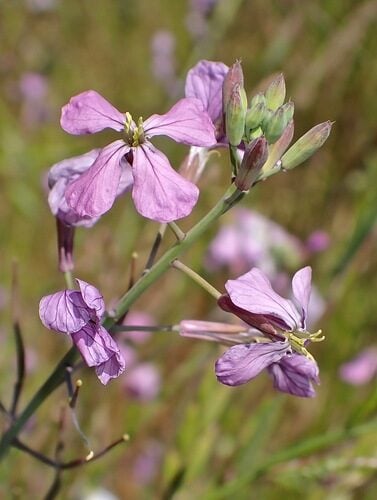
Raphanus raphanistrum
Wild radish, Jointed charlock, White charlock
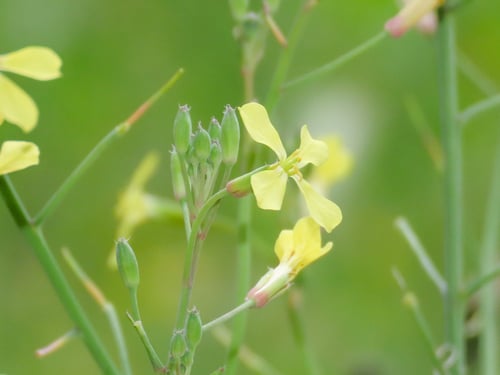
Raphanus raphanistrum subsp. landra
Sea radish, Black radish, Spanish radish
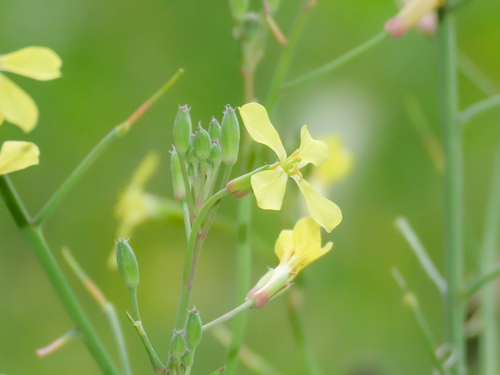
Raphanus raphanistrum subsp. rostratus
Fijjaileh
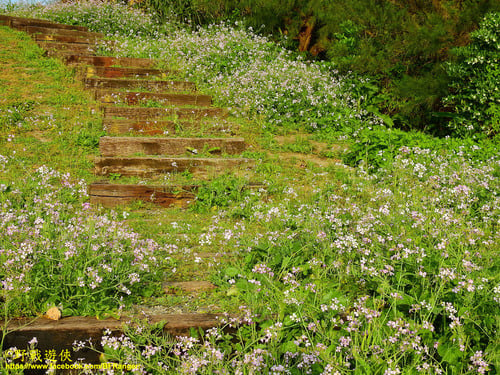
Raphanus sativus
Radish
Raphanus sativus caudatus - (L.)L.H.Bailey.
Rat-Tail Radish
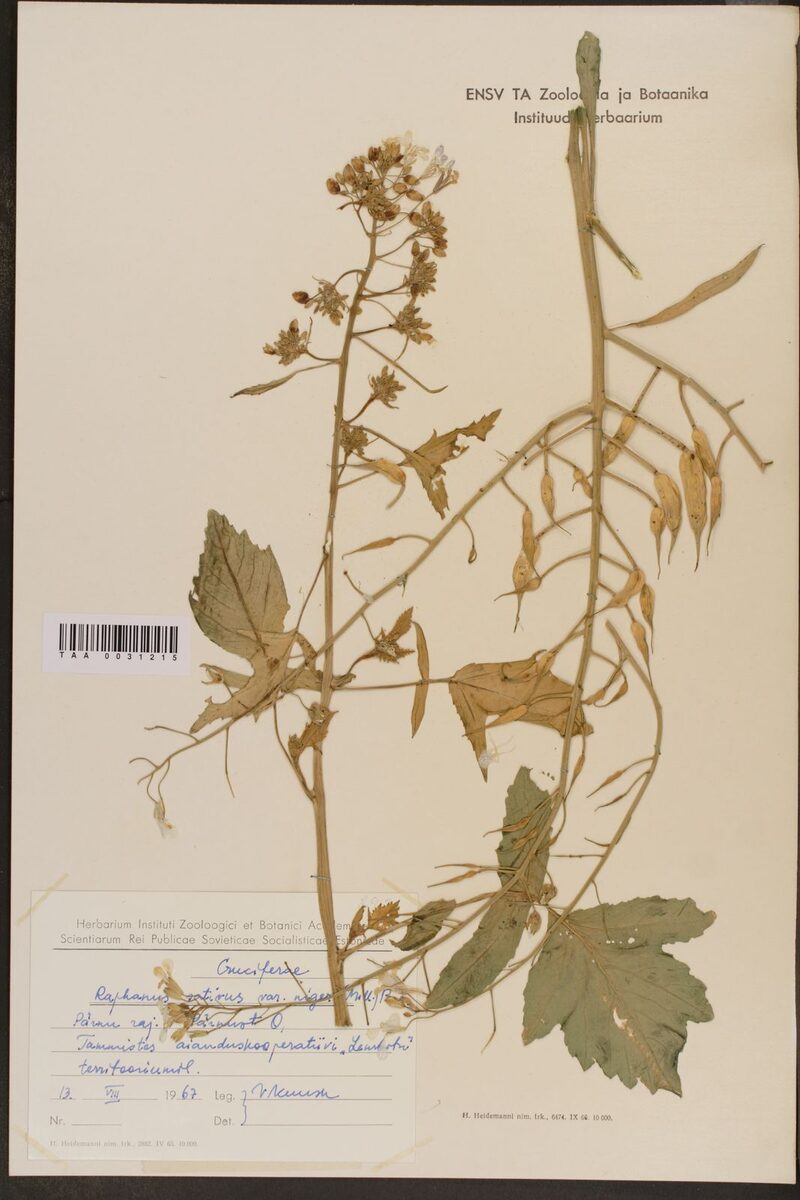
Raphanus sativus niger
Oriental Radish