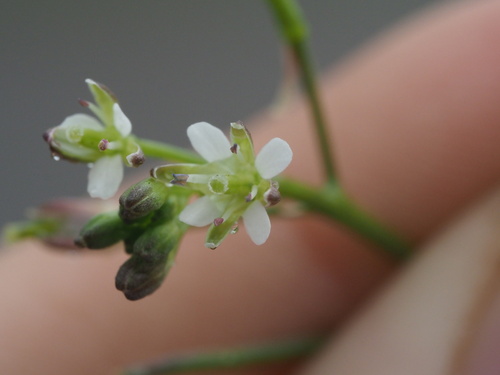
Cardamine bulbifera
(L.) Crantz.
Coral root
iNaturalist· cc-by-nc
(c) Leonid Rasran, some rights reserved (CC BY-NC), uploaded by Leonid Rasran
iNaturalist· cc-by-nc
(c) else15, some rights reserved (CC BY-NC), uploaded by else15
iNaturalist· cc-by-nc
(c) Degtyarev Nikolai Ivanovich, some rights reserved (CC BY-NC), uploaded by Degtyarev Nikolai Ivanovich
Summary
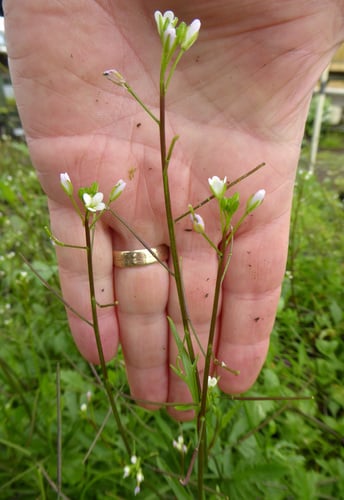
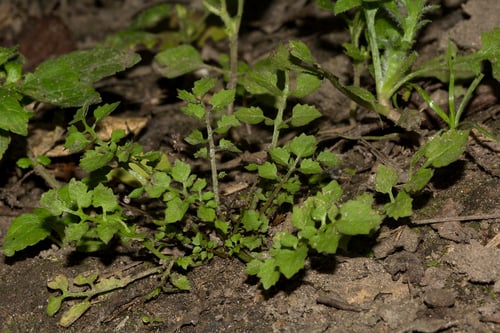
Source: WikipediaCardamine bulbifera, known as coralroot bittercress or coral root, is a species of flowering plant in the family Brassicaceae. It is a perennial with upright, mostly unbranched, stems to 70 cm (28 in) tall, and leaves made up of between three and 13 leaflets. At the base of each leaf there are bulbils which can fall off and grow into new plants. The flowers have petals that are 10–15 mm (0.4–0.6 in) long collected in corymbose few-flowered racemes and are generally light purple, pink or almost white. It is found in damp places.
Description
Cardamine bulbifera is a perennial growing to 0.5 m tall, hardy to UK zone 4 and not frost tender. Flowers April to June with seeds ripening May to July. Hermaphroditic and self-fertile, insect-pollinated. Tolerates light sandy, medium loamy, and heavy clay soils, including very alkaline soils. Grows in semi-shade or full sun and prefers moist soil.
Edible Uses
The leaves can be eaten raw or cooked and have a hot, cress-like flavour. The bulbils are also edible raw or cooked; they are quite small — roughly the size of a lentil — but have a pleasant, mild cress-like flavour. The root can be eaten raw or cooked as well; it has a hot flavour and is pleasant, though it is rather small.
Medicinal Uses
None known.
Distribution
It is a temperate plant.
Where It Grows
Britain, Europe, Luxembourg, Slovenia,
Propagation
Seed is best sown when ripe, or in spring if that is not possible. Where seed is plentiful it can be sown in situ; otherwise sow in pots in a cold frame and prick out seedlings into individual pots when large enough to handle, planting out in summer. Bulbils can be collected in early summer and potted up, overwintered in a cold frame, and planted out when in active growth in spring.
Other Uses
None known.
Notes
There are about 160 Cardamine species. They are mostly in damp places in temperate regions.
Synonyms
Also Known As
Brstična konopnica
References (2)
- Plants for a Future database, The Field, Penpol, Lostwithiel, Cornwall, PL22 0NG, UK. http://www.scs.leeds.ac.uk/pfaf/
- www.theplantlist.org