Peponium vogelii
(Hook. f.) Engl.
iNaturalist· cc-by-nc
(c) breslauer, some rights reserved (CC BY-NC), uploaded by breslauer
iNaturalist· cc-by-nc
(c) flovh, some rights reserved (CC BY-NC)
Description
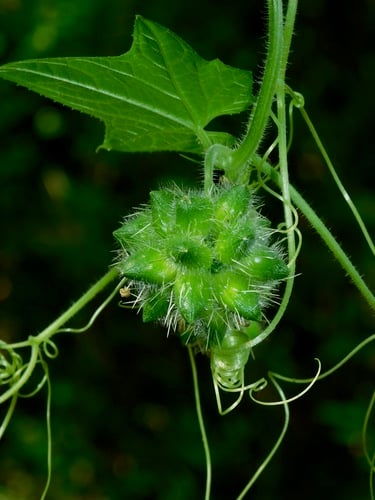
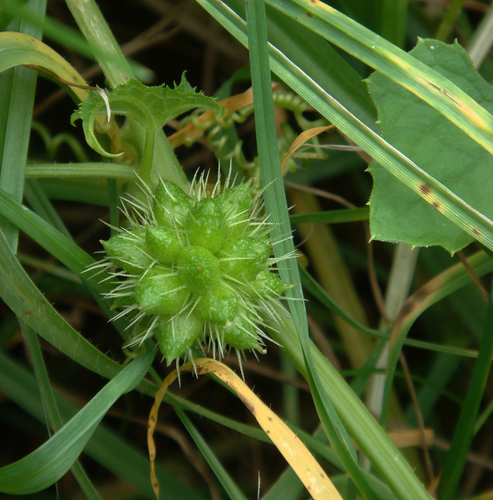
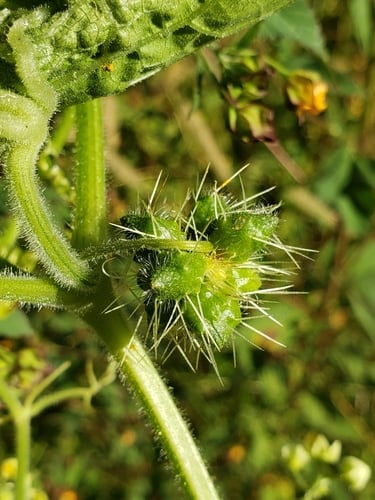
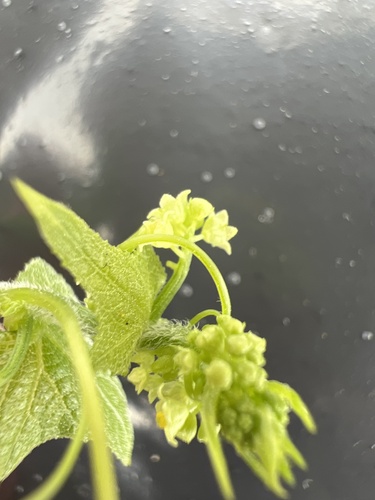
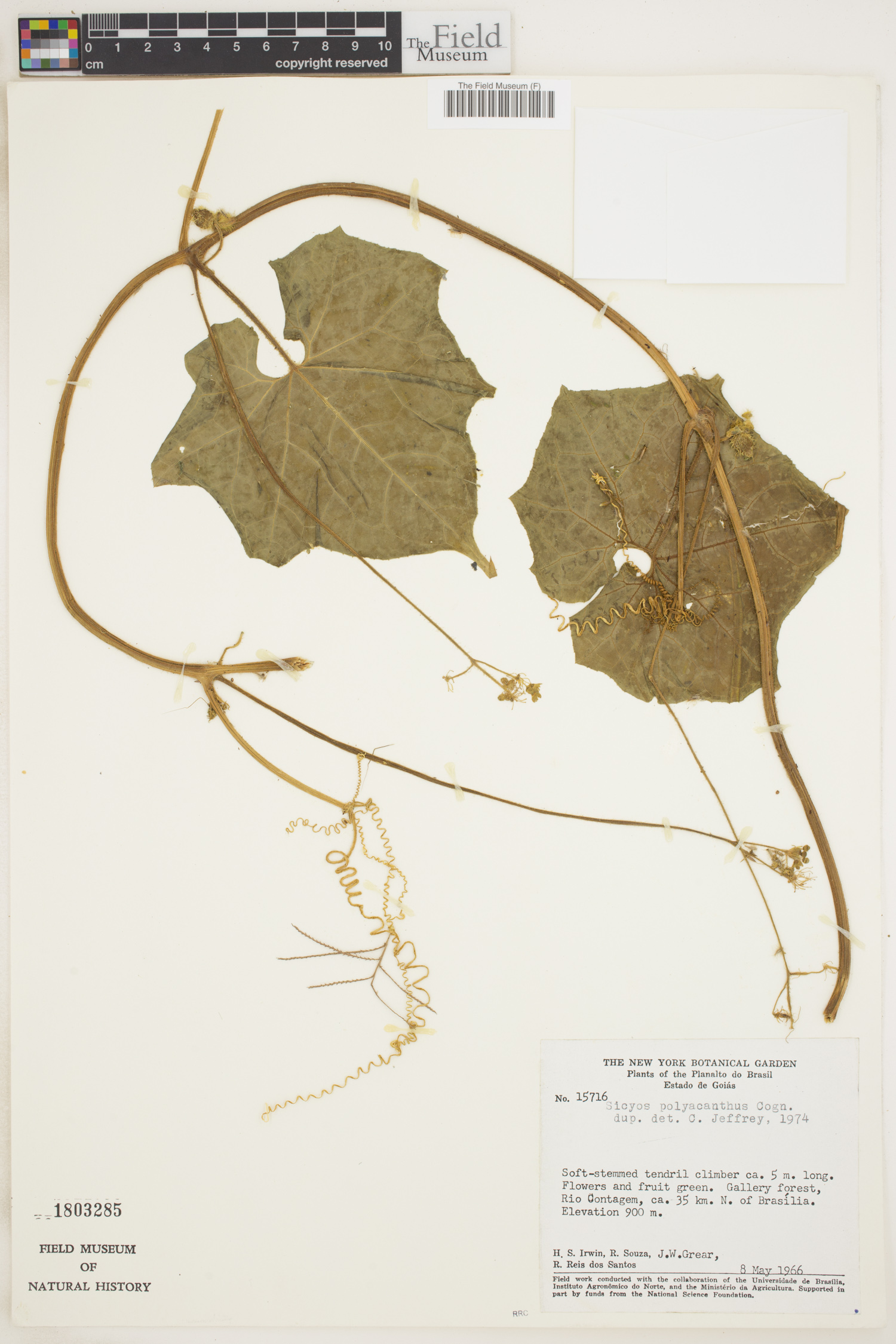
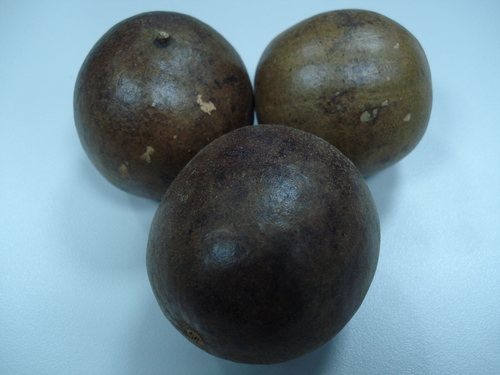
A climbing herb. A pumpkin family plant. It can grow 8 m long. It is roughly hairy on all parts. The tendrils are divided into 2. The leaves vary. They have 5 lobes and are 5-18 cm long by 7-26 cm wide. There are sharp teeth along the edge. The leaf stalk is 2-13 cm long. The flowers are bright yellow. The male flowers are along a stalk 8-36 cm long. They have green to yellow bracts 3 cm long. The flowers are 4-8 cm across. They have a sweet scent and open at night. The female flowers are also on long stalks. The fruit stalks are 7 cm long. The fruit have a bright red and hairy skin. The fruit are 15 cm long. They can be orange with green streaks. The seeds are small and dark.
Edible Uses
The unripe fruits are bitter but become sweet when ripe, and can be eaten raw or cooked. The fruits are particularly popular with children and serve as a famine food.
Traditional Uses
The unripe fruit are bitter but ripe fruit are sweet. They are eaten raw. They are also cooked.
This uses section is brief — help expand it
Medicinal Uses
The leaves are used as a treatment for menstrual problems. The pulped-up leaves are used as a poultice to maturate abscesses and furuncles. The dried, powdered leaves are rubbed into scarifications when treating leprosy. The fruits are eaten as a treatment for stomach-ache.
Known Hazards
The root and the unripe fruits are said to be toxic.
Distribution
A tropical plant. It grows in lowland and mountain rain-forest in West and Central Africa. It grows between 1,500-2,100 m above sea level.
Where It Grows
Africa, Angola, Benin, Central Africa, Congo, East Africa, Equatorial Guinea, Ethiopia, Ghana, Kenya, Malawi, Mozambique, Nigeria, Sao Tome and Principe, Seychelles, South Africa, Southern Africa, Tanzania, Uganda, West Africa,
Cultivation
Plants can be grown by seeds.
Production
Ripe fruit are collected during the rainy season.
Other Information
The fruit are eaten especially by children. It is a famine food.
Notes
There are about 20 Peponium species.
Synonyms
Also Known As
Antomona, Bukee sexana, Entach, Ikurshaeti, Jojo, Kaktesui, Oltulet-lolowuaru, Tojo
References (23)
- Anywar, G., et al, 2014, Wild Plants Used as Nutraceuticals from Nebbi District, Uganda. European Journal of medicinal Plants. 4(6):641-660
- Asfaw, Z. and Tadesse, M., 2001, Prospects for Sustainable Use and Development of Wild Food Plants in Ethiopia. Economic Botany, Vol. 55, No. 1, pp. 47-62
- Burkill, H. M., 1985, The useful plants of west tropical Africa, Vol. 1. Kew.
- Edwards. S., et al, (Eds), 1995, Flora of Ethiopia and Eritrea. Vol.2, Part 2 Canellaceae to Euphorbiaceae. Uppsala, Sweden. p 64
- H. G. A. Engler & K. A. E. Prantl, Nat. Pflanzenfam. Nachtr. 1:318. 1897
Show all 23 references Hide references
- Glover, et al, 1966b,
- Grivetti, L. E., 1980, Agricultural development: present and potential role of edible wild plants. Part 2: Sub-Saharan Africa, Report to the Department of State Agency for International Development. p 44
- Grubben, G. J. H. and Denton, O. A. (eds), 2004, Plant Resources of Tropical Africa 2. Vegetables. PROTA, Wageningen, Netherlands. p 564
- Ichikawa, M., 1980, The Utilization of Wild Food Plants by the Suiei Dorobo in Northern Kenya. J. Anthrop. Soc. Nippon. 88(1): 25-48
- Jardin, C., 1970, List of Foods Used In Africa, FAO Nutrition Information Document Series No 2.p 154
- Lulekal, E., et al, 2011, Wild edible plants in Ethiopia: a review on their potential to combat food insecurity. Afrika Focus - Vol. 24, No 2. pp 71-121
- Mbuvi, M. T. E., et al, 2019, Annonated checklist of plant species of Loita Forest Narok County, Kenya. Int. J. Adv. Res. Biol. Sci. (2019). 6(3): 54-110
- Mutie, F. G., 2020, Conservation of Wild Food Plants and Their Potential for Combatting Food Insecurity in Kenya as Exemplified by the Drylands of Kitui County. Plants 2020, 9, 1017
- Mutie, F. M., et al, 2023, Important Medicinal and Food Taxa (Orders and Families) in Kenya, Based on Three Quantitative Approaches. Plants 2023, 12, 1145
- Newman, 1970,
- Njoroge, G. & Newton, L. E. 1994, Edible and Poisonous Species of Cucurbitaceaea in the Central Highlands of Kenya. Journal of East African Natural History. 83:101-115
- Peters, C. R., O'Brien, E. M., and Drummond, R.B., 1992, Edible Wild plants of Sub-saharan Africa. Kew. p 103
- Reis, S. V. and Lipp, F. L., 1982, New Plant Sources for Drugs and Foods from the New York Botanical Garden herbarium. Harvard. p 297 (As Peponium kilimandscharicum)
- Regassa, T., et al, 2014, Ethnobotany of Wild and Semi-Wild Edible Plants of Chelia District, West-Central Ethiopia. Science, Technology and Arts Research Journal. 3(4): 122-134
- Senbeta, F. et al, 2013, Diversity of Useful Plants in the Coffee Forests of Ethiopia. Ethnobotany Research & Applications 11:049-069
- White, F., Dowsett-Lemaire, F. and Chapman, J. D., 2001, Evergreen Forest Flora of Malawi. Kew. p 218
- World Checklist of Useful Plant Species 2020. Royal Botanic Gardens, Kew
- Yimer, A., et al, 2021, Ethnobotanical study of wild edible plants used by Meinit Ethnic Community at Bench-Maji Zone, Southwest Ethiopia. Research Square. p 5