Claytonia caroliniana
Michx.
Carolina spring beauty, Broad-leaved spring beauty
iNaturalist· cc-by-nc
(c) Fhar Miess, some rights reserved (CC BY-NC)
iNaturalist· cc-by-nc
(c) Fhar Miess, some rights reserved (CC BY-NC)
iNaturalist· cc-by-nc
(c) Rodney Haynes, some rights reserved (CC BY-NC)
Summary
Source: WikipediaClaytonia caroliniana, the Carolina springbeauty, is an herbaceous perennial in the family Montiaceae. It was formerly placed in the Portulacaceae. Its native range is eastern and central North America. It is most commonly found in the New England area of the United States but its habitat extends from Ontario and a northern limit in the Cape Anguille Mountains of Newfoundland and south to Alabama. It grows approximately 6 inches tall in forests of the Appalachian Mountains and piedmont
Description
A herb. It has a deep bulb like corm. There are usually 1-2 leaves at the base. These are 7-15 cm long. The leaves on the stem are opposite. The stems are 25 cm tall. The flowers are 8-12 mm across.
Edible Uses
The starchy root can be eaten raw or cooked like potatoes and has a pleasant nutty flavour. Leaves and stems are also edible raw or cooked, though their flavour is very mild and they are best mixed with stronger-tasting leaves.
Traditional Uses
The bulbs or corms are cooked and eaten. The stems and leaves are steamed then used as a potherb.
This uses section is brief — help expand it
Medicinal Uses
None known
Distribution
It is a temperate plant. It grows in moist rich forests and wetlands. It can grow from low elevations to mountain regions. It suits hardiness zones 4-9.
Where It Grows
Canada, North America, USA,
Cultivation
Prefers a damp peaty soil and a position in full sun. Requires a lime-free soil. Ephemeral emerging in spring and dying back by summer every year. A clumping mat former. Forming a dense prostrate carpet spreading indefinitely.
Propagation
Surface sow seed on a peat-based compost in spring in a cold frame. Germination usually takes place within 2–4 weeks at 10°C. When large enough to handle, prick seedlings out into individual pots and grow on in the cold frame for at least their first winter. Plant out in late spring or early summer after the last expected frosts. Offsets can also be divided in spring or autumn.
Other Uses
None known
Notes
They have also been put in the family Portulacaceae.
References (10)
- Elias, T.S. & Dykeman P.A., 1990, Edible Wild Plants. A North American Field guide. Sterling, New York p 92
- Facciola, S., 1998, Cornucopia 2: a Source Book of Edible Plants. Kampong Publications, p 187
- Hedrick, U.P., 1919, (Ed.), Sturtevant's edible plants of the world. p 202
- Jackes, D. A., Edible Forest Gardens
- Kermath, B. M., et al, 2014, Food Plants in the Americas: A survey of the domesticated, cultivated and wild plants used for Human food in North, Central and South America and the Caribbean. On line draft. p 240
Show all 10 references Hide references
- Lim, T. K., 2015, Edible Medicinal and Non Medicinal Plants. Volume 9, Modified Stems, Roots, Bulbs. Springer p 24
- MacKinnon, A., et al, 2009, Edible & Medicinal Plants of Canada. Lone Pine. p 205
- Plants for a Future database, The Field, Penpol, Lostwithiel, Cornwall, PL22 0NG, UK. http://www.scs.leeds.ac.uk/pfaf/
- Tozer, F., 2007, The Uses of Wild Plants. Green Man Publishing. p 70
- www.wildediblefood.com
More from Montiaceae
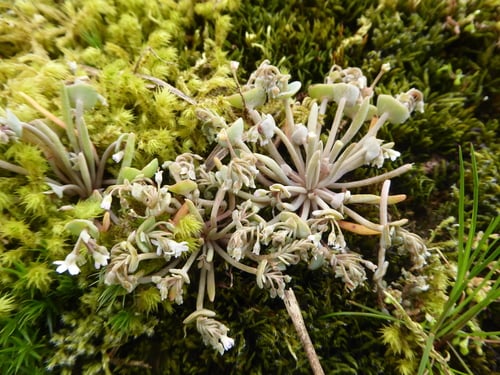
Claytonia exigua
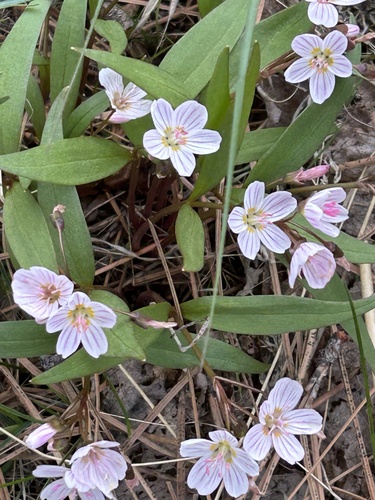
Claytonia lanceolata
Western spring beauty, Lanceleaf spring beauty
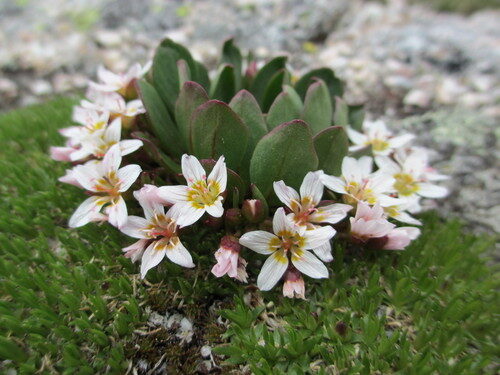
Claytonia megarhiza
Alpine spring beauty, Thick-rooted spring beauty
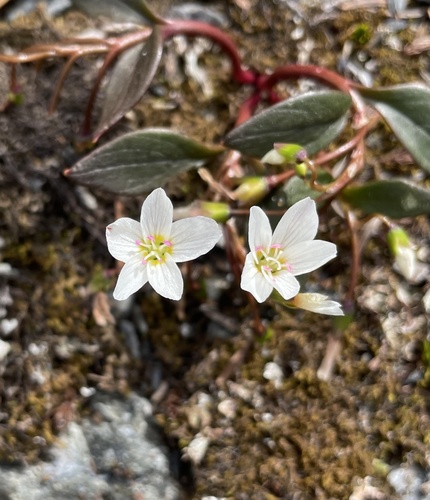
Claytonia multiscapa
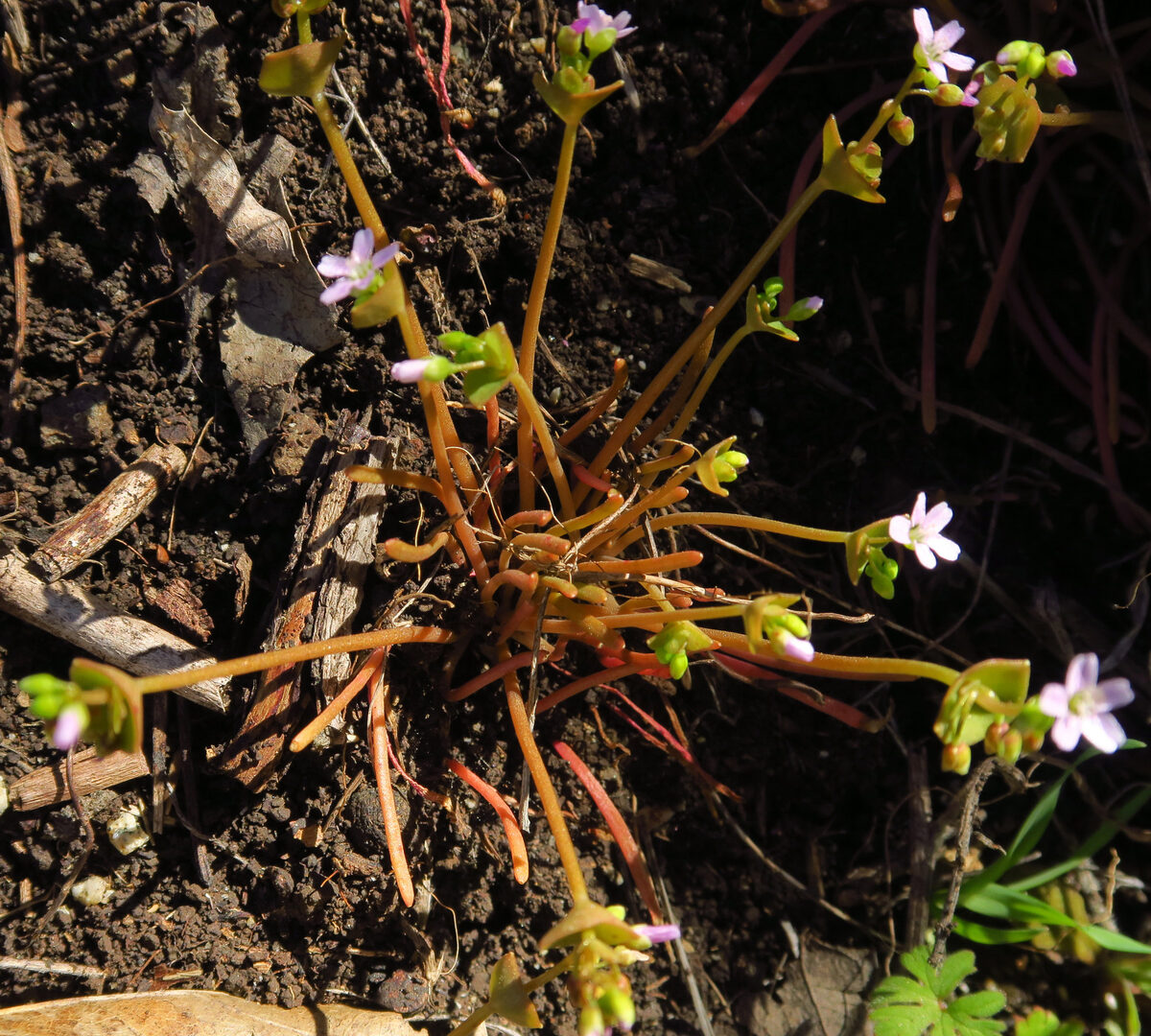
Claytonia parviflora ssp. parviflora
Indian Lettuce
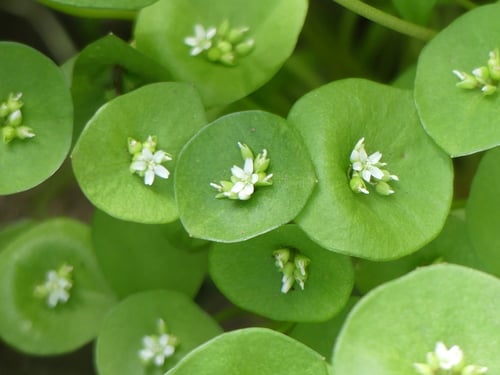
Claytonia perfoliata
Spring beauty, Cuban spinach, Petota, Miner's lettuce