Claytonia acutifolia
Pall. ex Willd.
Bering Sea spring beauty, Siberian narrow-leafed spring beauty
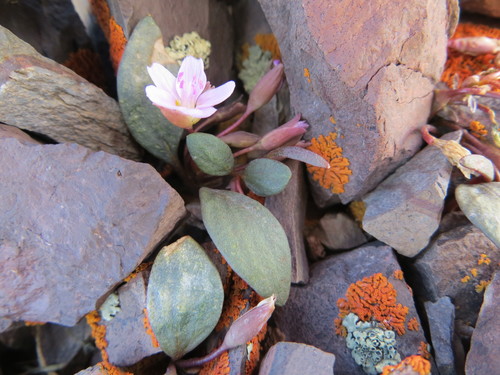
iNaturalist· cc-by-nc
(c) frankdoubleyou, some rights reserved (CC BY-NC), uploaded by frankdoubleyou
iNaturalist· cc-by-nc
(c) frankdoubleyou, some rights reserved (CC BY-NC)
Summary
Source: WikipediaClaytonia acutifolia is a perennial reaching 0.2 m (0ft 8in) tall. Flowers appear May to July with seeds ripening in May. The plant is hermaphroditic, insect-pollinated, and requires full sun. It prefers light to medium well-drained soils, tolerating mildly acid to very acid pH, and requires moist conditions.
Description
A herb that keeps growing from year to year. It has a large taproot. There are several stems each with a pair of small, narrow opposite leaves. The leaves near the base are fleshy. These are long and narrow. The root is thick and fleshy. The flowers are in clusters at the end of the branches. There are 2-5 flowers in a group and they have 5 petals. These are white or pink.
Edible Uses
The root can be eaten raw or cooked — it is large and fleshy, and was traditionally eaten with oil. The leaves can be eaten raw or cooked. The flowers are eaten raw and make an attractive decoration in salads.
Traditional Uses
The root is eaten fresh or cooked. They are sweet. They are boiled, baked or stir fried. The leaves are eaten raw or cooked. The raw flowers are added to salads.
Medicinal Uses
None known
Distribution
It is a cold temperate plant. It grows in wet places near small rivers.
Where It Grows
Alaska, Asia, Arctic, North America, Russia, Siberia, USA,
Cultivation
We have very little information on this species and do not know if it will be hardy in Britain, though judging by its native range it must be very cold-tolerant and should succeed outdoors in many parts of this country. The following notes are based on the general needs of the genus. Requires a damp peaty lime-free soil and a position in full sun.
Propagation
Surface sow seed onto a peat-based compost in spring in a cold frame. Germination typically occurs within 2–4 weeks at 10°C. Once seedlings are large enough to handle, prick them out into individual pots and grow on in the cold frame through at least their first winter. Plant out in late spring or early summer after the last expected frosts. The plant can also be propagated by division of offsets in spring or autumn.
Other Uses
None known Special Uses
Notes
There are about 15-20 Claytonia species. They are mostly in North America. They have also been put in the family Portulacaceae.
Also Known As
Keetuk, Kegtaq
References (6)
- Ainana, L. & Zagrebin, I., 2014, Edible Plants Used by the Siberian Yupik Eskimos of Southeastern Chukotka Peninsula, Russia, (English translation). p 70
- Heller, C. A., 1962, Wild Edible and Poisonous Plants of Alaska. Univ. of Alaska Extension Service. p 54
- Jernigan, K. A., et al, 2017, Naukan ethnobotany in post-Soviet times: lost edibles and new medicinals. Journal of Ethnobiology and Ethnomedicine (2017) 13:61
- Kermath, B. M., et al, 2014, Food Plants in the Americas: A survey of the domesticated, cultivated and wild plants used for Human food in North, Central and South America and the Caribbean. On line draft. p 240
- Lim, T. K., 2015, Edible Medicinal and Non Medicinal Plants. Volume 9, Modified Stems, Roots, Bulbs. Springer p 24
Show all 6 references Hide references
- Plants for a Future database, The Field, Penpol, Lostwithiel, Cornwall, PL22 0NG, UK. http://www.scs.leeds.ac.uk/pfaf/
More from Montiaceae
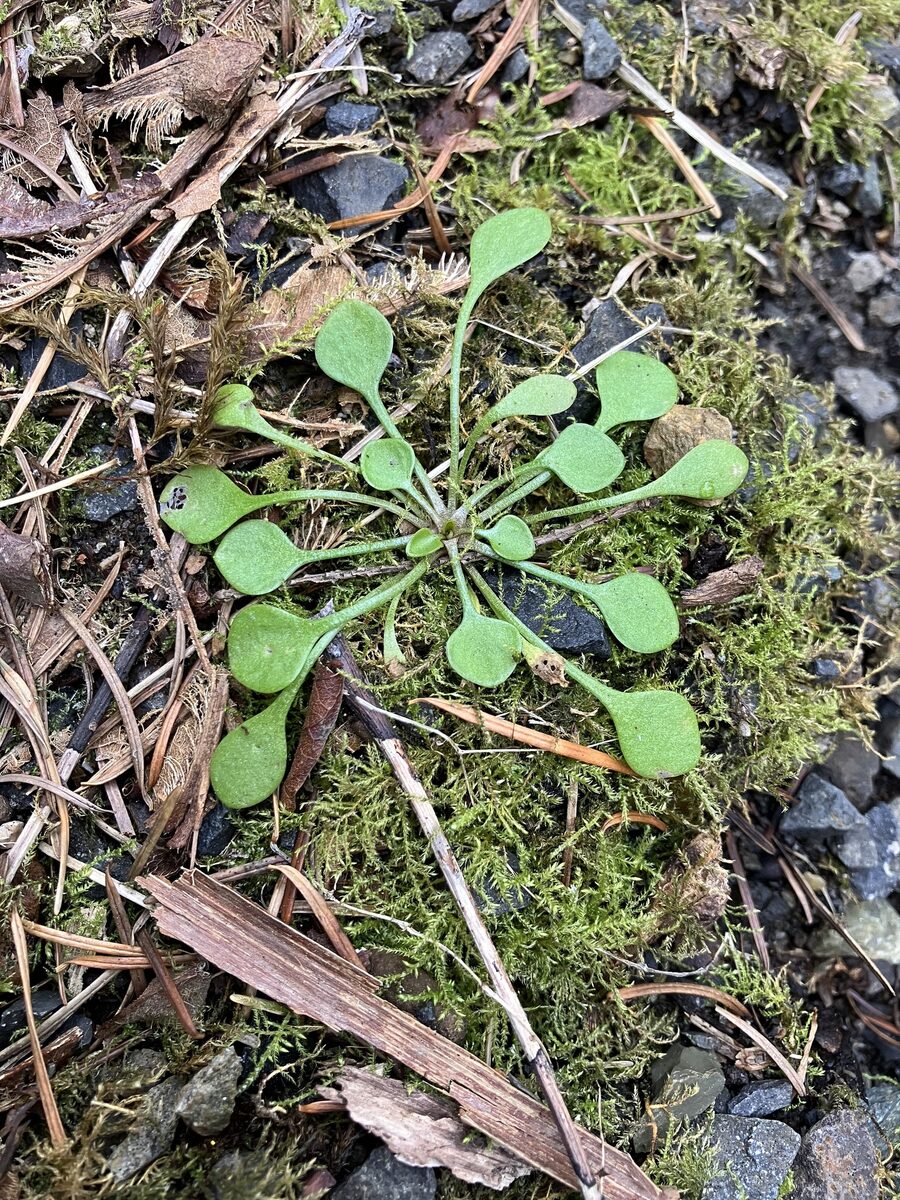
Claytonia rubra - (Howell) Tidestr.
Redstem Springbeauty
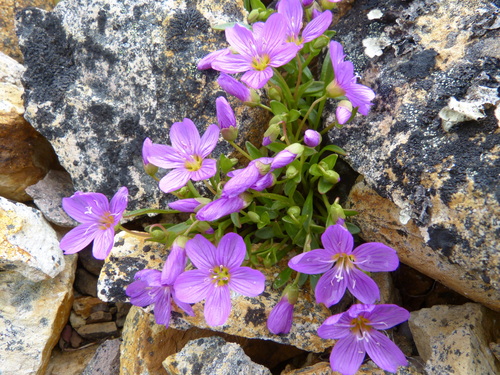
Claytonia scammaniana
Scamman's Springbeauty
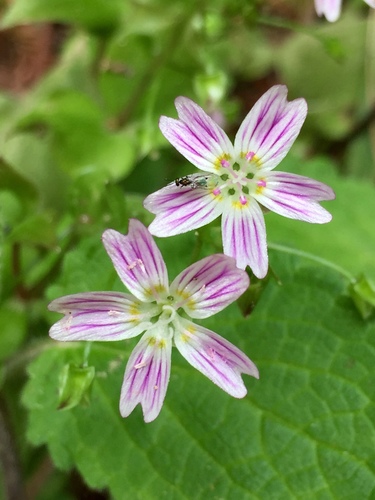
Claytonia sibirica
Pink purslane, Siberian Springbeauty, Siberian miner’s lettuce
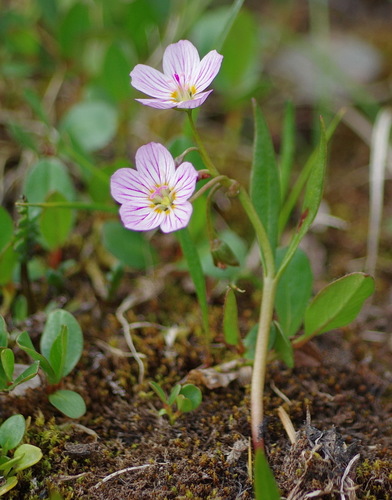
Claytonia tuberosa
Tuberous spring beauty
Claytonia umbellata
Great Basin spring beauty
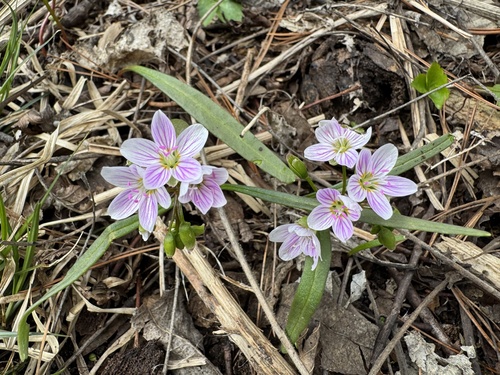
Claytonia virginica
Spring beauty, Virginia Springbeauty, Fairy spuds