Citrus reticulata
Blanco
Mandarin
iNaturalist· cc-by-nc
(c) Matt Reala, some rights reserved (CC BY-NC)
iNaturalist· cc-by
(c) Thomas Mesaglio, some rights reserved (CC BY)
iNaturalist· cc-by
(c) Thomas Mesaglio, some rights reserved (CC BY)
Summary
Source: WikipediaEvergreen tree growing 4.5 m tall by 3 m wide at a medium rate. Hardy to UK zone 9, frost tender. In leaf all year. Hermaphroditic with apomictic and insect pollination; self-fertile. Notable for attracting wildlife. Grows in medium loamy and heavy clay soils with good drainage. Tolerates mildly acidic, neutral, mildly alkaline, very acidic, and very alkaline soils. Requires full sun and prefers moist soil.
Description
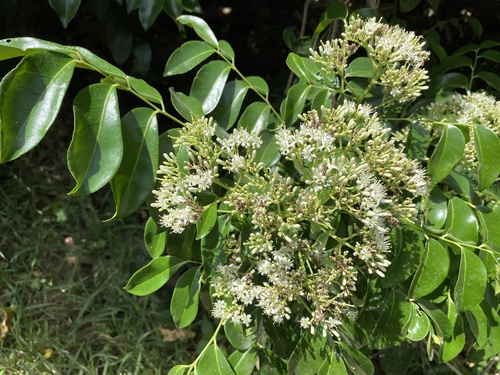
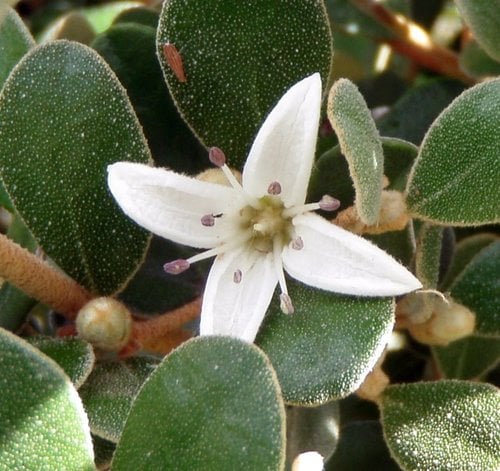
A small evergreen tree up to 4-8 m tall. It spreads to 2 m across. The stem is erect, branching and thorny. The leaves are dark green, and long and narrow in shape. They are 3-4 cm long. There is only a narrow wing on the leaf stalk. It has a few or no spines. The flowers are white and star shaped. They are 2.5-4 cm across and have a scent. Fruit are almost round and the skin peels off easily. The fruit are 4-8 cm long. The flesh is red, juicy and sweet.
Edible Uses
The fruit can be eaten raw or used in puddings, cakes, confectionery, and other cooked dishes — sweet and delicious, growing up to 8cm in diameter. The dried rind has a sweet, spicy flavour and is commonly used to flavour cakes and similar baked goods.
Traditional Uses
The fruit are eaten fresh and raw. They are also used for juice, preserved in syrup, added to salads or used in sweets, cakes, and drinks. The peel is dried and is used as a condiment. The oil from the peel is used to flavour ice cream, chewing gum, and baked goods. The flower petals are eaten.
Medicinal Uses
Citrus species contain a wide range of active compounds, and research into their applications is ongoing. They are rich in vitamin C, flavonoids, acids, and volatile oils, and also contain coumarins such as bergapten, which sensitizes the skin to sunlight. Bergapten is sometimes added to tanning preparations to promote skin pigmentation, though it can cause dermatitis or allergic reactions in some people. Recent applications include use as sources of antioxidants and chemical exfoliants in specialized cosmetics. The fruit itself is antiemetic, aphrodisiac, astringent, laxative, and tonic. The flowers are stimulant. The pericarp is analgesic, antiasthmatic, anticholesterolemic, anti-inflammatory, antiscorbutic, antiseptic, antitussive, carminative, expectorant, and stomachic, and is used to treat dyspepsia, gastrointestinal distension, cough with profuse phlegm, hiccup, and vomiting. The endocarp is carminative and expectorant, used for dyspepsia, gastrointestinal distension, coughs, and profuse phlegm. The unripened green exocarp is carminative and stomachic, used in treating pain in the chest and hypochondrium, gastrointestinal distension, swelling of the liver and spleen, and cirrhosis of the liver. The seed is analgesic and carminative, used in the treatment of hernia, lumbago, mastitis, and pain or swellings of the testes.
Known Hazards
Avoid peel with dry cough or excessive red tongue or splitting blood.
Distribution
A subtropical plant. The hardiest of the citrus. It grows from sea level up to 2300 m altitude in the tropics. They do best between 800 m and 1200 m altitude. A well drained soil is needed. They also prefer a drier climate. It is drought and frost resistant. They need a temperature above 3-5 °C. It suits hardiness zones 9-11.
Where It Grows
Africa, Andes, Angola, Asia, Australia, Bangladesh, Barbados, Bolivia, Bougainville, Brazil, Burkina Faso, Cambodia, Cameroon, Central Africa, Central America, Central Asia, China, Colombia, Cook Islands, Costa Rica, Côte d'Ivoire, Cuba, Dominican Republic, East Africa, East Timor, Ecuador, Ethiopia, Europe, Fiji, Georgia, Ghana, Guam, Guinea-Bissau, Guyana, Haiti, Hawaii, Himalayas, India, Indochina, Indonesia, Ivory Coast, Japan, Kenya, Korea, Laos, Madagascar, Malawi, Malaysia, Malesia*, Mexico, Middle East, Myanmar, Nauru, Nepal, New Caledonia, Niger, Nigeria, North Africa, North America, Northeastern India, Pacific, Pakistan, Papua New Guinea, PNG, Peru, Philippines*, Rotuma, Sahel, Samoa, Sao Tome and Principe, Saudi Arabia, SE Asia, Sierra Leone, Sikkim, Solomon Islands, South Africa, Southern Africa, South America, Spain, Sri Lanka, Suriname, Taiwan, Tajikistan, Tanzania, Thailand, Timor-Leste, Tonga, Uganda, USA, Vanuatu, Vietnam, West Africa, West Indies, West Timor, Zimbabwe,
Cultivation
Growth generally ceases below 13°c and above 38°c. If there are dry periods of more than three months, then irrigation will be necessary. This species grows better in the subtropics than in the tropics. Prefers a moderately heavy loam with a generous amount of compost and sand added plus a very sunny position. Prefers a pH between 5 and 6. Tolerates a pH in the range 4.3 to 8.3. Plants are intolerant of water logging. When growing plants in pots, a compost comprising equal quantities of loam and leafmould plus a little charcoal should produce good results. Do not use manure since Citrus species dislike it. When watering pot plants it is important to neither overwater or underwater since the plant will soon complain by turning yellow and dying. Water only when the compost is almost dry, but do not allow it to become completely dry. There are many named varieties. Plants dislike root disturbance and so should be placed into their permanent positions when young. If growing them in pots, great care must be exercised when potting them on into larger containers. Most Citrus species are self-fertile, meaning they can produce fruit without needing another plant for cross-pollination, though cross-pollination can improve fruit set in some varieties. Citrus fruits are generally harvested in late autumn to early spring, depending on the specific variety and local climate. Citrus trees usually flower in the spring. Some species may have a second flowering period in late summer.
Propagation
Sow seed in containers as soon as it is ripe, after rinsing thoroughly. Stored seed should be sown in containers as soon as possible. Germination typically occurs within 2–3 weeks at 13°C. Seedlings are prone to damping off and must be watered carefully and kept well ventilated. The seed is usually polyembryonic — two or more seedlings arise from each seed, genetically identical to the parent and generally free of any virus present in the parent plant. Once seedlings are large enough to handle, prick them out into individual pots and grow on until they reach 10cm or more in height before planting out into permanent positions. Propagation is also possible from cuttings of half-ripe wood or by layering.
Other Uses
An essential oil extracted from the peel is used as a food flavouring and in perfumery and medicines, with yields of around 0.5%. An essential oil from the leaves and young twigs, known as petitgrain oil, is also produced at yields of around 0.5%. Citrus species can be incorporated into agroforestry systems as shade trees, providing dappled light for understory crops while improving biodiversity by attracting pollinators and beneficial insects, and offering a valuable cash crop. The flowers are rich in nectar and pollen, making them highly attractive to bees and other pollinators. Fruits provide food for birds and mammals, and the dense foliage offers shelter for nesting and roosting birds. Leaf litter beneath the trees creates overwintering sites for invertebrates, and the rough bark of mature trees can shelter beneficial insects. The strong citrus scent of the leaves and fruit can also act as a natural pest deterrent, confusing or repelling certain insects.
Production
Seedling trees take 4-6 years to fruit. Grafted trees fruit after 2-4 years. Fruit tend to be produced seasonally. The season is often from April to August in the Southern Hemisphere.
Other Information
Not widely grown in Papua New Guinea but more are being planted. It is a cultivated food plant.
Notes
There are 20 Citrus species. Several hybrids have been formed.
Nutrition
| Part | Moisture | kJ | kcal | Protein | Vit A | Vit C | Iron | Zinc |
|---|---|---|---|---|---|---|---|---|
| Fruit - raw | 87.6 | 184 | 44 | 1.5 | 42 | 136 | 0.8 | — |
Synonyms
Also Known As
Chieh, Chu, Clementine, Cur. oranje, Hondra, Jamanarang, Jeruk keprak, Jeruk keprok, Jiaogan, Ju, Kak0sawk, Kamala, Kamla lebu, Komla, Kyul, Lawidwi, Lein-hmaw, Leing maw thee, Mandarina, Mandarine, Mandarini, Mangada, Mikan, Moli madarini, Monarikisi, Nagpur suntra, Naran, Narangi, Nartjie, Santara, Satsuma, Shalawi, Soco madarini, Som khiew wan, Suntala, Tangerina, Tangerine, Te mantarin, Tunmapa
References (86)
- AAK, 1994, Jeruk, Penerbit Kanisius, Jogyakarta. p 191
- Abbiw, D.K., 1990, Useful Plants of Ghana. West African uses of wild and cultivated plants. Intermediate Technology Publications and the Royal Botanic Gardens, Kew. p 42
- Ambasta, S.P. (Ed.), 2000, The Useful Plants of India. CSIR India. p 129
- Anderson, E. F., 1993, Plants and people of the Golden Triangle. Dioscorides Press. p 206
- Arora, R. K., 2014, Diversity in Underutilized Plant Species - An Asia-Pacific Perspective. Bioversity International. p 64 (Also as Citrus tankan)
Show all 86 references Hide references
- Ashton, M. S., et al 1997, A Field Guide to the Common Trees and Shrubs of Sri Lanka. WHT Publications Ltd. pdf p 346
- Barwick, M., 2004, Tropical and Subtropical Trees. A Worldwide Encyclopedic Guide. Thames and Hudson p 118
- Bekele-Tesemma A., Birnie, A., & Tengnas, B., 1993, Useful Trees and Shrubs for Ethiopia. Regional Soil Conservation Unit. Technical Handbook No 5. p 154
- Bennett, B. C., 1990, Useful Plants of Amazonian Ecuador. US Agency for International Development. Fifth Progress Report. New York Botanical Gardens. p 39
- Bernholt, H. et al, 2009, Plant species richness and diversity in urban and peri-urban gardens of Niamey, Niger. Agroforestry Systems 77:159-179
- Bianchini, F., Corbetta, F., and Pistoia, M., 1975, Fruits of the Earth. Cassell. p 184
- Blench, R., 2004, Fruits and Arboriculture in the Indo-Pacific Region. Indo-Pacific Prehistory Association Bulletin 24. (Taipei Papers Volume 2) p 36
- Bodkin, F., 1991, Encyclopedia Botanica. Cornstalk publishing, p 262
- Bremness, L., 1994, Herbs. Collins Eyewitness Handbooks. Harper Collins. p 47
- Brickell, C. (Ed.), 1999, The Royal Horticultural Society A-Z Encyclopedia of Garden Plants. Convent Garden Books. p 272
- Brouk, B., 1975, Plants Consumed by Man. Academic Press, London. p 183
- Brown, D., 2002, The Royal Horticultural Society encyclopedia of Herbs and their uses. DK Books. p 173
- Bussman, R. W., et al, 2021, Unity in diversity—food plants and fungi of Sakartvelo (Republic of Georgia), Caucasus. Journal of Ethnobiology and Ethnomedicine (2021) 17:72 p 14
- Cameron, J.W. & Soost, R.K., 1979, Citrus, in Simmonds, N.W., (ed), Crop Plant Evolution. Longmans. London. p 261
- Cheifetz, A., (ed), 1999, 500 popular vegetables, herbs, fruits and nuts for Australian Gardeners. Random House p 182
- Clarke, W.C. & Thaman, R.R., 1993, Agroforestry in the Pacific Islands: Systems for sustainability. United Nations University Press. New York. p 231
- Cobley, L.S. (rev. Steele, W.M.) 2nd Ed., 1976, An Introduction to the Botany of Tropical Crops. Longmans. p 167
- Coronel, R.E., 1982, Fruit Collections in the Philippines. IBPGR Newsletter p 6
- Cundall, P., (ed.), 2004, Gardening Australia: flora: the gardener's bible. ABC Books. p 384
- D'Ambrosio, U., & Puri, R. K., 2016, Foodways in transition: food plants, diet and local perceptions of change in a Costa Rican Ngäbe community. Journal of Ethnobiology and Ethnomedicine (2016) 12:3 p 27
- Das, T. & Das, A. K., 2005, Inventorying plant biodiversity in homegardens: A case study in Barak Valley, Assam, North East India. CURRENT SCIENCE, VOL. 89, NO. 1, 10 JULY 2005
- Elevitch, C.R.(ed.), 2006, Traditional Trees of the Pacific Islands: Their Culture, Environment and Use. Permanent Agriculture Resources, Holualoa, Hawaii. p 245
- Etherington, K., & Imwold, D., (Eds), 2001, Botanica's Trees & Shrubs. The illustrated A-Z of over 8500 trees and shrubs. Random House, Australia. p 215
- Facciola, S., 1998, Cornucopia 2: a Source Book of Edible Plants. Kampong Publications, p 218
- Fl. Filip. 610. 1837
- Flora of Pakistan. www.eFloras.org
- Food Composition Tables for use in East Asia FAO http://www.fao.org/infoods/directory No. 944 (As Citrus tankan)
- French, B.R., 1986, Food Plants of Papua New Guinea, A Compendium. Asia Pacific Science Foundation p 230
- French, B.R., 2010, Food Plants of Solomon Islands. A Compendium. Food Plants International Inc. p 230
- Giraldi, M. & Hanazaki, N., 2014, Use of Cultivated and Harvested Edible Plants by Caiçaras—What Can Ethnobotany Add to Food Security Discussions? Human Ecology Review, Volume 20, Number 2, 2014
- Goode, P., 1989, Edible Plants of Uganda. FAO p 27
- Hearne, D.A., & Rance, S.J., 1975, Trees for Darwin and Northern Australia. AGPS, Canberra p 47
- Hu, Shiu-ying, 2005, Food Plants of China. The Chinese University Press. p 496
- http://palaeoworks.anu.edu.au/Nuno_PhD/04.pdf re Timor
- Icon. pl. formos. 8:26. 1919 (As Citrus tankan)
- Jardin, C., 1970, List of Foods Used In Africa, FAO Nutrition Information Document Series No 2.p 129
- John, L., & Stevenson, V., 1979, The Complete Book of Fruit. Angus & Robertson p 275
- Katende, A.B., Birnie, A & Tengnas B., 1995, Useful Trees and Shrubs for Uganda. Identification, Propagation and Management for Agricultural and Pastoral Communities. Technical handbook No 10. Regional Soil Conservation Unit, Nairobi, Kenya. p 190
- Khan, D. & Shaukat, S.S., 2006, The Fruits of Pakistan: Diversity, Distribution, Trends of Production and Use. Int. J. Biol. Biotech., 3(3):463-499
- Kiple, K.F. & Ornelas, K.C., (eds), 2000, The Cambridge World History of Food. CUP p 1808
- Kumar, A., et al, 2012, Ethnobotanical Edible Plant Biodiversity of Lepcha Tribes. Indian Forester, 138 (9):798-803
- Lautenschläger, T., et al, 2018, First large-scale ethnobotanical survey in the province of Uíge, northern Angola. Journal of Ethnobiology and Ethnomedicine (2018) 14:51
- Lazarides, M. & Hince, B., 1993, Handbook of Economic Plants of Australia, CSIRO. p 61
- Lorenzi, H., Bacher, L., Lacerda, M. & Sartori, S., 2006, Brazilian Fruits & Cultivated Exotics. Sao Paulo, Instituto Plantarum de Estuados da Flora Ltda. p 553
- Lyle, S., 2006, Discovering fruit and nuts. Land Links. p 144
- Macmillan, H.F. (Revised Barlow, H.S., et al) 1991, Tropical Planting and Gardening. Sixth edition. Malayan Nature Society. Kuala Lumpur. p 278
- Martin, M.A., 1971, Introduction L'Ethnobotanique du Cambodge. Centre National de la Recherche Scientifique. Paris.
- Mbuya, L.P., Msanga, H.P., Ruffo, C.K., Birnie, A & Tengnas, B., 1994, Useful Trees and Shrubs for Tanzania. Regional Soil Conservation Unit. Technical Handbook No 6. p 184
- Miguel, E., et al, 1989, A checklist of the cultivated plants of Cuba. Kulturpflanze 37. 1989, 211-357
- Morton, J. F., 1987, Fruits of Warm Climates. Wipf & Stock Publishers p 142
- Mulherin, J., 1994, Spices and natural flavourings. Tiger Books, London. p 106
- Nathan, A., & Wong Y Chee, 1987, A Guide to Fruits and Seeds, Singapore Science Centre. p 60
- Niwano, Y. et al., 2009, Extensive Screening for Plant Foodstuffs in Okinawa, Japan with Anti-Obese Activity on Adipocytes, in vitro. Plant Foods in Human Nutrition 64:6-10 (As Citrus tankan)
- Omawale, 1973, Guyana's edible plants. Guyana University, Georgetown p 51
- Penafield Anchundia, D. D., 2017, Traditional food consumption and its nutritional contribution in Guasaganda, Central Ecuador. PhD Ghent University p 72
- Phon, P., 2000, Plants used in Cambodia. © Pauline Dy Phon, Phnom Penh, Cambodia. p 160
- Plants for a Future database, The Field, Penpol, Lostwithiel, Cornwall, PL22 0NG, UK. http://www.scs.leeds.ac.uk/pfaf/
- Plants of Haiti Smithsonian Institute http://botany.si.edu/antilles/West Indies
- Postman, J. D., et al, 2012, Recent NPGS Coordinated Expeditions in the Trans-Caucasus Region to Collect Wild Relatives of Temperate Fruit and Nut Crops. In Acta Horticulturae Number 948 p 191-198
- Priyadi, H., et al, Five hundred plant species in Gunung Halimun Salak National Park West Java. A checklist including Sundanese names, distribution and use. CIFOR, FFPRI, SLU p 64
- PROSEA handbook Volume 13 Spices. p 275
- Purseglove, J.W., 1968, Tropical Crops Dicotyledons, Longmans. p 508
- Roa, J. A. G. & Boada, D. S. G., 2018, Fundación para el Fortalecimiento de la Fruticultura y Plantas Alimenticias no Convencionales en Colombia.
- Ruiters-Welcome, A. K., 2019, Food plants of southern Africa. Ph.D. thesis. Univ. of Johannesburg p 98
- Segura, S., et al, 2018, The edible fruit species in Mexico. Genet Resour Crop Evol (2018) 65:1767–1793
- Seidemann J., 2005, World Spice Plants. Economic Usage, Botany, Taxonomy. Springer. p 109
- Small, E., 2009, Top 100 Food Plants. The world's most important culinary crops. NRC Research Press. p 390
- Solomon, C., 2001, Encyclopedia of Asian Food. New Holland. p 228
- Staples, G.W. and Herbst, D.R., 2005, A tropical Garden Flora. Bishop Museum Press, Honolulu, Hawaii. p 506
- Thaman, R.R., 1976, The Tongan Agricultural System, University of the South Pacific, Suva, Fiji. p 389
- Torre, de la, L., et al, 2008, Enciclopedia de las Plantas Útiles del Ecuador. Herbario QCA. Pontificia Universidad Católica del Ecuador. p 558
- USDA, ARS, National Genetic Resources Program. Germplasm Resources Information Network - (GRIN). [Online Database] National Germplasm Resources Laboratory, Beltsville, Maryland. Available: www.ars-grin.gov/cgi-bin/npgs/html/econ.pl (10 April 2000) (Also as Citrus tankan)
- Valder, P., 1999, The Garden Plants of China. Florilegium. p 255
- van Wyk, B., 2005, Food Plants of the World. An illustrated guide. Timber press. p 144
- Vasquez, R. and Gentry, A. H., 1989, Use and Misuse of Forest-harvested Fruits in the Iquitos Area. Conservation Biology 3(4): 350f
- Vickery, M.L. and Vickery, B., 1979, Plant Products of Tropical Africa, Macmillan. p 42
- Walter, A. & Lebot, V., 2007, Gardens of Oceania. ACIAR Monograph No. 122. p 134
- Welcome, A. K. & Van Wyk, B.-E., 2019, An inventory and analysis of the food plants of southern Africa. South African Journal of Botany 122 (2019) 136–179
- Wiersema, J. H. & Leon, B., 2013, World Economic Plants. A Standard Reference CRC Press. 2nd Ed. p 181, p 181 (As Citrus tangerina)
- Zaldivar, M. E., et al, 2002, Species Diversity of Edible Plants Grown in Homegardens of Chibehan Amerindians from Costa Rica. Human Ecology, Vol. 30, No. 3, pp. 301-316
- Zeven, A. C. & de West, J. M. J., 1982, Dictionary of cultivated plants and their regions of diversity. Wageningen. p 41, 63