Citrus reticulata x C. grandis
J.W. Ingram & H.E. Moore
Tangelo
iNaturalist· cc-by-nc
(c) Matt Reala, some rights reserved (CC BY-NC)
iNaturalist· cc-by
(c) Thomas Mesaglio, some rights reserved (CC BY)
iNaturalist· cc-by
(c) Thomas Mesaglio, some rights reserved (CC BY)
Description
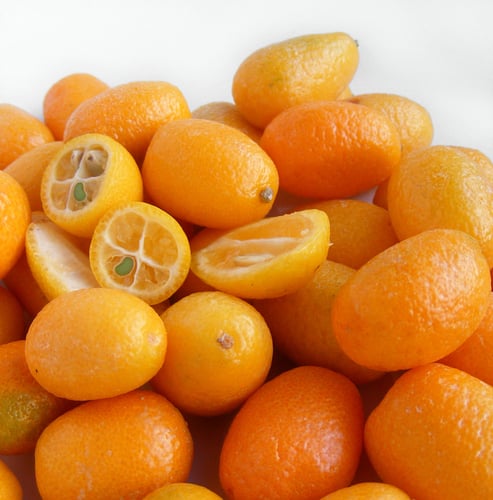
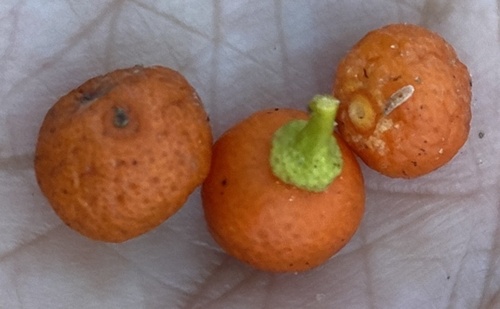
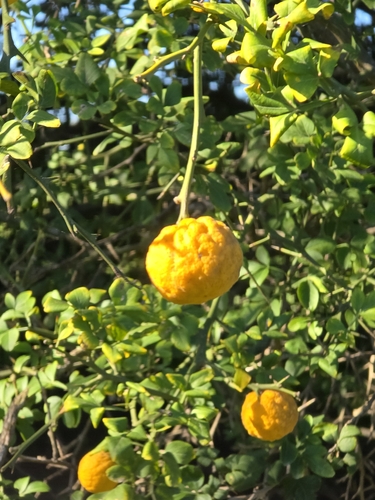
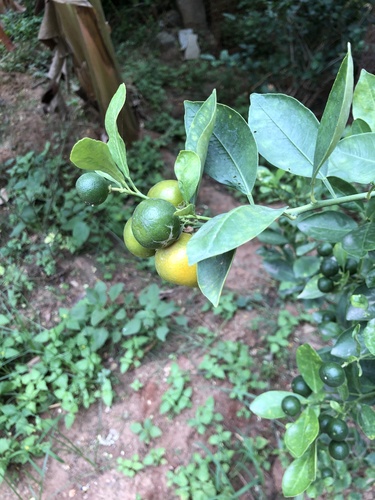
Natural and artificial hybrids between grapefruit and mandarin. A small evergreen tree. It is often a thinly branched shrub. It has an open habit. It grows 4-6 m high. There are thorns in the axils of leaves. The leaves are simple and leathery. They are smooth and shiny. They are 4-12 cm long. Fruit can be 10 cm across. They are reddish-orange when ripe. They are very juicy. The skin is easy to peel off.
Edible Uses
The fruit are eaten fresh and consumed as juice.
Traditional Uses
The fruit are eaten fresh and as juice.
This uses section is brief — help expand it
Distribution
A tropical plant. They need good drainage and a warm sunny position. They need a sheltered location.
Where It Grows
Asia, Australia, Barbados, Brazil, North America, Pacific, Philippines, SE Asia, South America, USA,
Cultivation
Plants are grown by grafting.
Notes
There are 20 Citrus species. Several hybrids have been formed.
Nutrition
| Part | Moisture | kJ | kcal | Protein | Vit A | Vit C | Iron | Zinc |
|---|---|---|---|---|---|---|---|---|
| Fruit | 86 | 205 | 49 | 1.1 | — | 41 | 0.2 | 0.1 |
Synonyms
References (11)
- Cheifetz, A., (ed), 1999, 500 popular vegetables, herbs, fruits and nuts for Australian Gardeners. Random House p 184
- Coronel, R.E., 1982, Fruit Collections in the Philippines. IBPGR Newsletter p 6 (As Citrus reticulata x paradisi ?)
- Cundall, P., (ed.), 2004, Gardening Australia: flora: the gardener's bible. ABC Books. p 383
- Facciola, S., 1998, Cornucopia 2: a Source Book of Edible Plants. Kampong Publications, p 218
- Hibbert, M., 2002, The Aussie Plant Finder 2002, Florilegium. p 68 (As Citrus tangelo)
Show all 11 references Hide references
- Lorenzi, H., Bacher, L., Lacerda, M. & Sartori, S., 2006, Brazilian Fruits & Cultivated Exotics. Sao Paulo, Instituto Plantarum de Estuados da Flora Ltda. p 591
- Lyle, S., 2006, Discovering fruit and nuts. Land Links. p 143
- Morton, J. F., 1987, Fruits of Warm Climates. Wipf & Stock Publishers p 158
- Purseglove, J.W., 1968, Tropical Crops Dicotyledons, Longmans. p 508
- USDA, ARS, National Genetic Resources Program. Germplasm Resources Information Network - (GRIN). [Online Database] National Germplasm Resources Laboratory, Beltsville, Maryland. Available: www.ars-grin.gov/cgi-bin/npgs/html/econ.pl (10 April 2000) (As Citrus tangelo)
- Wiersema, J. H. & Leon, B., 2013, World Economic Plants. A Standard Reference CRC Press. 2nd Ed. p 181