Unonopsis floribunda
Diels
Flowery unonopsis
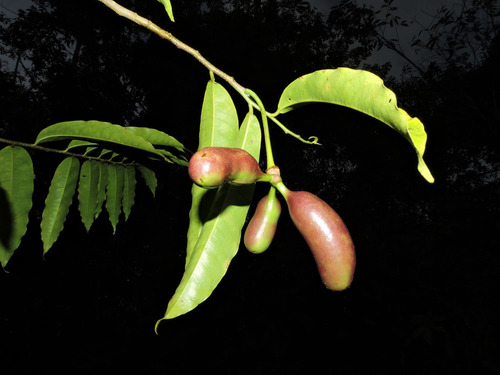
iNaturalist· cc-by-nc
(c) Germaine Alexander Parada, some rights reserved (CC BY-NC), uploaded by Germaine Alexander Parada
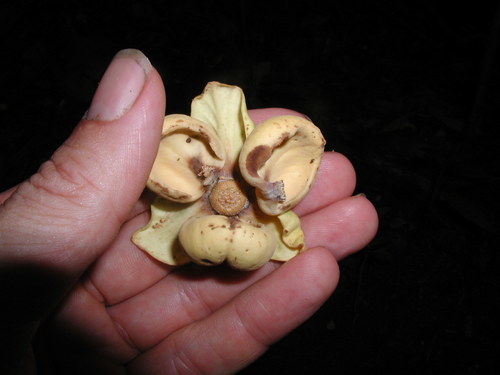
iNaturalist· cc-by-nc
(c) Roy Erkens, some rights reserved (CC BY-NC)
iNaturalist· cc-by-nc
(c) Roy Erkens, some rights reserved (CC BY-NC)
Summary
Source: WikipediaUnonopsis floribunda is a tree with dark bark that produces black fruit and red latex. It was first described by Ludwig Diels. It has been documented from Bolivia, Brazil, Colombia, Ecuador, Panama, and Peru.
Description
A tree. It can grow 25 m tall. The bark is dark. The leaves are simple and broad. The fruit is black.
This description is brief — help expand it
Edible Uses
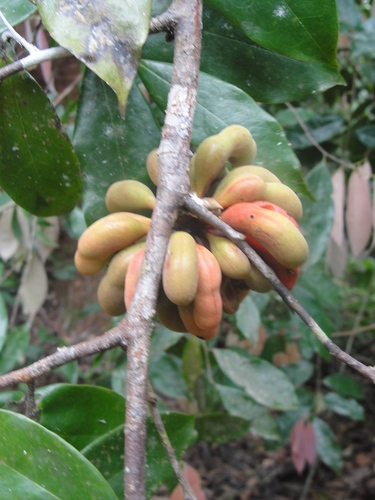
The fruit pulp is made into an alcaholic beverage. The fruit comprises 2 - 20 globose, green monocarps that mature to yellow, orange then finally black, around 11 - 16mm by 10 - 13mm (in some Peruvian collections 20 - 30mm by 18 - 25mm).
Traditional Uses
The fruit pulp is fermented into an alcoholic drink.
This uses section is brief — help expand it
Distribution
It is a tropical plant. It grows in rainforests and savannah. It grows up to 1,000 m above sea level.
Where It Grows
Amazon, Bolivia*, Brazil, Central America, Colombia, Ecuador, Panama, Peru, South America,
Cultivation
Plants can flower and produce fruit all year round.
Other Uses
The fruit is used as a dye and as a repellent. Fibres are obtained from the bark. Strips of bark are used as string to tie together poles and the beams of traditional houses. The bark is used as bracera for baskets (bracera de cestos).. The wood is oatmeal-coloured throughout. It is light to medium in weight; roey- grained; medium to rather coarse in texture; odourless to faintly fragrant; slightly bitter; brittle and fibrous. It is easy to work but does not appear to be durable. It is used as a stringer or poles in the construction of traditional houses. The wood is used as a fuel for smoking raw rubber.
Also Known As
Cara caspi, Carahuasca, Carguero, Chinicua, Chocolatillo, Envira, Espintana, Foodidujecu, Hicoja, Icoja, Huabu midha, Huasi caspi, Icoja, Kayayeis, Llanta caspimuyu, Mati muyo, Mena, Micha, Midha dhahua, Mongapata, Mongapatahue, Nagui, Noi, Pancho de sancho de tropa, Piraquina negro, Sacha carahuasca, Tortuga
References (3)
- Grandtner, M. M. & Chevrette, J., 2013, Dictionary of Trees, Volume 2: South America: Nomenclature, Taxonomy and Ecology. Academic Press p 681
- Kermath, B. M., et al, 2014, Food Plants in the Americas: A survey of the domesticated, cultivated and wild plants used for Human food in North, Central and South America and the Caribbean. On line draft. p 888
- Roa, J. A. G. & Boada, D. S. G., 2018, Fundación para el Fortalecimiento de la Fruticultura y Plantas Alimenticias no Convencionales en Colombia.