Cissus rotundifolia
(Forskk.) Vahl
Arabian wax cissus, Round-leaved vine
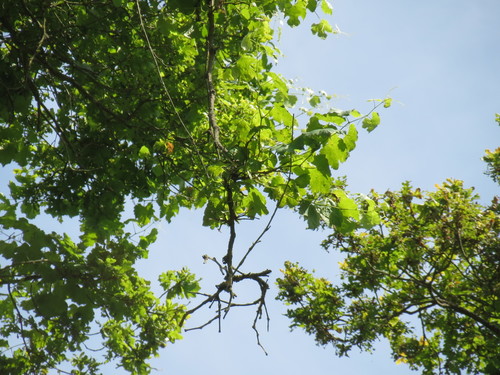
iNaturalist· cc-by-nc
(c) Kate Braun, some rights reserved (CC BY-NC), uploaded by Kate Braun
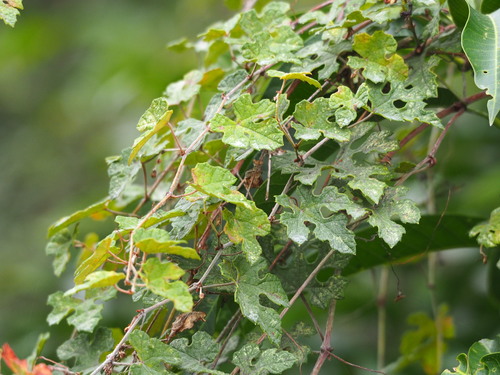
iNaturalist· cc-by-nc
(c) Pablo Galán, some rights reserved (CC BY-NC), uploaded by Pablo Galán
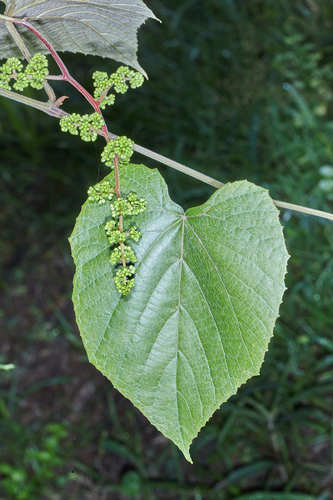
iNaturalist· cc-by-nc
(c) magdastlucia, some rights reserved (CC BY-NC), uploaded by magdastlucia
Summary
Source: WikipediaCissus rotundifolia is a perennial, evergreen climber in the Vitaceae family.
Description
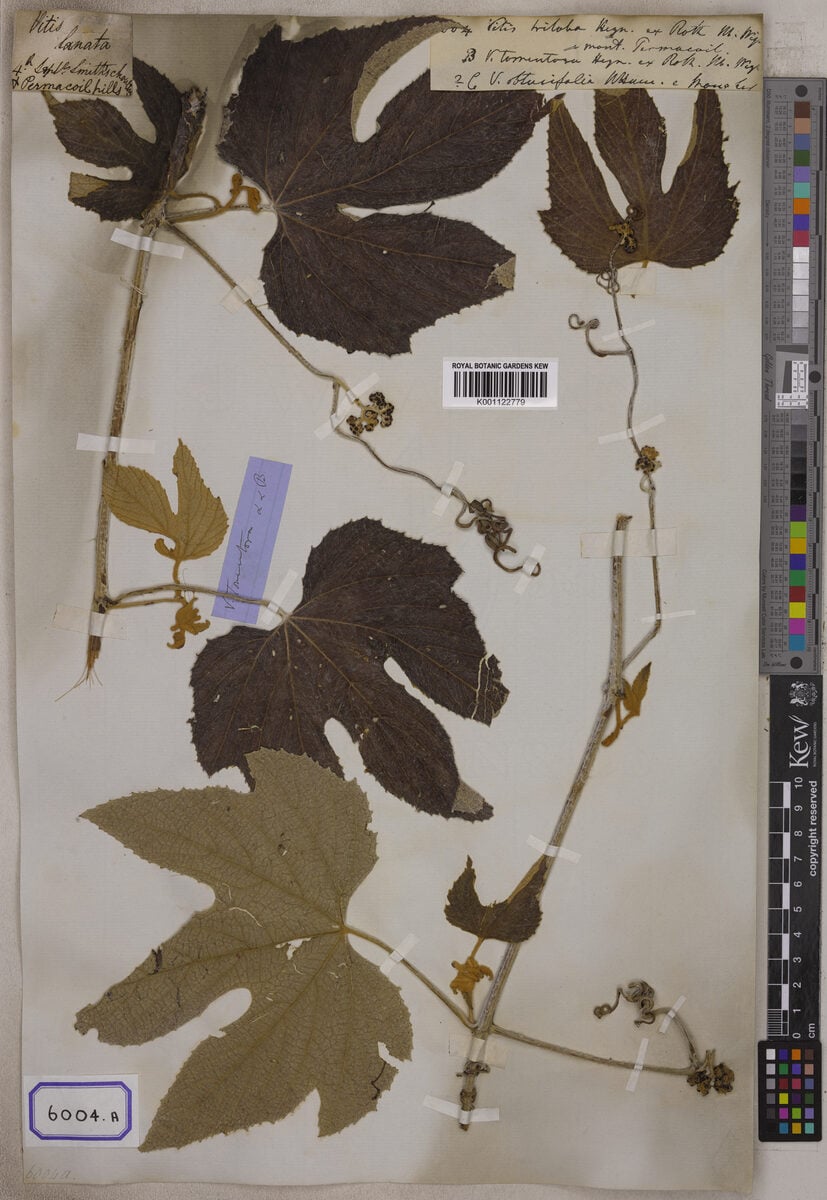
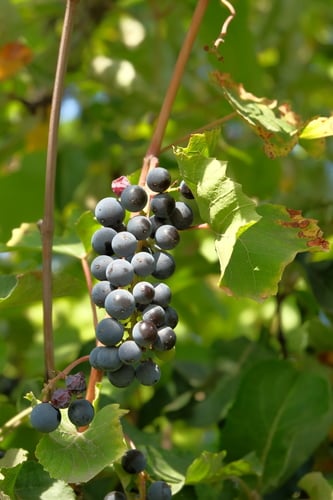
A vine which either climbs or lies flat on the ground. It does not have spines. It can become woody but the stems are succulent. They develop 4 or 5 ridges with age. It has tendrils. The leaves are simple and almost round. They are 5-8 cm across. The leaves are glossy, green and succulent. The edges of the leaves have blunt teeth. The flowers are in clusters. The flowers are small and green or white. The berry is oval and 1.2 cm long. It is red or purple.
Edible Uses
The young shoots are eaten as a vegetable and used for flavoring. The ripe berries are edible. The root tubers are pounded, dried, and ground before being added to food as a flavoring.
Traditional Uses
The young shoots are used as a vegetable and for flavouring. The ripe fruit are edible. The root tubers are pounded and dried then ground before being added to food as a flavouring.
Medicinal Uses
None mentioned in provided data.
Known Hazards
None mentioned in provided data.
Distribution
A tropical plant. It grows well in dry sunny locations. It can grow in arid places. In Zimbabwe it grows up to 500 m above sea level. In Brisbane Botanical Gardens.
Where It Grows
Africa, Arabia, Australia, Burundi, Central Africa, Congo, East Africa*, Egypt, Eswatini, Ethiopia, Hawaii, Kenya, Malawi, Middle East, Mozambique, North Africa, Pacific, Puerto Rico, Saudi Arabia, Somalia, South Africa, Southern Africa, Sudan, Swaziland, Tanzania, Uganda, USA, Virgin Islands, West Indies, Yemen*, Zambia, Zimbabwe,
Cultivation
It can be grown from stem cuttings. It can also be grown from seed from which the flesh of the fruit has been removed.
Notes
There are about 200-350 Cissus species. There are about 75 species in tropical America.
Synonyms
Also Known As
Alfaq, Buri, Hadel, Iheveiaihovo, Itulu, Munyu, Mudzambiringa, Pangalatane
References (19)
- Al-Fatimi, M. A., Wild Edible Plants Traditionally Collected and Used in Southern Yemen. Research Square. University of Aden. p 17
- Al-Hawshabl, O. S. S., et al, 2017, Floristic composition, life-forms and biological spectrum of Toor Al-Baha District, Lahej Governorate, Yemen. Current Science 3 (4): 72-91
- Bahru, T., et al, 2013, Wild Edible Plants: Sustainable Use and Management by Indigenous Communities in and the Buffer Area of Awah National Park, Ethiopia. Ethiop. J. Sci., 36(2): 93-108
- FAO, 1988, Traditional Food Plants, FAO Food and Nutrition Paper 42. FAO Rome p 184
- Glover et al, 1966b,
Show all 19 references Hide references
- Grivetti, L. E., 1980, Agricultural development: present and potential role of edible wild plants. Part 2: Sub-Saharan Africa, Report to the Department of State Agency for International Development. p 45
- Grubben, G. J. H. and Denton, O. A. (eds), 2004, Plant Resources of Tropical Africa 2. Vegetables. PROTA, Wageningen, Netherlands. p 560
- Hibbert, M., 2002, The Aussie Plant Finder 2002, Florilegium. p 67
- Jardin, C., 1970, List of Foods Used In Africa, FAO Nutrition Information Document Series No 2.p 67
- Johns, T., and Kokwaro, J.O., 1991, Food Plants of the Luo of Siayo District, Kenya. Economic Botany 45(1), pp 103-113
- Mutie, F. G., 2020, Conservation of Wild Food Plants and Their Potential for Combatting Food Insecurity in Kenya as Exemplified by the Drylands of Kitui County. Plants 2020, 9, 1017
- Mutie, F. M., et al, 2023, Important Medicinal and Food Taxa (Orders and Families) in Kenya, Based on Three Quantitative Approaches. Plants 2023, 12, 1145
- Peters, C. R., O'Brien, E. M., and Drummond, R.B., 1992, Edible Wild plants of Sub-saharan Africa. Kew. p 201
- Royal Botanic Gardens, Kew (1999). Survey of Economic Plants for Arid and Semi-Arid Lands (SEPASAL) database. Published on the Internet; http://www.rbgkew.org.uk/ceb/sepasal/internet [Accessed 13th June 2011]
- Swaziland's Flora Database http://www.sntc.org.sz/flora
- Symb. bot. 3:19. 1790
- von Katja Rembold, 2011, Conservation status of the vascular plants in East African rain forests. Dissertation Universitat Koblenz-Landau p 160
- World Checklist of Useful Plant Species 2020. Royal Botanic Gardens, Kew
- www.zimbabweflora.co.zw 2011