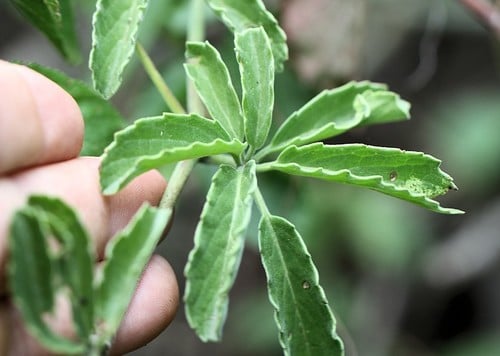
Ampelopsis humulifolia
Bunge
Niu pu tao
iNaturalist· cc-by-nc
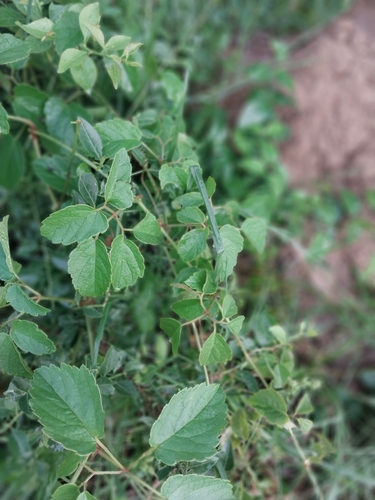
(c) Jane Charlen, some rights reserved (CC BY-NC), uploaded by Jane Charlen
iNaturalist· cc-by-nc
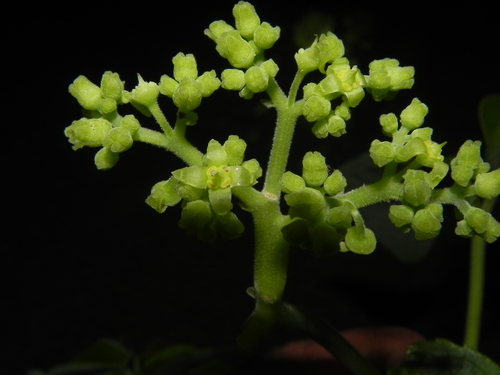
(c) 茶棚, some rights reserved (CC BY-NC), uploaded by 茶棚
iNaturalist· cc-by-nc
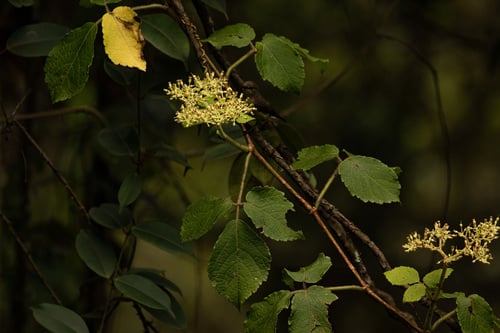
(c) Chuangzao, some rights reserved (CC BY-NC), uploaded by Chuangzao
Summary
A deciduous climber growing to 6 m, not frost tender. Monoecious, pollinated by insects. Flowers July to August with seeds ripening October. Grows in medium loamy soils with mildly acid to basic pH. Tolerates semi-shade or full sun and prefers moist soil. Hardy to UK zone 5.
Description
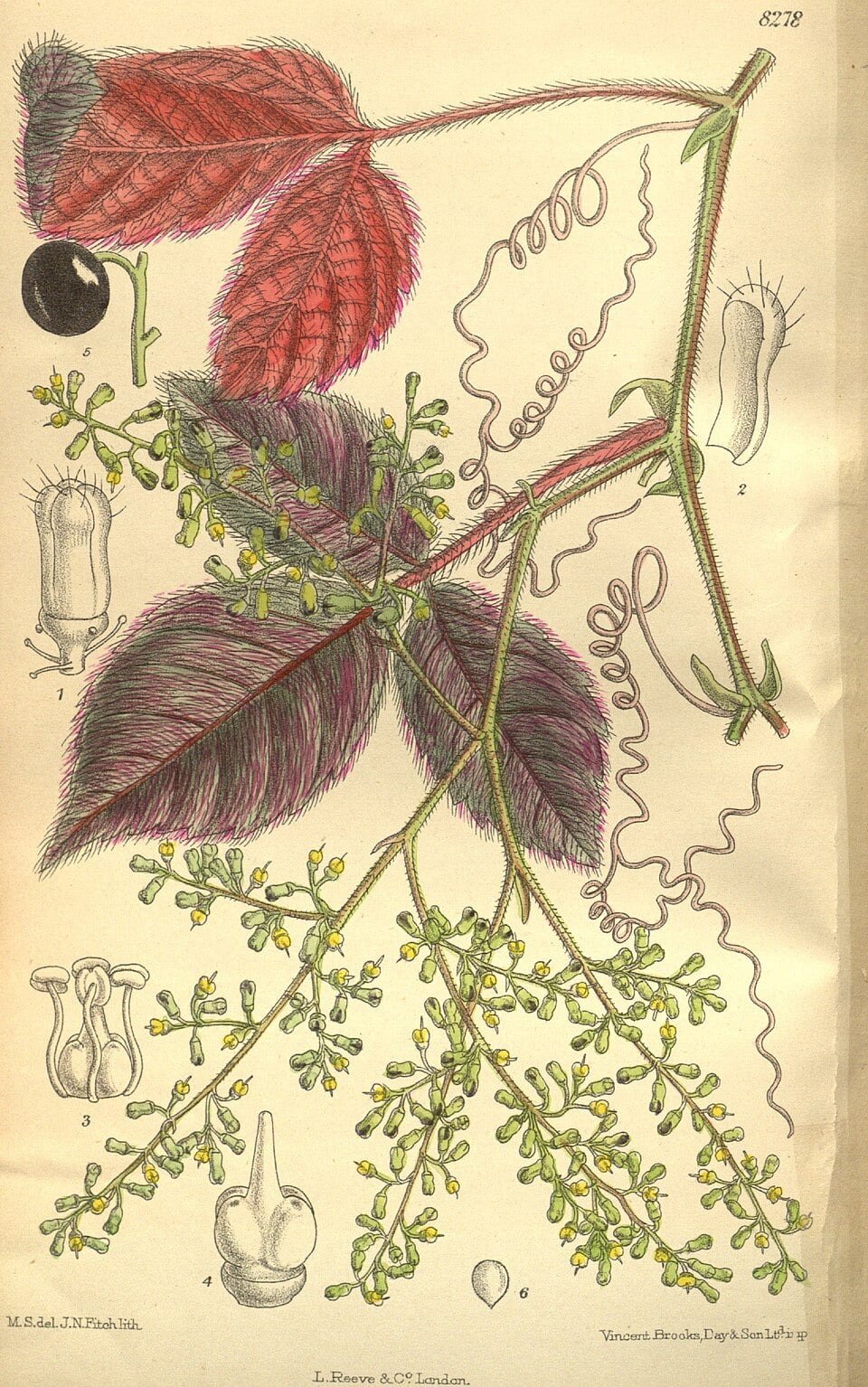
A woody creeper. The branches have ridges along them. The tendril are divided. The leaves are simple and have 3-5 lobes. The leaf blade is heart shaped and 6-12 cm long 5-10 cm wide. The fruit are round and 6-10 mm across. There are 2-4 seeds.
Edible Uses
The fruit, carried in small grape-like bunches, is about 4–5mm in diameter and can be eaten. The leaves are also edible. No further preparation details are recorded for either.
Medicinal Uses
None known
Distribution
It is a temperate plant. It grows in forests between 400-1,100 m above sea level in northern China.
Where It Grows
Asia, China, Japan, Korea,
Cultivation
Prefers a deep rich loam in a warm sheltered position in sun or semi-shade. Dormant plants are hardy to at least -25°c if the wood is fully ripened. The young growth in spring, even on mature plants, is frost-tender and so it is best to grow the plants in a position sheltered from the early morning sun. A very ornamental plant, it is closely related to A. bodinieri. Plants rarely produce fruits in Britain unless there is a long hot summer. Plants climb by means of coiling tendrils but large plants often need tying in to support the weight of foliage.
Propagation
Sow seed in pots in a cold frame in autumn, or stratify for 6 weeks at 5°c and sow in spring. Germination can be slow, sometimes taking more than a year. Prick seedlings out into individual pots once large enough to handle, and grow on in a greenhouse through their first winter. Plant out into permanent positions when more than 20cm tall, preferably in late spring or early summer after the last expected frosts. Take half-ripe wood cuttings, 7–10cm long, in July or August in a frame. Alternatively, take cuttings or eyes in late autumn or winter and place in the ground in a greenhouse or cold frame, or pot them up. An eye cutting consists of a single bud at the top with a short length of stem and a small section of bark removed; these normally root well and grow vigorously, ready to plant into permanent positions the following autumn. Layer into pots in late summer by partially severing the stem in spring, then lift the new plants in autumn.
Other Uses
None known
Notes
There are about 20-25 Ampelopsis species.
Synonyms
References (3)
- Altschul, S.V.R., 1973, Drugs and Foods from Little-known Plants. Notes in Harvard University Herbaria. Harvard Univ. Press. Massachusetts. no. 2666
- Enum. pl. China bor. 12. 1833 (Mem. Acad. Imp. Sci. St.-Petersbourg Divers Savans 2:86. 1835)
- Plants for a Future database, The Field, Penpol, Lostwithiel, Cornwall, PL22 0NG, UK. http://www.scs.leeds.ac.uk/pfaf/.