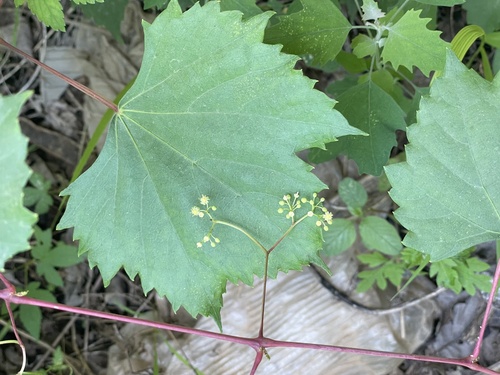
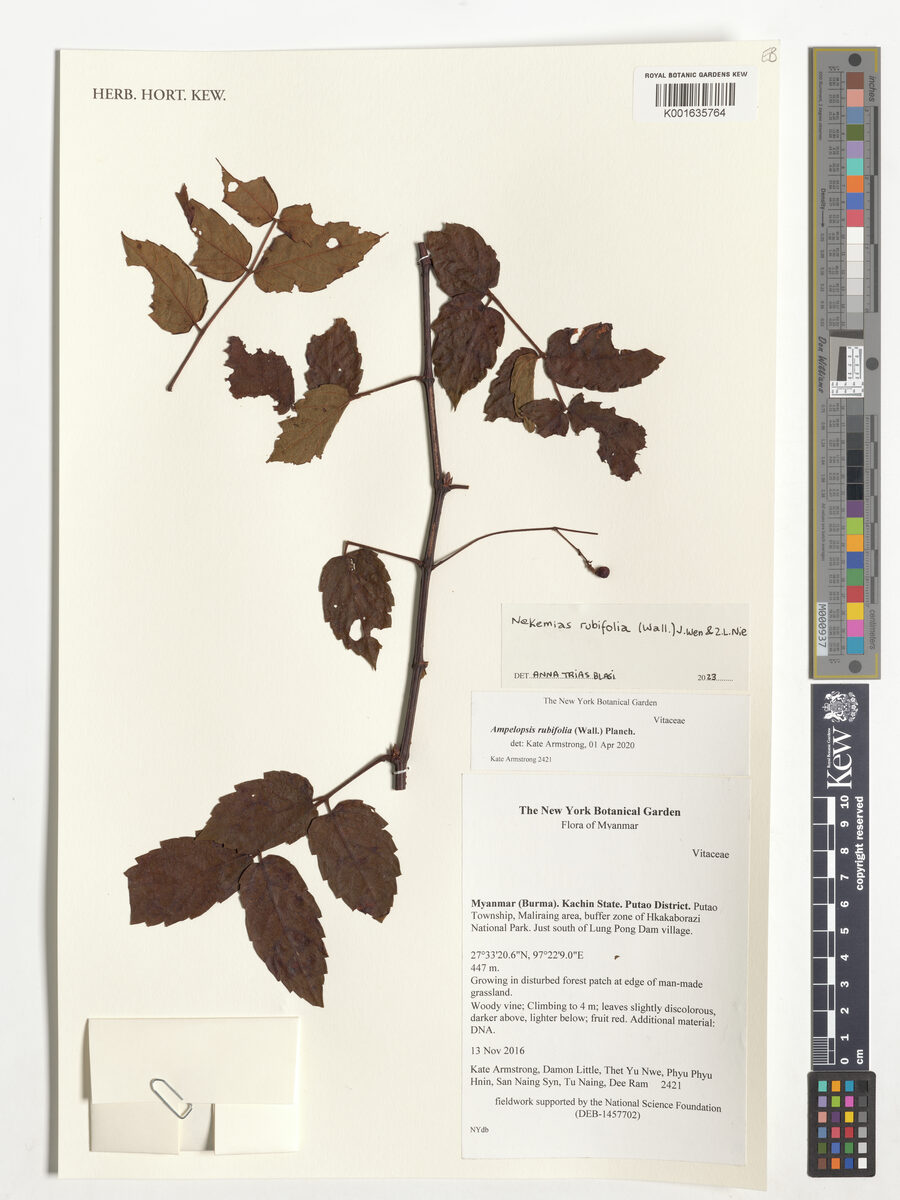
Ampelopsis glandulosa var. brevipedunculata
(Maxim.) Momiy.
Porcelain berry, Turquoise-berry vine, Blueberry climber, Pepper vine
iNaturalist· cc-by-sa
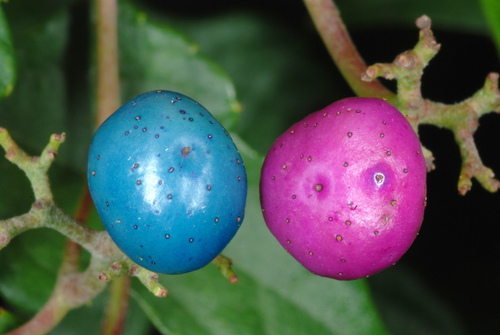
(c) Judy Gallagher, some rights reserved (CC BY-SA), uploaded by Judy Gallagher
iNaturalist· cc-by-sa
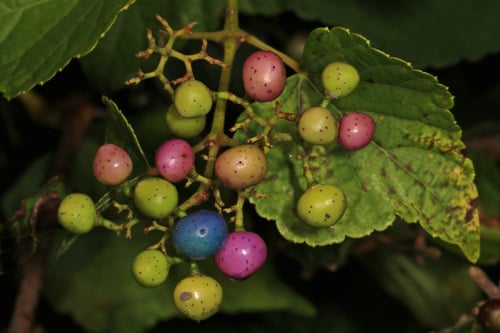
(c) Douglas Goldman, some rights reserved (CC BY-SA), uploaded by Douglas Goldman
iNaturalist· cc-by-sa
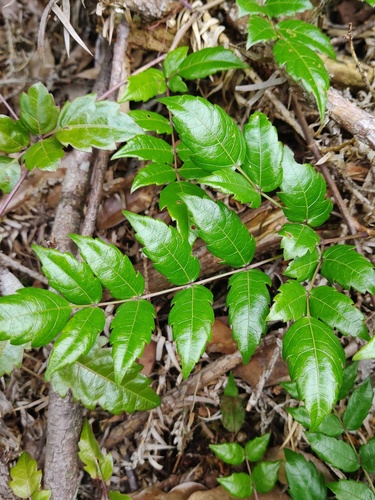
(c) Antonia Bookbinder, some rights reserved (CC BY-SA), uploaded by Antonia Bookbinder
Summary
Source: WikipediaAmpelopsis glandulosa, with common names creeper, porcelain berry, Amur peppervine, and wild grape, is a plant in the Vitaceae (grape) family, native to temperate areas of Asia, including China, Japan, India, Nepal, Myanmar, Vietnam, and the Philippines. It is commonly used as an ornamental plant, but is considered invasive outside of its native range. Ampelopsis glandulosa is generally similar to, and potentially confused with, grape species (genus Vitis) and other Ampelopsis species.
Description
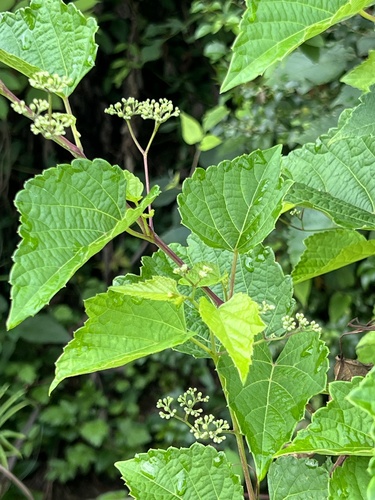
A climber which grows up to 20 m long. It climbs with twisting tendrils. It loses its leaves during the year. Leaves are alternate and have lobes. They have teeth around the edge. The leaves are 8-13 cm long. They are an attractive bright green. Flowers are light green and produced in clusters. The fruit is carried in small bunches. Fruit are 6-8 mm across. The fruit can be white, pink, green or blue. They turn black when ripe.
Edible Uses
The leaf buds, leaves, and stems are eaten cooked. The fruits are eaten raw or cooked.
Traditional Uses
The leaf buds are eaten cooked. The leaves and stems are eaten cooked. The fruit are eaten raw or cooked.
This uses section is brief — help expand it
Distribution
It grows naturally in thickets in hills all over Japan. It needs a warm sheltered position in full sun. The need a fertile porous soil. It can grow in light shade. It cannot tolerate water logging. It can survive frosts. It does best with a pH of 6-6.5. It suits hardiness zones 4-10.
Where It Grows
Asia, Australia, China, Japan, Korea, Indochina, North America, Russia, USA,
Cultivation
It can be grown by seed, cuttings or layering. Softwood or hardwood cuttings can be used. It should be near a wall or trellis.
Production
In China plants flower from July to August and fruit September to October.
Notes
There are about 20-25 Ampelopsis species.
Synonyms
References (9)
- Bodkin, F., 1991, Encyclopedia Botanica. Cornstalk publishing, p 76
- Crandall, C & Crandall, B., 1996, Flowering Fruiting and Foliage vines. Sterling. p 89
- Cundall, P., (ed.), 2004, Gardening Australia: flora: the gardener's bible. ABC Books. p 147
- Hibbert, M., 2002, The Aussie Plant Finder 2002, Florilegium. p 27 (As Ampelopsis glandulosa var. brevipedunculata)
- J. Jap. Bot. 52:30. 1977
Show all 9 references Hide references
- Lord, E.E., & Willis, J.H., 1999, Shrubs and Trees for Australian gardens. Lothian. p 326
- Lyle, S., 2006, Discovering fruit and nuts. Land Links. p 58 (As Ampelopsis brevipedunculata)
- Plants for a Future database, The Field, Penpol, Lostwithiel, Cornwall, PL22 0NG, UK. http://www.scs.leeds.ac.uk/pfaf/.
- Ryan, S., 2008, Dicksonia. Rare Plants Manual. Hyland House. p 73