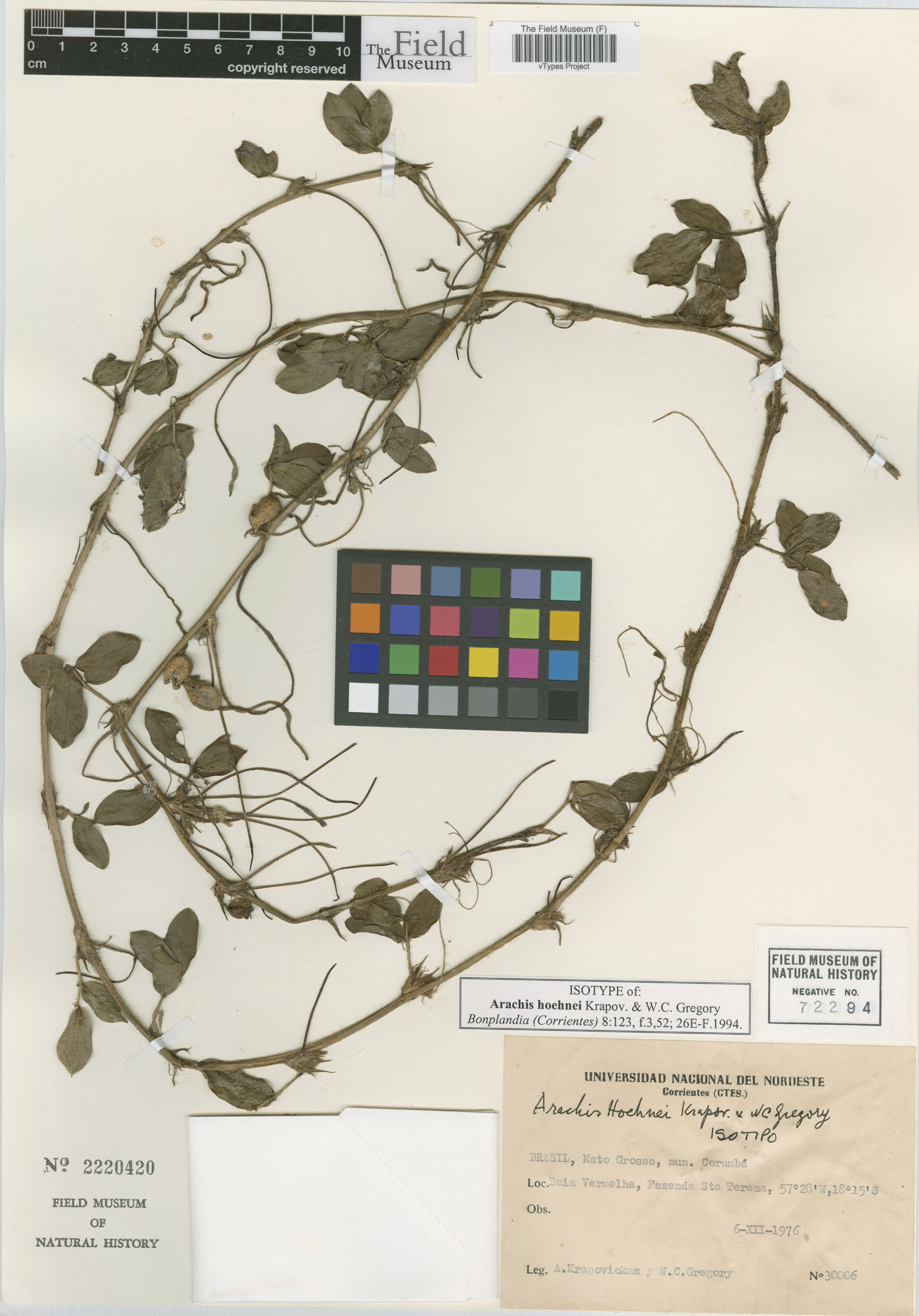
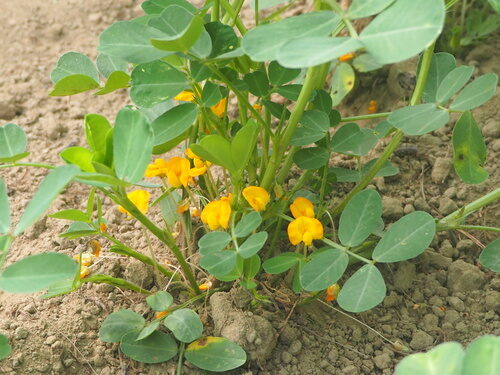
Vigna unguiculata cylindrica - (L.)Verdc.
(L.)Verdc.
Jerusalem Pea
gbif· cc-by-nc
Florida Museum of Natural History Herbarium - University of Florida
gbif· cc-by
Meise Botanic Garden
gbif· cc-by
Meise Botanic Garden
Description
Vigna unguiculata cylindrica is a ANNUAL growing to 0.5 m (1ft 8in). It is frost tender. It is in flower from July to September, and the seeds ripen from August to October. The species is hermaphrodite (has both male and female organs) and is pollinated by Insects. It can fix Nitrogen. Suitable for: light (sandy) and medium (loamy) soils and prefers well-drained soil. Suitable pH: mildly acid, neutral and basic (mildly alkaline) soils. It cannot grow in the shade. It prefers moist soil.
Edible Uses
Young seedpods - cooked. They are picked whilst the seeds are very immature and then cooked like French beans. Seed - cooked. Rich in protein.
Medicinal Uses
Diuretic Diuretic Parasiticide Stomachic Stomachic. The seed is diuretic. It is used to strengthen the stomach. When boiled and eaten as a food it is considered to destroy worms in the stomach.
Distribution
A cultivated form, notknown in the wild.
Where It Grows
Coming Soon
Cultivation
Requires a very warm sunny position in a moist but well drained soil. Often cultivated for its edible seed in warm temperate and tropical zones, it is best started off in a greenhouse in Britain and planted out after the last expected frosts. Plants have given reasonable yields for the past 3 years on our trial grounds in Cornwall (1993). This species has a symbiotic relationship with certain soil bacteria, these bacteria form nodules on the roots and fix atmospheric nitrogen. Some of this nitrogen is utilized by the growing plant but some can also be used by other plants growing nearby. When removing plant remains at the end of the growing season, it is best to only remove the aerial parts of the plant, leaving the roots in the ground to decay and release their nitrogen.
Propagation
Pre-soak the seed for 12 hours in warm water and sow in trays in early to mid spring in a greenhouse. Germination should take place within 10 days. Grow the plants on fast and plant them out after the last expected frosts. Consider giving them the protection of a cloche for their first few weeks outdoors to ensure that they do not suffer a check to their growth. An outdoor sowing in situ in late spring may succeed in a warm summer, though it is much more likely to be a disappointment in Britain.
Other Uses
Parasiticide. None known
Synonyms
Also Known As
Catjangbohne, Dolique catjan, Duan jia jiang dou, Fagiolo del occhio, Hata sasage, Judia catjang, Panni minnapayaru, Sanndaek sa, catjang cowpea, kulattha, long bean|mekaral / li -me / nil me.