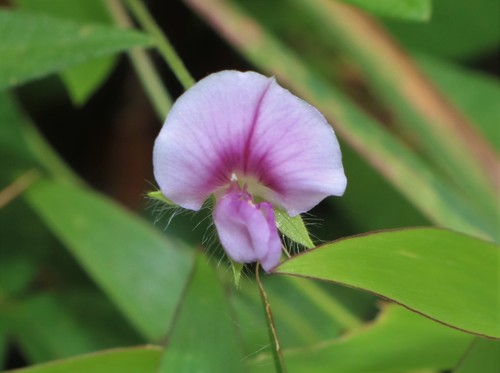
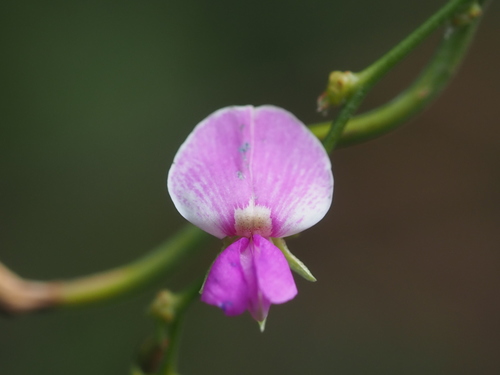
Vigna unguiculata subsp. catjang
(L.) Walp.; (Burm.) Chiov.
Catjang bean, Cowpea, Marble pea
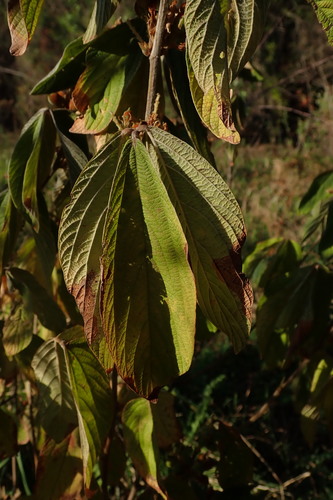
iNaturalist· cc-by-nc
(c) Craig Peter, some rights reserved (CC BY-NC), uploaded by Craig Peter
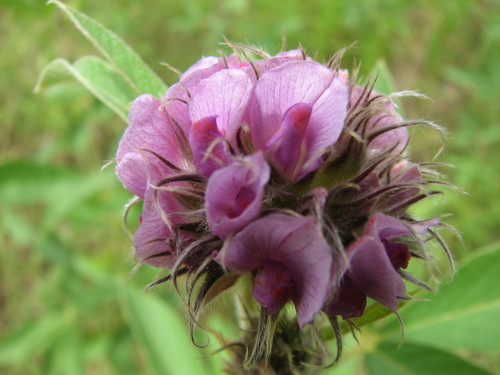
iNaturalist· cc0
no rights reserved, uploaded by S.MORE
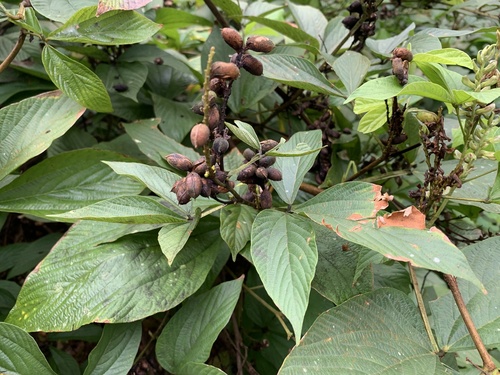
iNaturalist· cc-by-nc
(c) jm Wu, some rights reserved (CC BY-NC), uploaded by jm Wu
Description
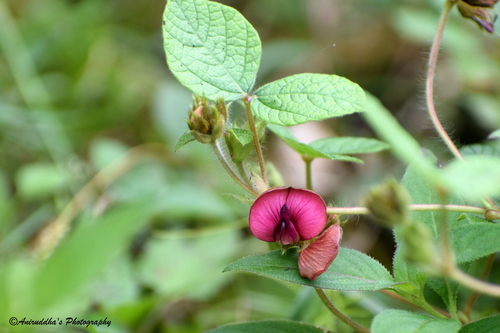
An annual climbing herb in the Fabaceae family that is a tropical plant. The seeds are oblong and 5-6 mm long, and the erect pods are 8-20 cm long and 5 mm wide.
Edible Uses
The seeds, young pods, and leaves are eaten.
Distribution
A tropical plant.
Where It Grows
Africa, Bangladesh, Central Africa, Congo, Europe, India, Italy, Mauritius, Mediterranean, North Africa, Portugal,
Notes
There are about 150 Vigna species. They are mostly in the tropics.
Nutrition
| Part | Moisture | kJ | kcal | Protein | Vit A | Vit C | Iron | Zinc |
|---|---|---|---|---|---|---|---|---|
| Seeds raw | 77.2 | — | — | 28 | — | 13.1 | — | 2.8 |
| Leaves | — | — | — | — | — | — | — | — |
Synonyms
Vigna catjang Walp.
Also Known As
Barbati
References (4)
- Hedrick, U.P., 1919, (Ed.), Sturtevant's edible plants of the world. p 679
- Jardin, C., 1970, List of Foods Used In Africa, FAO Nutrition Information Document Series No 2.p 30, 110
- Purseglove, J.W., 1968, Tropical Crops Dicotyledons, Longmans. p 322
- Rashid, H. E., 1977, Geography of Bangladesh. Westview. p 262 (As Vigna catiang)