Vigna unguiculata
(L.) Walp.
Cowpea, Black-eyed pea
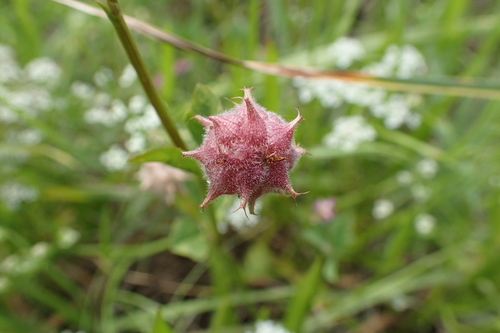
iNaturalist· cc-by-sa
(c) James (Jim) Duggan, some rights reserved (CC BY-SA), uploaded by James (Jim) Duggan
gbif· cc-by-nc
Jane Trembath
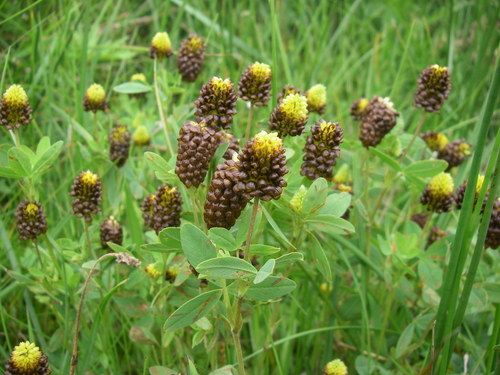
iNaturalist· cc-by-nc
(c) Lori A Owenby, some rights reserved (CC BY-NC), uploaded by Lori A Owenby
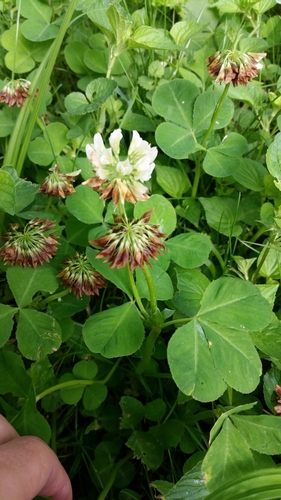
iNaturalist· cc-by-nc
(c) Craig Peter, some rights reserved (CC BY-NC), uploaded by Craig Peter
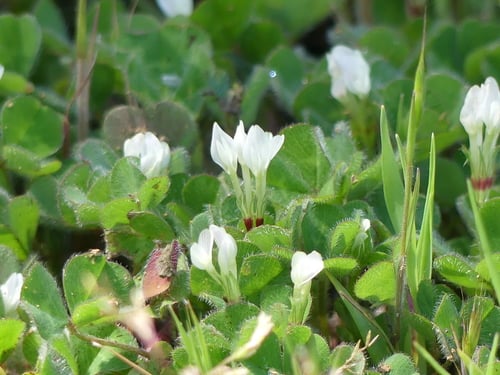
iNaturalist· cc0
no rights reserved, uploaded by S.MORE
iNaturalist· cc-by-nc
(c) jm Wu, some rights reserved (CC BY-NC), uploaded by jm Wu
Description
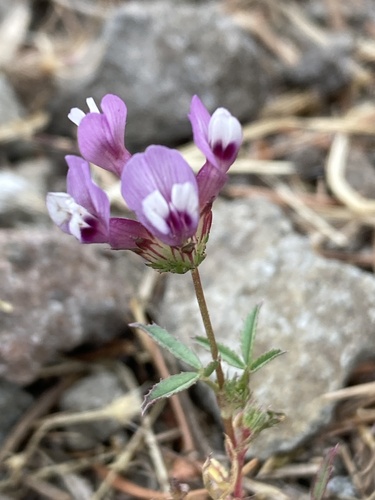
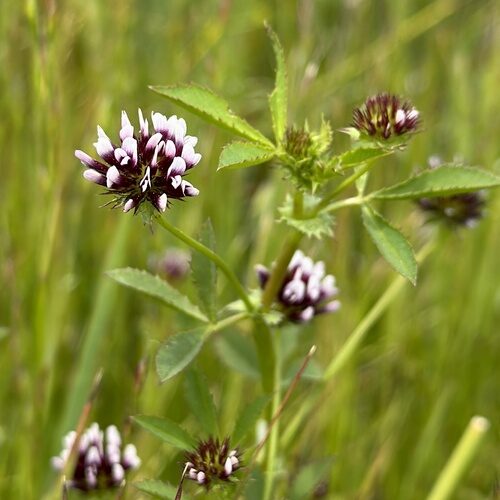
A creeping bean type plant with straight firm pods. Both cover crop types (leafy) and grain types occur. There is a deep tap root and many branches occur from it in the surface of the soil. The root nodules are large and round. They can be 5 mm across. The leaves have 3 leaflets. The end leaflet can be 12-16 cm long. This leaflet is larger than the side leaflets. The side leaflets are assymetrical. The stipules at the base of the leaf are large and with spurs at their base. Flowers occur often in pairs on the end of long flowering shoots. This stalk can be 2 cm to 30 cm long. Only 2-4 flowers in each stalk produce pods. Flowers are white, yellow or blue. They are large and showy. The standard petal is 2-3 cm across. The pods are about 15 cm long. The seeds are white except for a dark scar.
Edible Uses
Most cowpeas are grown on the African continent, particularly in Nigeria and Niger, which account for 66% of world cowpea production. The Sahel region also contains other major producers such as Burkina Faso, Ghana, Senegal, and Mali. Niger is the main exporter of cowpeas and Nigeria the main importer. Exact figures for cowpea production are hard to come up with as it is not a major export crop. Estimating world cowpea production is rather difficult, as it is usually grown in a mixture with other crops, but according to a 1997 estimate, cowpeas were cultivated on 12.5 million hectares (31 million acres) and had a worldwide production of 3 million metric tons (3,000,000 long tons; 3,300,000 short tons). While they play a key role in subsistence farming and livestock fodder, the cowpea is also seen as a major cash crop by Central and West African farmers, with an estimated 200 million people consuming cowpea on a daily basis. According to the Food and Agriculture Organization of the United Nations, as of 2012, the average cowpea yield in Western Africa was an estimated 483 kilograms per hectare (431 lb/acre), which is still 50% below the estimated potential production yield. In some tradition cropping methods, the yield can be as low as 100 kilograms per hectare (89 lb/acre). Outside Africa, the major production areas are Asia, Central America, and South America. Brazil is the world's second-leading producer of cowpea seed, accounting for 17% of annual cowpea production, although most is consumed within the country. Cowpeas are grown mostly for their edible beans, although the leaves, green seeds and pods can also be consumed, meaning the cowpea can be used as a food source before the dried peas are harvested. Like other legumes, cowpeas are cooked to make them edible, usually by boiling. Cowpeas can be prepared in stews, soups, purees, casseroles and curries. They can also be processed into a paste or flour. Chinese long beans can be eaten raw or cooked, but as they easily become waterlogged are usually sautéed, stir-fried, or deep-fried. A common snack in Africa is koki or moin-moin, where the cowpeas are mashed into a paste, mixed with spices and steamed in banana leaves. Dan wake cowpea dumplings are common in northern Nigeria and environs. They also use the cowpea paste as a supplement in infant formula when weaning babies off milk. Slaves brought to America and the West Indies cooked cowpeas much the same way as they did in Africa, although many people in the American South considered cowpeas not suitable for human consumption. A popular dish was Hoppin' John, which contained black-eyed peas cooked with rice and seasoned with pork. Over time, cowpeas became more universally accepted and now Hoppin' John is seen as a traditional Southern dish ritually served on New Year's Day.
Traditional Uses
The young leaves, young pods and ripe seeds are all eaten. They can be steamed, boiled, stir-fried etc. The leaves can be dried and stored. The dried seeds are used in soups and stews. They are ground into flour or fermented. The seeds are also used for bean sprouts. Roasted seeds are used as a coffee substitute.
Distribution
It grows in tropical and subtropical climates. It grows from sea level to 1800 metres altitude in the tropics. In Ethiopia it grows between 500-2,000 m above sea level. Plants can stand high temperatures. Some kinds can tolerate drought. They are sensitive to cold and killed by frost. Plants germinate with a temperature between 11.5-15.5°C. The best growth is between 20-35°C. They can grow on a range of soils providing they are well drained. They are a short day plant. They do well in the semiarid tropics. It will not tolerate acid or alkaline soils. It grows in areas with an annual rainfall between 280-410 mm. It can grow in arid places. It can tolerate shade so is good for inter-cropping.
Where It Grows
Afghanistan, Africa, Angola, Asia, Australia, Balkans, Bangladesh, Barbados, Benin, Bolivia, Botswana, Brazil, Burkina Faso, Burundi, Cambodia, Cameroon, Cape Verde, Caribbean, Central Africa, Central America, Central Asia, Chad, China, Comoros, Congo DR, Costa Rica, Côte d'Ivoire, Cuba, Djibouti, Dominican Republic, East Africa, East Timor, Ecuador, El Salvador, Equatorial Guinea, Eritrea, Eswatini, Ethiopia, Fiji, French Guiana, Gambia, Ghana, Guatemala, Guianas, Guinea, Guinée, Guinea-Bissau, Guyana, Haiti, Hawaii, Himalayas, India, Indochina, Indonesia, Iran, Iraq, Ivory Coast, Jamaica, Japan, Kenya, Korea, Laos, Liberia, Macedonia, Madagascar, Malawi, Mali, Mauritania, Mauritius, Middle East, Mozambique, Myanmar, Namibia, Nepal, Niger, Nigeria, Niue, North America, Northeastern India, Pacific, Pakistan, Papua New Guinea, PNG, Peru, Philippines, Puerto Rico, Rotuma, Rwanda, Sao Tome and Principe, Saudi Arabia, SE Asia, Senegal, Seychelles, Sierra Leone, Sikkim, Somalia, South Africa, Southern Africa, South America, South Sudan, Sri Lanka, Sudan, Suriname, Swaziland, Taiwan, Tajikistan, Tanzania, Thailand, Timor-Leste, Togo, Turkey, Türkiye, Tuvalu, Uganda, USA, Vietnam, West Africa, West Indies, West Timor, Yemen, Yugoslavia, Zambia, Zimbabwe,
Cultivation
It is grown from seeds. Seed collection is easy. Seeds remain viable for several years if carefully stored. A seeding rate of about 20 kg per ha is suitable and seed are sometimes broadcast then thinned. Cowpeas mostly inbreed giving pure lines.
Other Information
It is a valuable food as well as a cover crop. It is cultivated. It has become well accepted in some areas of Papua New Guinea. eg Baiyer River.
Notes
Chemical composition: Protein (crude) = 28.0% (dry). Fat = 1.4% (dry). Fibre (crude): 3.1% (dry). Ash (insoluble) = 3.4% (dry). Carbohydrate (soluble): Starch = 33.4% (dry). Sucrose = 6.8% (dry). D-glucose = 0.2% (dry). D-fructose = 0.4% (dry). Amino acids (g [16g N]-1): Aspartic acid = 13.1g. Threonine = 4.2g. Serine = 4.8g. Glutamic acid = 17.5g. Proline = 3.7g. Glycine = 4.2g. Alanine = 4.7g. Valine = 6.1g. Cysteine = 0.8g. Methionine = 1.4g. Isoleucine = 5.0g. Leucine = 8.3g. Tyrosine = 3.6g. Phenylalanine = 6.4g. Lysine = 8.2g. Histidine = 3.5g. Arginine = 8.9g. Minerals: Sulphur = 0.16% (dry). Potassium = 0.47% (dry). Magnesium = 0.15% (dry). Calcium = 0.08% (dry). Na = 0.01% (dry). K = 1.43% (dry). Zinc = 28mg/kg-1 (dry). Iron = 90mg/kg-1 (dry). Manganese = 20mg/kg-1 (dry). Copper = 6mg/kg-1 (dry).There are about 150 Vigna species. They are mostly in the tropics.
Synonyms
Also Known As
Adenguare, Agwa, Akara-binch, Akedi, Akitereku ase, Amuli, Asedua kokoo, Atidua, Barbati, Be-hlawi, Belawi, Beloi, Besei, Birijori, Black eye pea, Black-eyed bean, Bodi, Bojo, Boo, Bora bean, Bori, Caspi chiclayo, Caupi, Dau den, Daun talak, Dau-trang, Dinaba, Dinawa, Dolique a oeil noir, Dunguri, Eboo, Eggobe, Ekiyindiru, E-lel, Enkoole, Ere, Ewa, Ewe, Feijao-macanha, Fore-metan, Frejol, Frijol de vaca, Gahat, Imare, Imbumba, Indumba, Iniangu, Jiang dou, Kacang merah, Karnikara, Kaspi purutu, Kattukanam, Kelege kelegete, Kollu, Kuerbse, Kunde, Laputu, Likote, Madan bean, Manawa, Mandala, Mazi bori, Mbwenge, Mkunde, Mole, Mpindi, Mugobiswa, Muma kiore, Munaoa, Munawa, muNyemba, Mwende, Ngor, Nhebe-limboncadje, Nhebe-limboque, Niaw, Niebe, Nkasa, Nsili, Nthooko, Nyawa, Nyemba, Nyebe, Nyele, Nzooko, Obo, Obo alwala, Omugobe, Peanut bean, Pini, Sasage, Sbaithai, Seb, Shirshira, Sosso, Tau kok, Tchaasse, Te bin, Thua pum, Tindlubu, Tinhlumayo, Titoun'ti, Tnainyeritonn'te, Towo, Vainita, Verdura, Wake, Wakei, Watalo-binch, Yoo
References (126)
- Abbiw, D.K., 1990, Useful Plants of Ghana. West African uses of wild and cultivated plants. Intermediate Technology Publications and the Royal Botanic Gardens, Kew. p 31
- ABDELMUTI
- Achigan-Dako, E, et al (Eds), 2009, Catalogue of Traditional Vegetables in Benin. International Foundation for Science.
- Acipa, A. et al, 2013, Nutritional Profile of some Selected Food Plants of Otwal and Ngai Counties, Oyam District, Northern Uganda. African Journal or Food, Agriculture, Nutrition and Development. 13(2)
- Agea, J. G., et al 2011, Wild and Semi-wild Food Plants of Bunyoro-Kitara Kingdom of Uganda: etc. Environmental Research Journal 5(2) 74-86
Show all 126 references Hide references
- Amagloh, F. K. & Nyarko, E. S., 2012, Mineral Nutrient Content of Commonly Consumed Leafy Vegetables in Northern Ghana. African Hournal of Food, Agriculture, Nutrition and Development. Vol. 12(3): p 6397
- Ambasta, S.P. (Ed.), 2000, The Useful Plants of India. CSIR India. p 678
- Anderson, E. F., 1993, Plants and people of the Golden Triangle. Dioscorides Press. p 224
- Andabati, B., & Muyonga, J., 2014, Phenolic content and antioxidant activity of selected Ugandian traditional medicinal foods. African Journal of Food Science. 8(8), pp 427-434
- Ara, R. I. T., 2015, Leafy Vegetables in Bangladesh. Photon eBooks. p 109
- Arinathan, V., et al, 2007, Wild edibles used by Palliyars of the western Ghats, Tamil Nadu. Indian Journal of Traditional Knowledge. 6(1) pp 163-168
- Asfaw, Z., Conservation and use of traditional vegetables in Ethiopia. FAO
- Baa-Poku, F. & Asante, I. K., 2020, Use of Neglected and Underutilized Crop Species (NUCS) in some farming communities in the Upper Afram and Upper Dayi River Basins in Ghana. International Journal of Technology and Management Research 5 (2): 48-63
- Baidu-Forson, J.J., et al ,2014,. Assessment of agrobiodiversity resources in the Borotse flood plain, Zambia. CGIAR Research Program on Aquatic Agricultural Systems. Penang, Malaysia. Working Paper: AAS-2014-12.
- Bernholt, H. et al, 2009, Plant species richness and diversity in urban and peri-urban gardens of Niamey, Niger. Agroforestry Systems 77:159-179
- Bianchini, F., Corbetta, F., and Pistoia, M., 1975, Fruits of the Earth. Cassell. p 36
- Bodkin, F., 1991, Encyclopedia Botanica. Cornstalk publishing, p 1017 (As Vigna sinensis)
- Bodkin, F., 1991, Encyclopedia Botanica. Cornstalk publishing, p 1017
- Burkill, H. M., 1985, The useful plants of west tropical Africa, Vol. 3. Kew.
- Catarino, L., et al, 2016, Ecological data in support of an analysis of Guinea-Bissau's medicinal flora. Data in Brief 7 (2016):1078-1097 (As var. spontanea)
- Cobley, L.S. (rev. Steele, W.M.) 2nd Ed., 1976, An Introduction to the Botany of Tropical Crops. Longmans. p 92
- D'Ambrosio, U., & Puri, R. K., 2016, Foodways in transition: food plants, diet and local perceptions of change in a Costa Rican Ngäbe community. Journal of Ethnobiology and Ethnomedicine (2016) 12:3 p 24
- Dakora, F. D., 2013, Biogeographic Distribution, Nodulation and Nutritional Attributes of Underutilized Indigenous Agrican Legumes. Acta Horticulturae Number 979 Vol. 1. p 53
- Dansi, A., et al, 2008, Traditional leafy vegetables and their use in the Benin Republic. Genet Resour Crop Evol (2008) 55:1239–1256
- Dey, A. & Mukhererjee, A., 2015, Living and Survival Amidst Hunger: Wild Edible Botanicals as a Prime Forest Productivity in the Rural Purulia District, West Bengal, India from Colonial to Present. Research Journal of Forestry 9(3): 71-86 (As Dolichos biflorus)
- Diouf, M., et al, Leafy Vegetables in Senegal. Bioversity webite
- Duarte, M. C., et al, 2022, Diversity of Useful Plants in Cabo Verde Islands: A Biogeographic and Conservation Perspective. Plants 2022, 11, 1313 p 6
- Epenhuijsen C.W. van., 1974, Growing Native vegetables in Nigeria. FAO Rome, p 101
- Ertug, F, Yenen Bitkiler. Resimli Türkiye Florası -I- Flora of Turkey - Ethnobotany supplement
- Facciola, S., 1998, Cornucopia 2: a Source Book of Edible Plants. Kampong Publications, p 113
- FAO, 1988, Traditional Food Plants, FAO Food and Nutrition Paper 42. FAO Rome p 514
- Flora Somalia. http://plants.jstor.org
- Flora of Pakistan. www.eFloras.org
- Fowler, D. G., 2007, Zambian Plants: Their Vernacular Names and Uses. Kew. p 41
- Fox, F. W. & Young, M. E. N., 1982, Food from the Veld. Delta Books. p 220
- French, B.R., 1986, Food Plants of Papua New Guinea, A Compendium. Asia Pacific Science Foundation p 37
- French, B.R., 2010, Food Plants of Solomon Islands. A Compendium. Food Plants International Inc. p 391
- Gangte, H. E., et al, 2013, Wild Edible Plants used by the Zou Tribe in Manipur, India. International Journal of Scientific and Research Publications, Volume 3, Issue 5 (As Vigna sinensis)
- Godfrey, J. et al, 2013, Harvesting, preparation and preservation of commonly consumed wild and semi-wild food plants in Bunyoro-Kitara Kingdom, Uganda. Int. J. Med. Arom. Plants. Vol.3 No.2 pp 262-282
- Goode, P., 1989, Edible Plants of Uganda. FAO p 26
- Goode, P., 1989, Edible Plants of Uganda. FAO p 36
- Goode, P., 1989, Edible Plants of Uganda. FAO p 39
- Grubben, G. J. H. and Denton, O. A. (eds), 2004, Plant Resources of Tropical Africa 2. Vegetables. PROTA, Wageningen, Netherlands. p 550
- Guite, C., 2016, Study of wild edible plants associated with the Paite Tribe of Manipur, India. International Journal of Current Research. Vol. 8, Issue 11, pp. 40927-40932 (As Vigna sinensis)
- Harris, F. M. A. and Salisu Mohammed, 2003, Relying on nature: Wild Foods in Northern Nigeria. AMBIO Vol. 32 No. 1, p 27
- Hedrick, U.P., 1919, (Ed.), Sturtevant's edible plants of the world. p 281 (As Dolichos sphaerospermus and Dolichos hastatus))
- Hermandez Bermejo, J.E., and Leon, J. (Eds.), 1994, Neglected Crops. 1492 from a different perspective. FAO Plant Production and Protection Series No 26. FAO, Rome. p 291
- http://www.botanic-gardens-ljubljana.com/en/plants
- Hu, Shiu-ying, 2005,
- Hwang, H., et al, 2013, A Study on the Flora of 15 Islands in the Western Sea of Jeollanamdo Province, Korea. Journal of Asia-Pacific Biodiversity Vol. 6, No. 2 281-310
- Irawan, D., et al, 2006, Ethnobotanical study and nutrient potency of local traditional vegetables in Central Kalimantan. Tropics Vol. 15(4)
- Jha, P. K., et al, 1996, Plant genetic resources of Nepal: A guide for plant breeders of agricultural, horticultural and forestry crops. Euphytica 87:189-210
- Kar, A., et al, 2013, Wild Edible Plant Resources used by the Mizos of Mizoram, India. Kathmandu University Journal of Science, Engineering and Technology. Vol. 9, No. 1, July, 2013, 106-126
- Kermath, B. M., et al, 2014, Food Plants in the Americas: A survey of the domesticated, cultivated and wild plants used for Human food in North, Central and South America and the Caribbean. On line draft. p 912
- Kumar, A., et al, 2012, Ethnobotanical Edible Plant Biodiversity of Lepcha Tribes. Indian Forester, 138 (9):798-803 (As Phaseolus unguiculata)
- Latham, P., 2004, Useful Plants of Bas-Congo province. Salvation Army & DFID p 290
- Lim, T. K., 2015, Edible Medicinal and Non Medicinal Plants. Volume 9, Modified Stems, Roots, Bulbs. Springer p 40
- Lulekal, E., et al, 2011, Wild edible plants in Ethiopia: a review on their potential to combat food insecurity. Afrika Focus - Vol. 24, No 2. pp 71-121
- Magwede, K., van Wyk, B.-E., & van Wyk, A. E., 2019, An inventory of Vhavenḓa useful plants. South African Journal of Botany 122 (2019) 57–89
- Malaisse, F., 1997, Se nourrir en floret claire africaine. Approche ecologique et nutritionnelle. CTA., p 69
- Mertz, O., Lykke, A. M., and Reenberg, A., 2001, Importance and Seasonality of Vegetable Consumption and Marketing in Burkina Faso. Economic Botany, 55(2):276-289
- Miguel, E., et al, 1989, A checklist of the cultivated plants of Cuba. Kulturpflanze 37. 1989, 211-357
- Moerman, D. F., 2010, Native American Ethnobotany. Timber Press. p 596
- Molla, A., Ethiopian Plant Names. http://www.ethiopic.com/aplants.htm
- Mutie, F. G., 2020, Conservation of Wild Food Plants and Their Potential for Combatting Food Insecurity in Kenya as Exemplified by the Drylands of Kitui County. Plants 2020, 9, 1017
- Mutie, F. M., et al, 2023, Important Medicinal and Food Taxa (Orders and Families) in Kenya, Based on Three Quantitative Approaches. Plants 2023, 12, 1145
- Ochse, J.J. et al, 1931, Vegetables of the Dutch East Indies. Asher reprint. p 435 (As Vigna sinensis)
- Omawale, 1973, Guyana's edible plants. Guyana University, Georgetown p 115
- Omawale, 1973, Guyana's edible plants. Guyana University, Georgetown p 83 (As Vigna sinensis)
- Oomen, H.A.P.C., & Grubben, G.J.H., 1978, Tropical Leaf Vegetables in Human Nutrition, Communication 69, Department of Agricultural research, RTI Amsterdam, p10, 36, 66
- Pham-Hoang Ho, 1999, An Illustrated Flora of Vietnam. Nha Xuat Ban Tre. p 957
- Phon, P., 2000, Plants used in Cambodia. © Pauline Dy Phon, Phnom Penh, Cambodia. p 626
- Plants of Haiti Smithsonian Institute http://botany.si.edu/antilles/West Indies
- Purseglove, J.W., 1968, Tropical Crops Dicotyledons, Longmans. p 322
- Rajapaksha, U., 1998, Traditional Food Plants in Sri Lanka. HARTI, Sri Lanka. p 237 (As Dolichos biflorus and Vigna catang)
- Royal Botanic Gardens, Kew (1999). Survey of Economic Plants for Arid and Semi-Arid Lands (SEPASAL) database. Published on the Internet; http://www.rbgkew.org.uk/ceb/sepasal/internet [Accessed 1st May 2011]
- Rubaihayo, E. B., Conservation and use of traditional vegetables in Uganda. Bioversity International.
- Ruiters-Welcome, A. K., 2019, Food plants of southern Africa. Ph.D. thesis. Univ. of Johannesburg p 63
- Salako, V. K. et al, 2013, Home gardens: an assessment of their biodiversity and potential contribution to conservation of threatened species and crop wild relatives in Benin. Genet Resour Crop Evol
- Schneider, E., 2001, Vegetables from Amaranth to Zucchini: The essential reference. HarperCollins. p 60
- Segnon, A. C. & Achigan-Dako, E. G., 2014, Comparative analysis of diversity and utilization of edible plants in arid and semi-arid areas in Benin. Journal of Ethnobiology and Ethnomedicine 2014, 10:80
- Shah, S. K., 2014, Dietary contribution of underutilized minor crops and indigenous plants collected from uncultivated lands and forests in Nepal. in Promotion of Underutilized Indigenous Food Resources for Food Security and Nutrition in Asia and Pacific. FAO. Bangkok p 64 (As Dolichos biflorus and Vigna sinensis)
- Sharma, B.B., 2005, Growing fruits and vegetables. Publications Division. Ministry of Information and broadcasting. India. p 148
- Shava, S., et al, 2009, Traditional food crops as a source of community resilience in Zimbabwe. International Journal of the African Renaissance 4(1)
- Smith, K., 1998. Growing Uncommon Fruits and Vegetables. New Holland. p 2
- Sprent, J. I., et al, 2009, African legumes: a vital but under-utilized resource. Journal of Experimental Botany. Vol. 61 No. 5 pp. 1257-1265
- Staples, G.W. and Herbst, D.R., 2005, A tropical Garden Flora. Bishop Museum Press, Honolulu, Hawaii. p 329
- Steel, W.M., 1979, Cowpeas, in Simmonds N.W.,(ed), Crop Plant Evolution. Longmans. London. p 183
- Sukenti, K., et al, 2016, Ethnobotanical study on local cuisine of the Sasak tribe in Lombok Island, Indonesia. Journal of Ethnic Foods. 3 (2016) 189-200 p 198
- Swaziland's Flora Database http://www.sntc.org.sz/flora
- Termote, C., et al, 2014, Assessing the potential of wild foods to reduce the cost of a nutritionally adequate diet: An example from eastern Baringo District, Kenya. Food and Nutrition Bulletin, vol. 35, no. 4
- Terra, G.J.A., 1973, Tropical Vegetables. Communication 54e Royal Tropical Institute, Amsterdam, p 80
- Thaman, R. R, 2016, The flora of Tuvalu. Atoll Research Bulletin No. 611. Smithsonian Institute p 93
- Torre, de la, L., et al, 2008, Enciclopedia de las Plantas Útiles del Ecuador. Herbario QCA. Pontificia Universidad Católica del Ecuador. p 364
- Tredgold, M.H., 1986, Food Plants of Zimbabwe. Mambo Press. p 17
- USDA, ARS, National Genetic Resources Program. Germplasm Resources Information Network - (GRIN). [Online Database] National Germplasm Resources Laboratory, Beltsville, Maryland. Available: www.ars-grin.gov/cgi-bin/npgs/html/econ.pl (10 April 2000)
- van Wyk, B., 2005, Food Plants of the World. An illustrated guide. Timber press. p 383
- van Wyk, Be, & Gericke, N., 2007, People's plants. A Guide to Useful Plants of Southern Africa. Briza. p 30
- Vasquez, R. and Gentry, A. H., 1989, Use and Misuse of Forest-harvested Fruits in the Iquitos Area. Conservation Biology 3(4): 350f
- Verdcourt, B., 1979, Manual of New Guinea Legumes. Botany Bulletin No 11, Division of Botany, Lae, Papua New Guinea. p 527
- Vickery, M.L. and Vickery, B., 1979, Plant Products of Tropical Africa, Macmillan. p 21
- Walter, A. & Lebot, V., 2007, Gardens of Oceania. ACIAR Monograph No. 122. p 219
- Weinberger, K., Msuya J., 2004, Indigenous Vegetables in Tanzania. Significance and Prospects. Technical Bulletin No. 31 AVRDC, Taiwan/FAO p 4
- Williams, C.N., Chew, W.Y., and Rajaratnam, J.A., 1989, Tree and Field Crops of the Wetter Regions of the Tropics. Longman, p 183
- Williamson, J., 2005, Useful Plants of Malawi. 3rd. Edition. Mdadzi Book Trust. p 261
- Zon, A.P.M. van der, Grubben, G.J.H., 1976, Les legumes-feuilles spontanes et cultives du Sud-Dahomey, Communication 65, Royal Tropical Institute, Amsterdam, p 104, 105. Longmans. London. p 183
- Swaziland's Flora Database http://www.sntc.org.sz/flora
- Terra, G.J.A., 1973, Tropical Vegetables. Communication 54e Royal Tropical Institute, Amsterdam, p 80 and p 45 (As Dolichos sphaerospermus)
- Tredgold, M.H., 1986, Food Plants of Zimbabwe. Mambo Press. p 17
- USDA, ARS, National Genetic Resources Program. Germplasm Resources Information Network - (GRIN). [Online Database] National Germplasm Resources Laboratory, Beltsville, Maryland. Available: www.ars-grin.gov/cgi-bin/npgs/html/econ.pl (10 April 2000)
- van Wyk, B., 2005, Food Plants of the World. An illustrated guide. Timber press. p 383
- van Wyk, Be, & Gericke, N., 2007, People's plants. A Guide to Useful Plants of Southern Africa. Briza. p 30
- van Wyk, B-E., 2011, The potential of South African plants in the development of new food and beverage products. South African Journal of Botany 77 (2011) 857–868
- van Wyk, Ben-Erik, 2019, The diversity and multiple uses of southern African legumes. Australian Systematic Botany, 2019, 32, 519–546
- Verdcourt, B., 1979, Manual of New Guinea Legumes. Botany Bulletin No 11, Division of Botany, Lae, Papua New Guinea. p 527
- Vickery, M.L. and Vickery, B., 1979, Plant Products of Tropical Africa, Macmillan. p 21
- Walter, A. & Lebot, V., 2007, Gardens of Oceania. ACIAR Monograph No. 122. p 219
- Weinberger, K., Msuya J., 2004, Indigenous Vegetables in Tanzania. Significance and Prospects. Technical Bulletin No. 31 AVRDC, Taiwan/FAO p 4
- Welcome, A. K. & Van Wyk, B.-E., 2019, An inventory and analysis of the food plants of southern Africa. South African Journal of Botany 122 (2019) 136–179
- Wiersema, J. H. & Leon, B., 2013, World Economic Plants. A Standard Reference CRC Press. 2nd Ed. p 721
- Williams, C.N., Chew, W.Y., and Rajaratnam, J.A., 1989, Tree and Field Crops of the Wetter Regions of the Tropics. Longman, p 183
- Williamson, J., 2005, Useful Plants of Malawi. 3rd. Edition. Mdadzi Book Trust. p 261
- Wiriadinata, H., 1995, Ethnobotany of Economic Plants in the Baliem Valley, Jayawijaya, Irian Jaya, Indonesian Institute of Science, Bogor, Indonesia (As Vigna sinensis)
- World Checklist of Useful Plant Species 2020. Royal Botanic Gardens, Kew
- Zeven, A. C. & de West, J. M. J., 1982, Dictionary of cultivated plants and their regions of diversity. Wageningen. p 76
- Zon, A.P.M. van der, Grubben, G.J.H., 1976, Les legumes-feuilles spontanes et cultives du Sud-Dahomey, Communication 65, Royal Tropical Institute, Amsterdam, p 104, 105