Vigna unguiculata subsp. cylindrica
(L.) Verdc.
Horse-gram of Madras, Catjang pea, Indian cowpea
iNaturalist· cc-by-nc
(c) Craig Peter, some rights reserved (CC BY-NC), uploaded by Craig Peter
iNaturalist· cc-by-nc
(c) fhulum, some rights reserved (CC BY-NC)
iNaturalist· cc-by-nc
(c) fhulum, some rights reserved (CC BY-NC)
Description
An annual climbing herb. It grows 7-13 m long. It has erect pods. The pods are 8-20 cm long and 5 mm wide. The seeds are oblong. They are 5-6 mm long.
Edible Uses
The seeds are eaten, and the young pods are eaten as a vegetable.
Traditional Uses
The seeds are eaten. The young pods are eaten as a vegetable.
This uses section is brief — help expand it
Distribution
A tropical plant.
Where It Grows
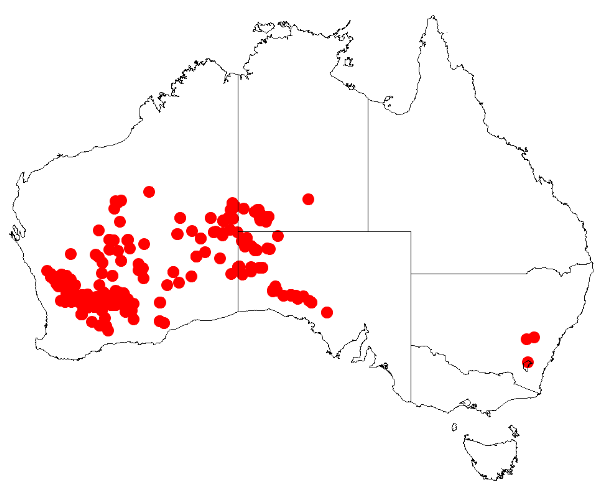
Africa, Andamans, Asia, Australia, Cambodia, Central Africa, China, Congo, Cuba, East Africa, India, Indochina, Japan, Kenya, Korea, Laos, Mozambique, Pakistan, Philippines, SE Asia, Somalia, Vietnam, West Indies,
Other Information
It is cultivated.
Notes
There are about 150 Vigna species. They are mostly in the tropics.
Nutrition
| Part | Moisture | kJ | kcal | Protein | Vit A | Vit C | Iron | Zinc |
|---|---|---|---|---|---|---|---|---|
| Seeds dry | 7.5 | 1476 | 353 | 22.8 | — | — | — | — |
| Seeds young | 82 | 291 | 70 | 3.8 | — | — | 3.6 | — |
Synonyms
Also Known As
Catjangbohne, Dau do, Dau tia, Dolique catjan, Duan jia jiang dou, Fagiolo del occhio, Frijol precioso, Hata sasage, Judia catjang, Mantequilla, Panni minnapayaru, Sabrosito, Sanndaek sa
References (16)
- Aballe, K. E., 2012, Ethnobotanical Investigation of Matigsalug Ethnic Group in Sitio Patag, Brgy. Datu Salumay, Marilog District, Davao City. University of Southeastern Philippines. Part 2 p 21 (As Vigna cylindrica)
- Ambasta, S.P. (Ed.), 2000, The Useful Plants of India. CSIR India. p 678
- Arinathan, V., et al, 2007, Wild edibles used by Palliyars of the western Ghats, Tamil Nadu. Indian Journal of Traditional Knowledge. 6(1) pp 163-168
- Facciola, S., 1998, Cornucopia 2: a Source Book of Edible Plants. Kampong Publications, p 113
- Ghosh, A, 2014, Survey of Ethno-medicinal Climbing plants in Andaman and Nicobar Islands, India. Int. J. of Pharm. Life Sci. 5(7): July, 2014:3671-3677
Show all 16 references Hide references
- JSTOR Global Plants edible
- Kew Bull. 24:544. 1970 "subsp. cylindrica (L.) Eselt."
- Lazarides, M. & Hince, B., 1993, Handbook of Economic Plants of Australia, CSIRO. p 247
- Maundu, P. et al, 1999, Traditional Food Plants of Kenya. National Museum of Kenya. 288p
- Miguel, E., et al, 1989, A checklist of the cultivated plants of Cuba. Kulturpflanze 37. 1989, 211-357
- Phon, P., 2000, Plants used in Cambodia. © Pauline Dy Phon, Phnom Penh, Cambodia. p 627
- Plants for a Future database, The Field, Penpol, Lostwithiel, Cornwall, PL22 0NG, UK. http://www.scs.leeds.ac.uk/pfaf/
- Tanaka,
- USDA, ARS, National Genetic Resources Program. Germplasm Resources Information Network - (GRIN). [Online Database] National Germplasm Resources Laboratory, Beltsville, Maryland. Available: www.ars-grin.gov/cgi-bin/npgs/html/econ.pl (10 April 2000)
- van Wyk, B., 2005, Food Plants of the World. An illustrated guide. Timber press. p 383
- Wiersema, J. H. & Leon, B., 2013, World Economic Plants. A Standard Reference CRC Press. 2nd Ed. p 721