Pinus palustris
Mill.
Longleaf pine, Pitch pine, Southern yellow pine
iNaturalist· cc-by
(c) Katja Schulz, some rights reserved (CC BY)
iNaturalist· cc-by-sa
(c) Douglas Goldman, some rights reserved (CC BY-SA)
iNaturalist· cc-by-sa
(c) Douglas Goldman, some rights reserved (CC BY-SA)
Summary
Source: WikipediaSlow-growing evergreen reaching 30m tall and 5m wide. Monoecious, wind-pollinated, not self-fertile. Year-round foliage, flowers March to April, seeds ripen October. Tolerates light sandy and medium loamy well-drained soils, nutritionally poor conditions. Grows in mildly acidic and neutral soils. Requires full sun, adapts to dry and moist conditions with drought tolerance.
Description
A tall pine tree. It grows 40 m tall. The trunk can be 1.2 m across. The bark is orange-brown and in coarse rectangular plates. The leaves are needle like and 20-45 cm long by 1.5 mm wide. They are shiny and slightly twisted. They are in bundles of 2-3. The male cones are cylinder shaped and 3-8 cm long. The female cones are 15-25 cm long. The seeds are 10 mm long.
Edible Uses
A vanillin flavouring is obtained as a by-product of resins released from the pulpwood.
Traditional Uses
The seeds or nuts are eaten raw or roasted. The needles are used for tea. The inner bark can be used for emergency flour.
This uses section is brief — help expand it
Medicinal Uses
Turpentine from pine resin is antiseptic, diuretic, rubefacient, and vermifuge. Taken internally, it treats kidney and bladder complaints, and is used both internally and as a rub or steam bath for rheumatic conditions. It benefits the respiratory system and helps with mucous membrane diseases, coughs, colds, influenza, and TB. Externally it treats skin complaints, wounds, sores, burns, and boils, applied as liniment plasters, poultices, herbal steam baths, and inhalers. Turpentine was formerly used in treating colic, chronic diarrhoea, and worms, to arrest bleeding from tooth sockets, and as a rubefacient.
Known Hazards
The wood, sawdust and resins from various species of pine can cause dermatitis in sensitive people.
Distribution
It is a temperate plant. It grows in well-drained sandy soil up to 700 m above sea level.
Where It Grows
Asia, Indonesia, North America, SE Asia, USA*,
Cultivation
Thrives in a light well-drained sandy or gravelly loam. Dislikes poorly drained moorland soils. Established plants tolerate drought. This species grows in an area where the summers are long and hot and the winters are mild. It is not very hardy in Britain, especially when young, and grows much smaller in this country than it does in the wild. It dislikes temperatures falling below about -5°c. There are, however, some trees that were 15 metres tall in south-eastern England in 1970. Trees in the wild grow slowly, taking about 150 years to reach maximum size and living 200 - 300 years. Young seedlings are very slow growing for their first few years and look more like a clump of grass than a tree. They do not begin to grow a stem for their first few years. It is believed that this is a form of protection from forest fires since the heat might pass over the small tree without killing it and leaving it without much competition. Leaf secretions inhibit the germination of seeds, thereby reducing the amount of plants that can grow under the trees. The cones are 15 - 25cm long, they open and shed their seed whilst still attached to the tree. Plants are strongly outbreeding, self-fertilized seed usually grows poorly. They hybridize freely with other members of this genus. Plants in this genus are notably susceptible to honey fungus. This species is notably resistant to fusiform rust.
Propagation
Sow seed in individual pots in a cold frame as soon as it is ripe, or in late winter if not. Stored seed benefits from 6 weeks of cold stratification at 4°c to improve germination. Move seedlings to their permanent positions as soon as possible and protect them for the first winter or two. The root system is very sparse, so early planting is critical for good establishment. Plant trees when small — between 30 and 90cm, ideally around 5–10cm tall — with a thorough weed-excluding mulch. Larger transplants check badly, barely growing for several years, with poor root development and wind resistance. Cuttings are only viable from trees under 10 years old, using single leaf fascicles with the base of the short shoot. Disbudding a few weeks before taking cuttings can help, though cuttings are generally slow to establish.
Other Uses
A tan or green dye comes from the needles. The needles release terpene when rained on, which negatively affects germination of some plants including wheat. Carpets are woven from the leaves. This species is exceptionally rich in resinous secretions and is a major source of resin and turpentine in America, though it is too tender for use in Britain. Oleo-resins are extracted by tapping the trunk or by destructive distillation of the wood; warmer-region trees tend to yield more. Turpentine makes up around 20% of the oleo-resin, separated by distillation, and used as a solvent for waxes, in varnish-making, perfumery, and medicinally. Rosin, the residue after turpentine removal, is used on violin bows and in sealing wax and varnish. Pitch from the resin is used for waterproofing and as a wood preservative. The wood is heavy, very hard, tough, strong, coarse-grained, and durable, weighing 44lb per cubic foot. It is widely used for construction, pulp, building interiors, masts, fencing, fuel, flooring, and charcoal.
Other Information
It is cultivated.
Notes
The seeds or nuts are over 25% protein.
Synonyms
Also Known As
Pohon daun panjang
References (4)
- Kermath, B. M., et al, 2014, Food Plants in the Americas: A survey of the domesticated, cultivated and wild plants used for Human food in North, Central and South America and the Caribbean. On line draft. p 661
- Sukarya, D. G., (Ed.) 2013, 3,500 Plant Species of the Botanic Gardens of Indonesia. LIPI p 451
- Wiersema, J. H. & Leon, B., 2013, World Economic Plants. A Standard Reference CRC Press. 2nd Ed. p 532
- World Checklist of Useful Plant Species 2020. Royal Botanic Gardens, Kew
More from Pinaceae
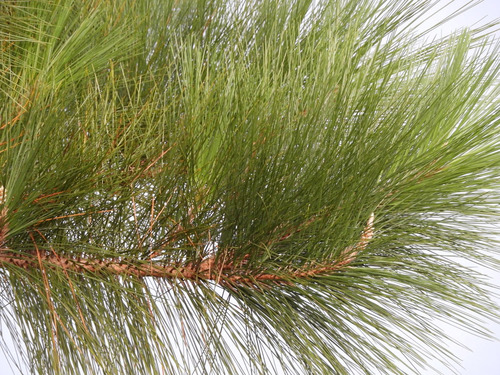
Pinus caribaea
Caribbean pitch pine, Cuban pine
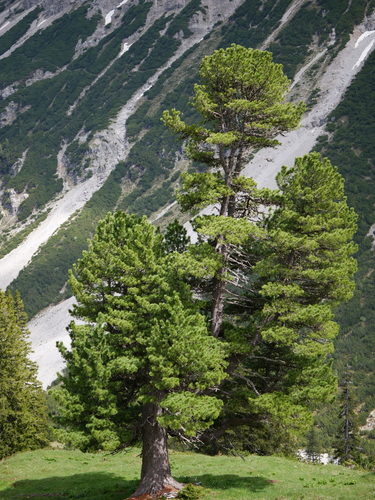
Pinus cembra
Arolla pinetree, Swiss stone pine, Siberian cedar
Pinus cembra sibirica - (DuTour.)Krylov
Siberian Pine
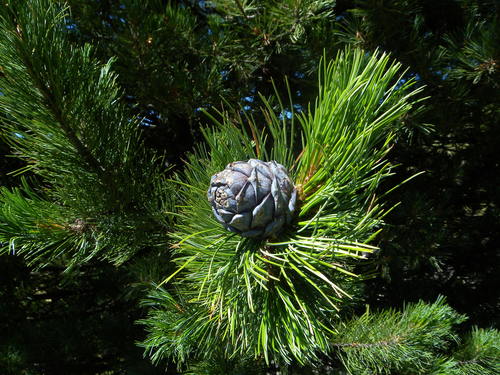
Pinus cembra var. siberica
Siberian pine
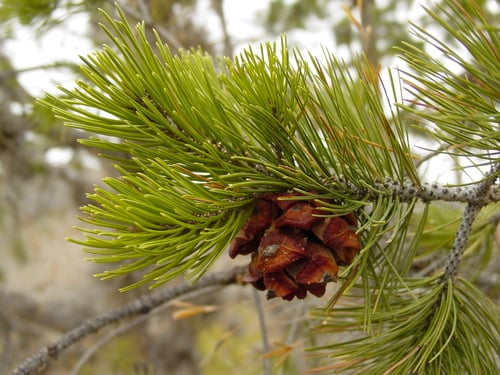
Pinus cembroides
Mexican pinyon, Mexican Nut Pine
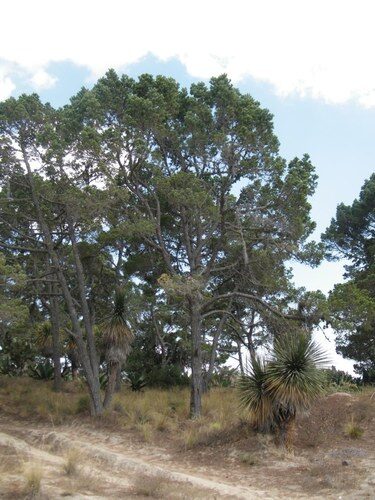
Pinus cembroides orizabensis
Mexican Pine Nut