Pinus cembroides orizabensis
D.Bail.
Mexican Pine Nut
iNaturalist· cc-by-nc
(c) Juan Carlos López Domínguez, some rights reserved (CC BY-NC), uploaded by Juan Carlos López Domínguez
iNaturalist· cc-by-nc
(c) Juan Carlos López Domínguez, some rights reserved (CC BY-NC), uploaded by Juan Carlos López Domínguez
iNaturalist· cc-by-nc-nd
(c) conabio_bancodeimagenes, some rights reserved (CC BY-NC-ND), uploaded by conabio_bancodeimagenes
Description
Pinus cembroides orizabensis is an evergreen Tree growing to 15 m (49ft 3in) at a slow rate. See above for USDA hardiness. It is hardy to UK zone 8. It is in leaf all year, and the seeds ripen in October. The species is monoecious (individual flowers are either male or female, but both sexes can be found on the same plant) and is pollinated by Wind. The plant is not self-fertile. Suitable for: light (sandy) and medium (loamy) soils, prefers well-drained soil and can grow in nutritionally poor soil. Suitable pH: mildly acid and neutral soils. It cannot grow in the shade. It prefers dry or moist soil and can tolerate drought.
Edible Uses
Condiment. Seed - the oily seed kernel is eaten raw, roasted, ground into a powder for making bread, cakes etc or made into a nut butter[1, 2, 11, 34, 62, 63, 92, 94, 183]. A very good size, the seed is up to 20mm long. Said to be the highest in protein and lowest in starch of all the piñons. The seed contains about 14.6% protein, 62% fat. 17.3% carbohydrate. This species provides a major source of seeds for sale in America. Inner bark - only used in times of dire need. There are no more details but inner bark is often dried, ground into a powder and then used as a thickener in soups etc or added to cereals when making bread. A vanillin flavouring is obtained as a by-product of other resins that are released from the pulpwood.
Medicinal Uses
Poultice. The gum exuding from damaged areas of the tree is used to treat sore throats. The turpentine obtained from the resin of all pine trees is antiseptic, diuretic, rubefacient and vermifuge. It is a valuable remedy used internally in the treatment of kidney and bladder complaints and is used both internally and as a rub and steam bath in the treatment of rheumatic affections. It is also very beneficial to the respiratory system and so is useful in treating diseases of the mucous membranes and respiratory complaints such as coughs, colds, influenza and TB. Externally it is a very beneficial treatment for a variety of skin complaints, wounds, sores, burns, boils etc and is used in the form of liniment plasters, poultices, herbal steam baths and inhalers.
Known Hazards
The wood, sawdust and resins from various species of pine can cause dermatitis in sensitive people.
Distribution
Southern N. America.
Where It Grows
NORTHERN AMERICA: United States, Texas, Mexico, Chihuahua, Coahuila de Zaragoza (south), Durango, Nuevo León, San Luis Potosí, Sonora (northeast), Tamaulipas (southwest), Zacatecas, Baja California Sur (south), Aguascalientes, Guanajuato, Hidalgo, Jalisco (northeast), México, Puebla, Querétaro, Tlaxcala (east), Veracruz de Ignacio de la Llave (w.-c.), Ciudad de México,
Cultivation
Thrives in a light well-drained sandy or gravelly loam. Dislikes poorly drained moorland soils. Established plants tolerate drought, succeeding in hot dry positions. This species is not hardy in the colder areas of the country, it tolerates temperatures down to between -5 and -10°c. Leaf secretions inhibit the germination of seeds, thereby inhibiting the growth of other plants below the tree. Slow growing, it takes 25 years from seed before cones are formed. The tree takes 250 - 350 years to reach full maturity. The cones open and shed their seed whilst still attached to the tree. This sub-species has larger seeds than the type. Plants are strongly outbreeding, self-fertilized seed usually grows poorly. They hybridize freely with other members of this genus. Plants in this genus are notably susceptible to honey fungus.
Propagation
It is best to sow the seed in individual pots in a cold frame as soon as it is ripe if this is possible otherwise in late winter. A short stratification of 6 weeks at 4°c can improve the germination of stored seed. Plant seedlings out into their permanent positions as soon as possible and protect them for their first winter or two. Plants have a very sparse root system and the sooner they are planted into their permanent positions the better they will grow. Trees should be planted into their permanent positions when they are quite small, between 30 and 90cm. We actually plant them out when they are about 5 - 10cm tall. So long as they are given a very good weed-excluding mulch they establish very well. Larger trees will check badly and hardly put on any growth for several years. This also badly affects root development and wind resistance. Cuttings. This method only works when taken from very young trees less than 10 years old. Use single leaf fascicles with the base of the short shoot. Disbudding the shoots some weeks before taking the cuttings can help. Cuttings are normally slow to grow away.
Other Uses
Dye Herbicide Pitch WoodA tan or green dye is obtained from the needles. The needles contain a substance called terpene, this is released when rain washes over the needles and it has a negative effect on the germination of some plants, including wheat. A gum pitch is used as a glue for waterproofing and repairing pottery. Oleo-resins are present in the tissues of all species of pines, but these are often not present in sufficient quantity to make their extraction economically worthwhile. The resins are obtained by tapping the trunk, or by destructive distillation of the wood. In general, trees from warmer areas of distribution give the higher yields. Turpentine consists of an average of 20% of the oleo-resin and is separated by distillation. Turpentine has a wide range of uses including as a solvent for waxes etc, for making varnish, medicinal etc. Rosin is the substance left after turpentine is removed. This is used by violinists on their bows and also in making sealing wax, varnish etc. Pitch can also be obtained from the resin and is used for waterproofing, as a wood preservative etc. Wood - soft, light, close-grained.
More from Pinaceae
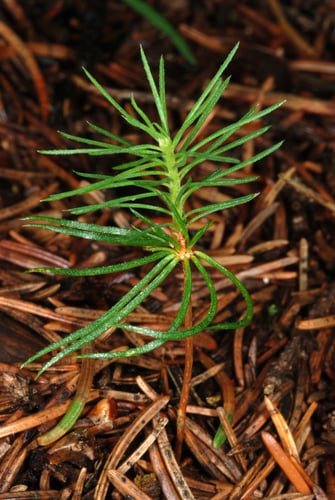
Picea abies
Norway spruce, Common spruce
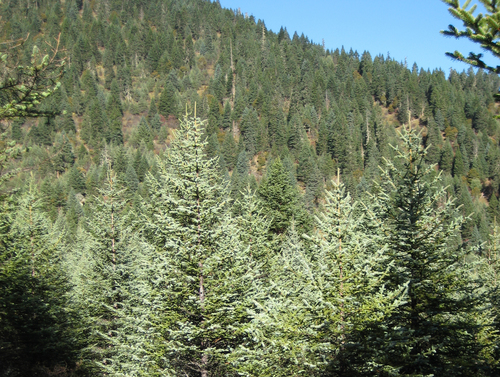
Picea asperata
Chinese spruce, Yu shan, Dragon spruce
Picea balsamifera
Fir
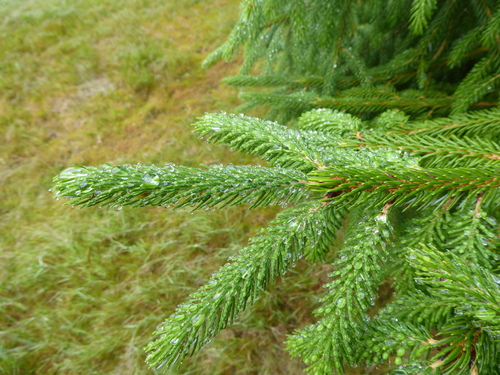
Picea brachytyla
Sargent spruce, Miao diao shan
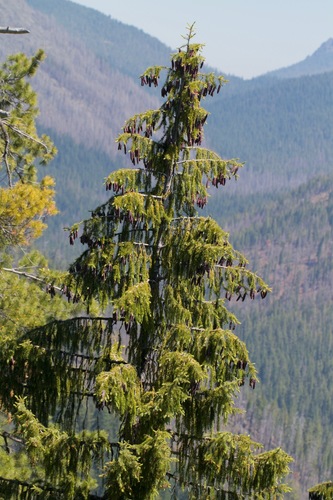
Picea breweriana
Weeping spruce, Brewer Spruce, Brewer's weeping spruce
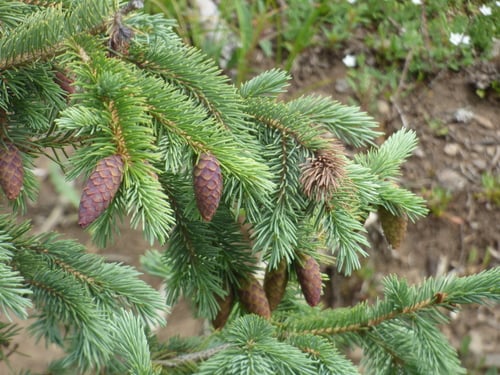
Picea engelmannii
Mountain spruce, Engelmann spruce, Columbian spruce