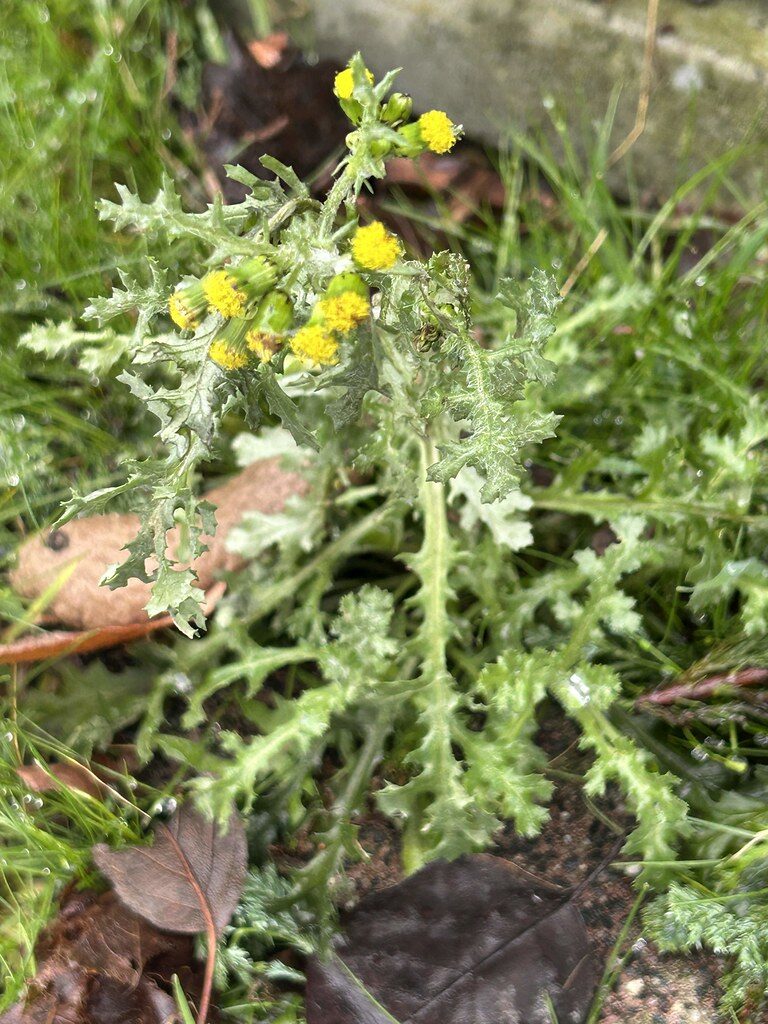
Cirsium vulgare
(Savi) Ten.
Spear thistle, Common thistle, Scotch thistle
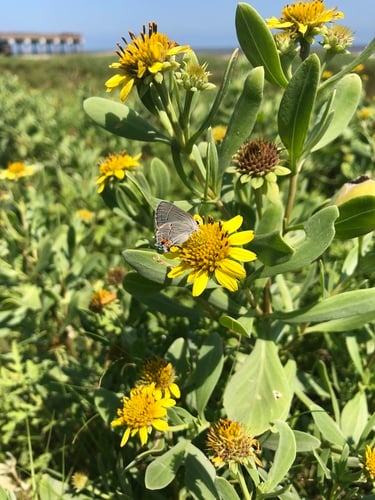
iNaturalist· cc-by-nc
(c) Sabine Atteln, some rights reserved (CC BY-NC), uploaded by Sabine Atteln
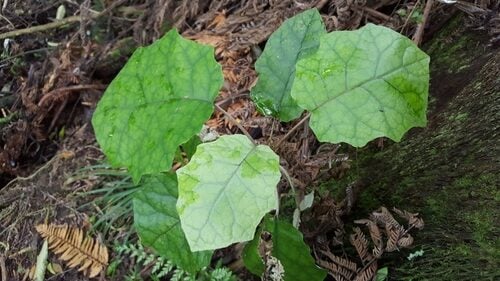
iNaturalist· cc-by-nc
(c) Tatyana Zarubo, some rights reserved (CC BY-NC)
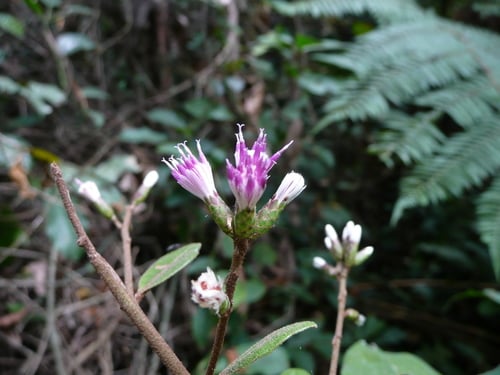
iNaturalist· cc-by-nc
(c) Tatyana Zarubo, some rights reserved (CC BY-NC)
Summary
Source: WikipediaCirsium vulgare, commonly known as spear thistle, bull thistle, or common thistle, is a species of the Asteraceae genus Cirsium, native throughout most of Europe (north to 66°N, locally 68°N), Western Asia (east to the Yenisei Valley), and northwestern Africa (Atlas Mountains). It is also naturalised in North America, Africa, and Australia and is an invasive weed in several regions. It is the national flower of Scotland. The plant provides a great deal of nectar for pollinators. It was rated in the top 10 for most nectar production (nectar per unit cover per year) in a UK plants survey conducted by the AgriLand project which is supported by the UK Insect Pollinators Initiative. Marsh thistle, Cirsium palustre, was ranked in first place while this thistle was ranked in sixth place. It also was a top producer of nectar sugar in another study in Britain, ranked third with a production per floral unit of (2300 ± 400 μg).
Description
A herb. It is a thistle. The young plant develops as a ring of leaves near the ground. The mature plant can be 1.5 m tall. It has a well developed taproot. The stems have wings along them. The stem leaves do not have stalks and are 20-25 cm long. The leaves are lobed and the lobes are divided into 4 or 5 divisions which are often rotated. The edges of the leaves are spiny. The flower head is at the top of the plant and is spiny. Often there are 3 or 4 heads. They are purple.
Edible Uses
The root is cooked and has a flavour somewhat like Jerusalem artichoke, though less agreeable, with a rather bland taste best suited to mixing with other vegetables. It can be dried and stored for later use. The root is rich in inulin, a starch the human body cannot digest, which passes straight through the digestive system and may ferment in some people, causing flatulence. Young flower stems are cooked and used as a vegetable. Young leaves can be soaked overnight in salt water, then cooked and eaten, or used in salads according to some sources. The flavour is bland and the prickles must be removed before eating — a fiddly process that leaves little edible material. Flower buds are cooked like globe artichokes but are smaller and even more fiddly to prepare. Dried flowers serve as a rennet substitute for curdling plant milks. Seeds are occasionally eaten roasted.
Traditional Uses
The spines are removed and the young leaves eaten raw or cooked. They are soaked overnight in salted water. The young stems are peeled and eaten raw or cooked. The roots of young plants can be eaten raw or cooked. The young flowers are used as a substitute for rennet in curdling milk for cheesemaking. Roasted seeds can be eaten.
Medicinal Uses
The roots have been used as a poultice, and a decoction of the plant has been applied as a poultice on sore jaws. A hot infusion of the whole plant has been used as a herbal steam treatment for rheumatic joints. A decoction of the whole plant has been used both internally and externally to treat bleeding piles.
Distribution
It grows in temperate and Mediterranean places. It grows in well-drained and fertile locations. It can grow on sand dunes and beaches. It grows in wet grasslands between 400-1,800 m above sea level in western China. Tasmania Herbarium.
Where It Grows
Afghanistan, Africa, Alaska, Albania, Algeria, Argentina, Armenia, Asia, Australia, Austria, Belarus, Belgium, Bolivia, Brazil, Britain, Bulgaria, Canada, Canary Islands, Caucasus, Central Asia, Chile, Crete, Cyprus, Czech republic, Denmark, Easter Island, Europe, Falklands, Finland, France, Georgia, Germany, Greece, Hawaii, Hungary, Iran, Iraq, Ireland, Italy, Kazakhstan, Korea, Kyrgyzstan, Lebanon, Lesotho, Lord Howe Island, Luxembourg, Mediterranean, Morocco, Netherlands, New Zealand, Norfolk Is., North Africa, North America, Norway, Pakistan, Palestine, Paraguay, Peru, Poland, Portugal, Romania, Russia, Saudi Arabia, Siberia, Sicily, Slovenia, South Africa, South America, Spain, Sweden, Switzerland, Syria, Tajikistan, Tasmania, Tunisia, Turkey, Türkiye, Turkmenistan, Ukraine, Uruguay, USA, Uzbekistan, Yemen, Yugoslavia,
Cultivation
Plants can be grown from seed.
Propagation
Sow seed in early spring or autumn in situ. Germination typically occurs within 2–8 weeks at 20°C. This plant is a pernicious weed and needs no encouragement to establish.
Other Uses
A fibre obtained from the inner bark can be used to make paper. The fibre measures approximately 0.9mm long. Stems are harvested in late summer, leaves removed, and stems steamed until the fibres can be stripped away. The fibres are then cooked with lye for two hours and put in a ball mill for three hours, producing a light brown tan paper. The seeds yield a good oil by expression, though no yield details are given. The seed down makes excellent tinder, easily ignited by a spark from flint.
Production
The roots need to be harvested before the thistles flower.
Notes
There are about 150-250 Cirsium species. They grow in temperate regions.
Synonyms
Also Known As
Black thistle, Bull thistle, Bur thistle, Cardo de toro, Cardo negro, Chveulebrivi nari, Khaspush, Navadni osat, Pareira brava
References (36)
- Al-Sodany, Y. M., et al, 2013, Medicinal Plants in Saudi Arabia: I. Sarrwat Mountains at Taif, KSA. Academic Journal of Plant Sciences 6 (4): 134-145
- Blamey, M and Grey-Wilson, C., 2005, Wild flowers of the Mediterranean. A & C Black London. p 451
- Cormack, R. G. H., 1967, Wild Flowers of Alberta. Commercial Printers Edmonton, Canada. p 363
- Cribb, A.B. & J.W., 1976, Wild Food in Australia, Fontana. p 135
- Curtis, W.M., 1963, The Students Flora of Tasmania Vol 2 p 376
Show all 36 references Hide references
- Dashorst, G.R.M., and Jessop, J.P., 1998, Plants of the Adelaide Plains & Hills. Botanic Gardens of Adelaide and State Herbarium. p 156
- Diaz-Betancourt, M., et al, 1999, Weeds as a future source for human consumption. Rev. Biol. Trop. 47(3):329-338
- Duke, J.A., 1992, Handbook of Edible Weeds. CRC Press. p 74
- Elias, T.S. & Dykeman P.A., 1990, Edible Wild Plants. A North American Field guide. Sterling, New York p 115
- Ertug, F, Yenen Bitkiler. Resimli Türkiye Florası -I- Flora of Turkey - Ethnobotany supplement
- Esperanca, M. J., 1988. Surviving in the wild. A glance at the wild plants and their uses. Vol. 1. p 151
- Facciola, S., 1998, Cornucopia 2: a Source Book of Edible Plants. Kampong Publications, p 37
- Flora of Australia Volume 49, Oceanic Islands 1, Australian Government Publishing Service, Canberra. (1994) p 366
- Fl. napol. 5:209. 1835-1836
- Harris, S., Buchanan, A., Connolly, A., 2001, One Hundred Islands: The Flora of the Outer Furneaux. Tas Govt. p 135
- Hussey, B.M.J., Keighery, G.J., Cousens, R.D., Dodd, J., Lloyd, S.G., 1997, Western Weeds. A guide to the weeds of Western Australia. Plant Protection Society of Western Australia. p 94
- Hyde-Wyatt, B.H. & Morris D.I., 1975, Tasmanian Weed Handbook. Dept of Ag Tasmania. p 30
- Irving, M., 2009, The Forager Handbook, A Guide to the Edible Plants of Britain. Ebury Press p 148
- Kermath, B. M., et al, 2014, Food Plants in the Americas: A survey of the domesticated, cultivated and wild plants used for Human food in North, Central and South America and the Caribbean. On line draft. p 232
- Kew Plants of the World Online
- Ladio, A., Lozada, M. & M. Weigandt, 2007, Comparison of traditional wild plant knowledge between aboriginal communities inhabiting arid and forest environments in Patagonia, Argentina. Journal of Arid Environments 69 (2007) 695–715
- Lamp, C & Collet F., 1989, Field Guide to Weeds in Australia. Inkata Press. p 78
- Lazarides, M. & Hince, B., 1993, Handbook of Economic Plants of Australia, CSIRO. p 60
- Lim, T. K., 2015, Edible Medicinal and Non Medicinal Plants. Volume 9, Modified Stems, Roots, Bulbs. Springer p 24
- Low, T., 1991, Wild Herbs of Australia and New Zealand. Angus & Robertson. p 34
- MacKinnon, A., et al, 2009, Edible & Medicinal Plants of Canada. Lone Pine. p 368
- Malezas Comestibles del Cono Sur, INTA, 2009, Buernos Aires
- Paczkowska, G. & Chapman, A.R., 2000, The Western Australian Flora. A Descriptive Catalogue. Western Australian Herbarium. p 160
- Pieroni, A., et al, 2020, Wild food plants traditionally gathered in central Armenia: archaic ingredients or future sustainable foods? Environment, Development and Sustainability. Springer p 7
- Plants for a Future database, The Field, Penpol, Lostwithiel, Cornwall, PL22 0NG, UK. http://www.scs.leeds.ac.uk/pfaf/
- Stern, G., 1986, Australian Weeds. A Source of Food and Medicine. Harper & Row. p 194
- Tasmanian Herbarium Vascular Plants list p 6
- Tozer, F., 2007, The Uses of Wild Plants. Green Man Publishing. p 69
- World Checklist of Useful Plant Species 2020. Royal Botanic Gardens, Kew
- www.ediblewildfood.com
- Zizka, G., 1991, Flowering Plants of Easter Island. Palmarum Hortus Francofurtensis