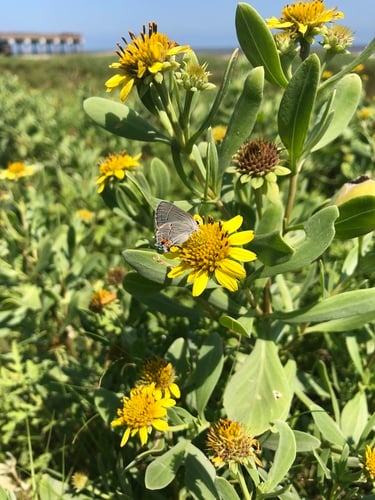
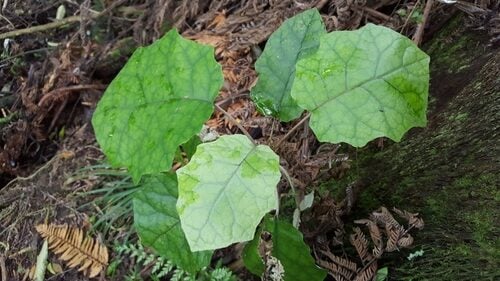
Taraxacum mongolicum
Hand.-Mazz.
Pu Gong Ying
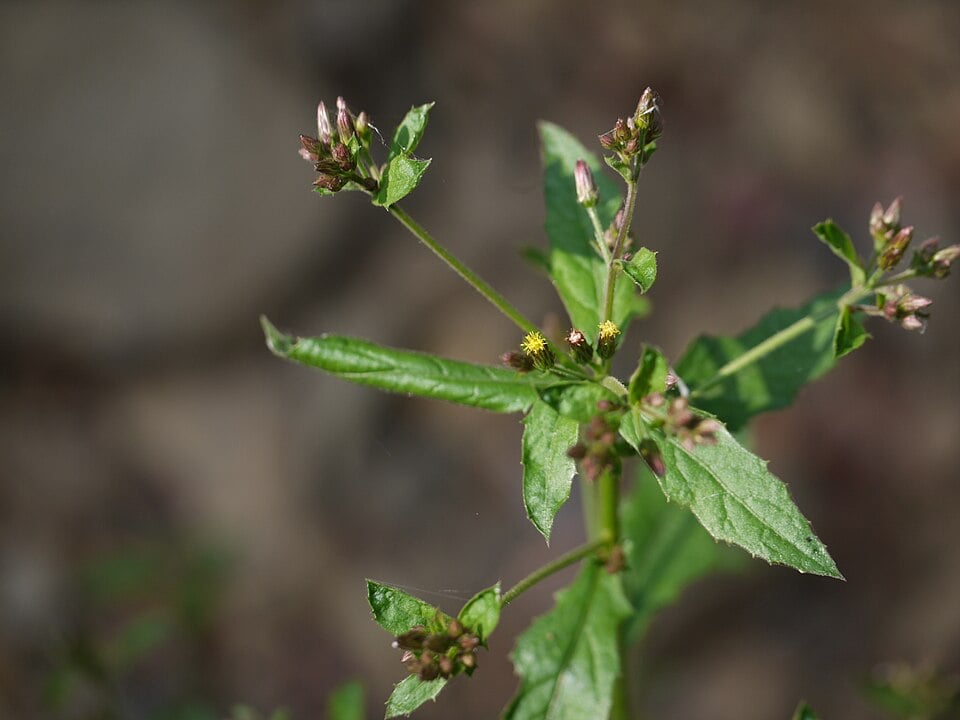
iNaturalist· cc-by-nc
(c) pnfnho, some rights reserved (CC BY-NC)
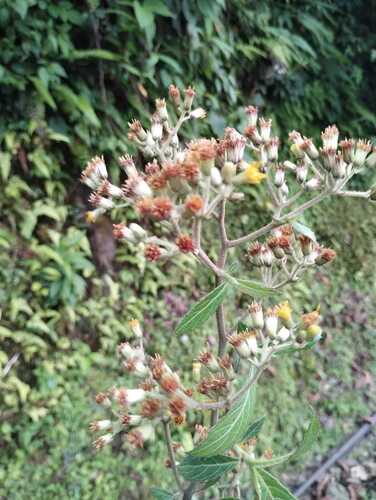
iNaturalist· cc-by-nc
(c) 八重垣えりか, some rights reserved (CC BY-NC)
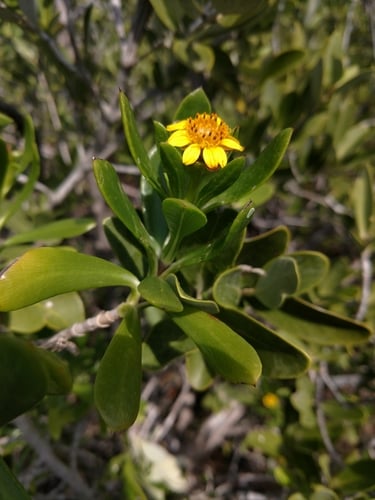
iNaturalist· cc-by-nc
(c) 八重垣えりか, some rights reserved (CC BY-NC)
Summary
Source: WikipediaTaraxacum mongolicum, commonly known as Mongolian dandelion or Chinese dandelion, is a species of flowering plant in the family Asteraceae. It is a perennial herb native to temperate regions of East Asia, including China, Mongolia, Korea, Japan, Taiwan, and parts of eastern Russia. The plant typically grows between 8 and 25 cm tall, producing a basal rosette of lobed green leaves and solitary yellow flower heads on hollow, hairy stems. It is commonly found in disturbed habitats such as grasslands, roadsides, and cultivated areas, and reproduces primarily through agamospermy. The species has been traditionally used in East Asian medicine, where it has been applied in the treatment of inflammatory and infectious conditions. Modern studies have investigated its potential pharmacological properties, including antimicrobial, anti-inflammatory, and cytotoxic effects. It is also being researched as a possible phytogenic feed additive in livestock, particularly poultry, due to its influence on gut health and immune response. The plant contains a variety of bioactive compounds such as flavonoids, phenolic acids, and polysaccharides. Taraxacum mongolicum has been introduced to other regions, including North America, where it has become naturalized in some areas. It was first formally described by Austrian botanist Heinrich von Handel-Mazzetti and has since been referenced under several botanical synonyms.
Description
A herb. It grows 8-25 cm tall. The leaf stalk is narrow. The leaves are 6-15 cm long by 2-4 cm wide. They are usually divided into 3-4 pairs of lobes.
Edible Uses
Young leaves can be eaten raw or cooked. The root is also edible when cooked, and flowers can be eaten raw or cooked — unopened buds work well in fritters. The dried whole plant makes a tea, and a pleasant tea can also be brewed from the flowers alone; leaves and roots are equally suitable for tea-making. The root is dried and roasted to produce a coffee substitute. Note that specific records for this species are limited beyond young leaf use, and several further uses are inferred from closely related taxa.
Traditional Uses
The young leaves and flowers are eaten as a vegetable. They are boiled or stir fried.
This uses section is brief — help expand it
Medicinal Uses
The whole plant is antibacterial, cholagogue, decongestant, depurative, diuretic, febrifuge, galactogogue, laxative, and stomachic. It inhibits the growth of Staphylococcus aureus, Pneumococci, Meningococci, Bacillus dysenteriae, B. typhi, C. diphtheriae, and Proteus, among others. A decoction is used in treating abscesses, appendicitis, boils, liver problems, and stomach disorders. The plant has been used by the Chinese for over 1,000 years in treating breast cancer and other breast disorders, including poor milk flow. The stem has been used specifically in the treatment of cancer.
Distribution
It is a temperate climate plant. It grows in Yunnan in China. In Sichuan.
Where It Grows
Asia, China, Indonesia, Korea, Mongolia, SE Asia, Tibet,
Cultivation
We have very little information on this species and do not know if it will be hardy in Britain, though judging by its native range it should succeed outdoors in many parts of the country. The following notes are based on the general needs of the genus. Prefers a well-drained humus-rich soil in full sun or light shade. Many species in this genus produce their seed apomictically. This is an asexual method of seed production where each seed is genetically identical to the parent plant. Occasionally seed is produced sexually, the resulting seedlings are somewhat different to the parent plants and if these plants are sufficiently distinct from the parents and then produce apomictic seedlings these seedlings are, in theory at least, a new species.
Propagation
Sow seed in spring in a cold frame, either surface-sowing or covering only very lightly; keep the compost consistently moist. Germination typically occurs within two weeks. Prick seedlings into individual pots deep enough to accommodate the taproot, then plant out in early summer. The plant can also be propagated by division in early spring as growth resumes.
Other Uses
None known.
Production
In Yunnan plants are harvested between June and August.
Notes
There are 50-60 Taraxacum species.
Also Known As
Ba ko er jia, Bobodeng, Bubegedeng, Dakucai, Huangercai, Jombang, Po po ding, Pugongying, Wu mu ji li, Yoongma
References (21)
- Cheng, Z., et al, 2022, Ethnobotanical study on wild edible plants used by Dulong people in northwestern Yunnan, China. Journal of Ethnobiology and Ethnomedicine (2022) 18:3
- "Chinese Nutrition Journal", 2002, Vol 23(8) p 298
- Fan, L., et al, The Use of Edible Wild Plants and Fungi in Korean-Chinese Villages. Journal of Environmental Information Science 44-5 p 71-79
- Geng, Y., et al, 2016, Traditional knowledge and its transmission of wild edibles used by the Naxi in Baidi Village, northwest Yunnan province. Journal of Ethnobiology and Ethnomedicine. 12:10
- Heo, B., et al., 2009, Antiproliferative Activity of Korean Wild Vegetables on Different Human Tumor Cell Lines. Plant Foods for Human Nutrition. 64:257-263
Show all 21 references Hide references
- Hwang, H., et al, 2013, A Study on the Flora of 15 Islands in the Western Sea of Jeollanamdo Province, Korea. Journal of Asia-Pacific Biodiversity Vol. 6, No. 2 281-310
- Jia, X., et al, 2022, Ethnobotany of wild edible plants in multiethnic areas of the Gansu–Ningxia–Inner Mongolia junction zone. Journal of Ethnobiology and Ethnomedicine 18:53
- Ju, Y., et al, 2013, Eating from the wild: diversity of wild edible plants used by Tibetans in Shangri-la region, Yunnan, China, Journal of Ethnobiology and Ethno medicine 9:28
- Kang, Y., et al, 2012, Wild food plants and wild edible fungi in two valleys on the Qinling Mountains (Shaanxi, central China) Journal of Ethnobiology and Ethnomedicine; 9:26
- Kang, Y., et al, 2014, Wild food plants used by the Tibetans of Gongba Valley (Zouqu country, Gansu, China) Journal of Ethnobiology and Ethnomedicine 10:20
- Khasbagan, Hu-Yin Huai, and Sheng-Ji pei, 2000, Wild Plants in the Diet of Athorchin Mongol Herdsmen in Inner Mongolia. Economic Botany 54(4): 528-536
- Liu, Yi-tao, & Long, Chun-Lin, 2002, Studies on Edible Flowers Consumed by Ethnic Groups in Yunnan. Acta Botanica Yunnanica. 24(1):41-56
- Monogr. Taraxacum 67, t. 2, fig. 13. 1907
- Plants for a Future database, The Field, Penpol, Lostwithiel, Cornwall, PL22 0NG, UK. http://www.scs.leeds.ac.uk/pfaf/
- Sachula, et al, 2020, Wild edible plants collected and consumed by the locals in Daqinggou, Inner Mongolia, China. Journal of Ethnobiology and Ethnomedicine (2020) 16:60
- Urgamal, M., Oyuntsetseg, B., Nyambayar, D. & Dulamsuren, Ch. 2014. Conspectus of the vascular plants of Mongolia. (Editors: Sanchir, Ch. & Jamsran, Ts.). Ulaanbaatar, Mongolia. “Admon“ Press. 334pp. (p. 199-230).
- Wang, J. et al, 2013, A Study on the Utilization of Wild Plants for Food in Liangshan Yi Autonomous Prefecture. Plant Diversity and Resources. 35(4): 416-471
- Wang, J., et al, 2020, An ethnobotanical survey of wild edible plants used by the Yi people of Liangshan Prefecture, Sichuan Province, China. Journal of Ethnobiology and Ethnomedicine 16:10 p 7
- Wijayakusuma, H.M.H., et al, 1996, Tanaman Berkhasiat Obat Di Indonesia. Pustaka Kartini. p 71
- Wujisguleng, W., & Khasbagen. K., 2010, An integrated assessment of wild vegetable resources in Inner Mongolian Autonomous Region, China. Journal or Ethnobiology and Ethnomedicine 6:34
- Zhang, L., et al, 2016, Ethnobotanical study of traditional edible plants used by the Naxi people during droughts. Journal of Ethnobiology and Ethnomedicine. 12:39