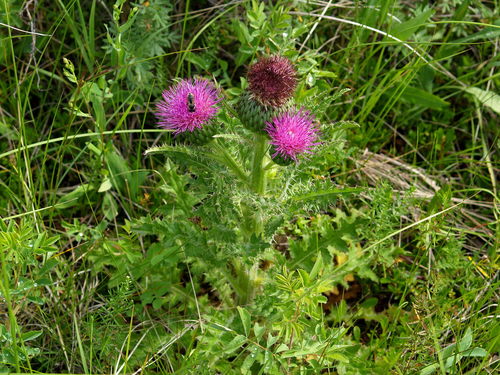
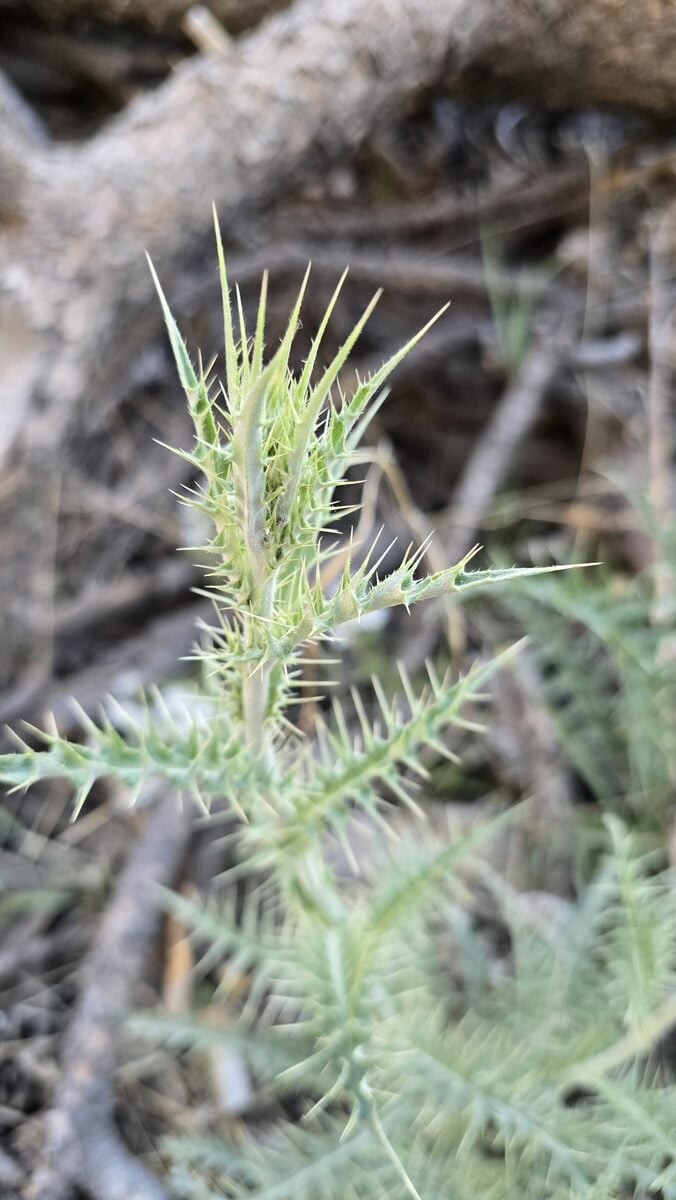
Taraxacum megalorhizon
(Forssk.) Hand-Mazz.
Dandelion
wikimedia· cc-by
Wikimedia Commons - Gidip
wikimedia· cc-by
Wikimedia Commons - Gidip
Description
A temperate Mediterranean herb in the Asteraceae family, occurring at approximately 1,000 m elevation.
This description is brief — help expand it
Edible Uses
Leaves can be eaten raw or cooked. The root is also edible when cooked, and flowers can be eaten raw or cooked — unopened buds are suitable for fritters. The dried whole plant makes a tea, and a pleasant tea can be brewed from the flowers alone; leaves and roots can similarly be used for tea. The root is dried and roasted to serve as a coffee substitute. Note that specific records for this species are limited, and several of these uses are inferred from closely related taxa.
Traditional Uses
The leaves are eaten raw or cooked.
This uses section is brief — help expand it
Medicinal Uses
None known.
Distribution
It is a Mediterranean climate plant. It occurs at about 1,000 m above sea level.
Where It Grows
Balkans, Bosnia, Crete, Croatia, Europe, Italy, Jordan, Mediterranean, Middle East,
Propagation
Sow seed in spring in a cold frame, either surface-sowing or covering only very lightly; keep the compost consistently moist. Germination typically occurs within two weeks. Prick seedlings into individual pots deep enough to accommodate the taproot, then plant out in early summer. The plant can also be propagated by division in early spring as growth resumes.
Other Uses
A latex extracted from the roots can be used to produce a high-class rubber.
Notes
There are 50-60 Taraxacum species.
Also Known As
Agrioradiko, Tarakhon
References (7)
- Al-Qura'n, S. A., 2010, Ethnobotanical and Ecological Studies of Wild Edible Plants in Jordan. Libyan Agriculture Research Center Journal International 1(4):231-243
- Biscotti, N. & Pieroni, A., 2015, The hidden Mediterranean diet: wild vegetables traditionally gathered and consumed in the Gargano area, Apulia, SE Italy. Acta Societatis Botanicorum Poloniae 84 (3): 327-338
- Luczaj et al, 2013, Wild vegetable mixes sold in the markets of Dalmatia (southern Croatia). Journal of Ethnobiology and Ethnomedicine. 8:2
- Luczaj, et al, 2014, Wild Food Plants of Dalmatia (Croatia). Chapter 8 in A. Pieroni, C. L. Quave (eds.), Ethnobotany and Biocultural Diversities in the Balkans, Springer Science p 143
- Monogr. Taraxacum 35. 1907
Show all 7 references Hide references
- Plants for a Future database, The Field, Penpol, Lostwithiel, Cornwall, PL22 0NG, UK. http://www.scs.leeds.ac.uk/pfaf/
- Rivera, D. et al, 2006, Gathered Mediterranean Food Plants - Ethnobotanical Investigations and Historical Development, in Heinrich M, Müller WE, Galli C (eds): Local Mediterranean Food Plants and Nutraceuticals. Forum Nutr. Basel, Karger, 2006, vol 59, pp 18–74