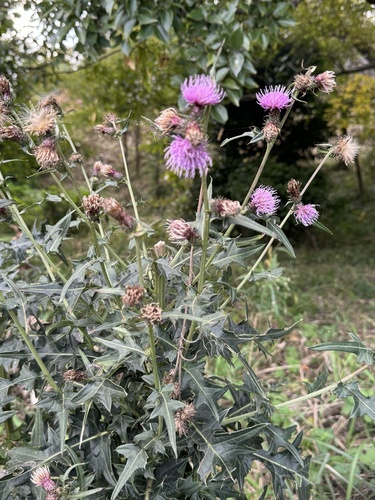
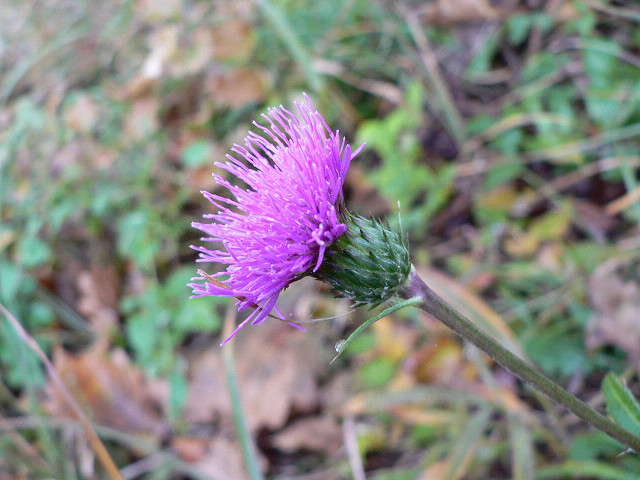
Cirsium tuberosum
(L.) All.
Tuberous thistle
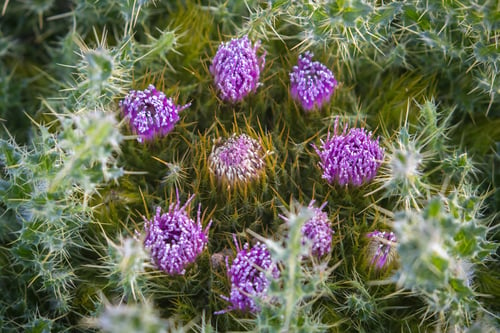
iNaturalist· cc-by-nc
(c) Simon Crameri, some rights reserved (CC BY-NC), uploaded by Simon Crameri
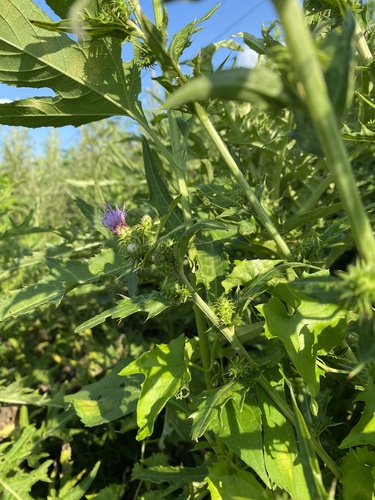
iNaturalist· cc-by-nc
(c) janek42, some rights reserved (CC BY-NC)
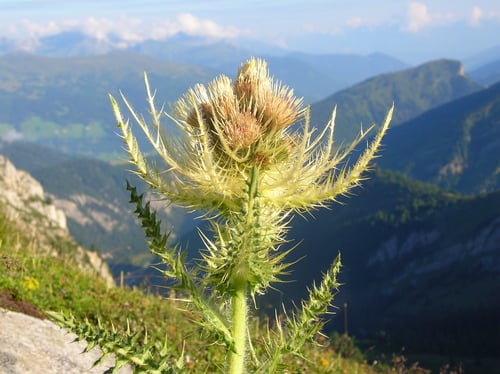
iNaturalist· cc-by-nc
(c) janek42, some rights reserved (CC BY-NC)
Summary
Source: WikipediaCirsium tuberosum is a species of flowering plant belonging to the family Asteraceae. Its native range is Europe.
Description
Tuberous thistle is a perennial growing 0.6 m tall that flowers from June to August with seed ripening July to September. It thrives in light sandy, medium loamy, and heavy clay soils across a range of pH levels from mildly acidic to mildly alkaline, requiring full sun and moist conditions.
Edible Uses
The root is edible cooked and can be stored overwinter. It has a slight bitterness but is acceptable as a cooked vegetable. Occasionally the root is very aromatic, which makes it less pleasant to eat. The root is rich in inulin, a starch the human body cannot digest, which passes straight through the digestive system and may ferment in some people, causing flatulence.
Medicinal Uses
None known.
Distribution
It is a temperate plant.
Where It Grows
Britain, Europe,
Propagation
Sow seed in early spring or autumn in situ. Germination typically occurs within 2–8 weeks at 20°C. Division in spring or autumn is also possible and very easy — larger clumps can be replanted directly into permanent positions, while smaller clumps are best potted up and grown on in a cold frame until rooting well, then planted out in summer or the following spring.
Other Uses
The seed fluff makes useful tinder. The seeds yield a good oil by expression, though no details on potential yields are given.
Notes
There are about 150-250 Cirsium species. They grow in temperate regions.
Synonyms
References (1)
- Plants for a Future database, The Field, Penpol, Lostwithiel, Cornwall, PL22 0NG, UK. http://www.scs.leeds.ac.uk/pfaf/