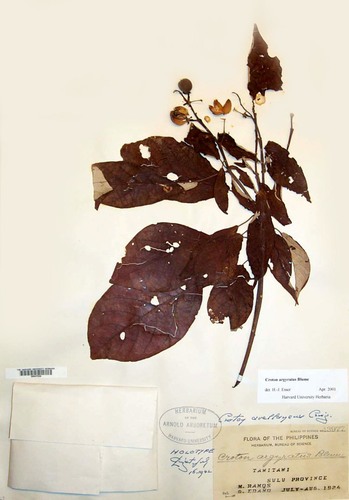
Ditaxis heterantha
Zucc.
Azafran
iNaturalist· cc-by-nc
(c) Opuntia Cadereytensis, some rights reserved (CC BY-NC)
iNaturalist· cc-by-nc
(c) Opuntia Cadereytensis, some rights reserved (CC BY-NC)
iNaturalist· cc-by-nc
(c) Edgar Pedro Méndez Vázquez, some rights reserved (CC BY-NC)
Summary
Source: WikipediaDitaxis heterantha is a member of the plant family Euphorbiaceae and grows wild in Guanajuato, Mexico, where it is known as azafrán, azafrancillo, azafrán de bolita or saffron pellets and has several culinary uses, including as a substitute for saffron. Ditaxis heterantha is not related to true saffron (Crocus sativus) nor to safflower (Carthamus tinctorius), which also is used as a saffron substitute. Ditaxis heterantha has dull, dark brown seeds 3–5 mm in diameter that resemble allspice. The waxy, deep orange endosperm of the seed is used in Mexico (particularly Guanajuato) for coloring and flavoring food, such as menudo amarillo. It has an oil content of about 40% and a protein content of about 20%, as well as containing the apocarotenoids heterathin and ditaxin.
Description
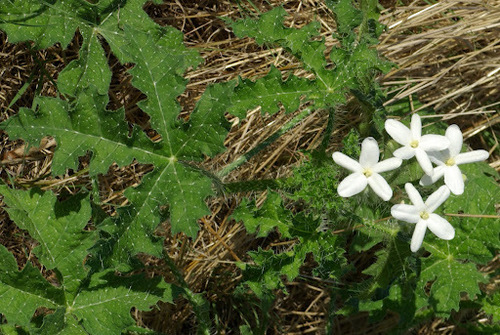
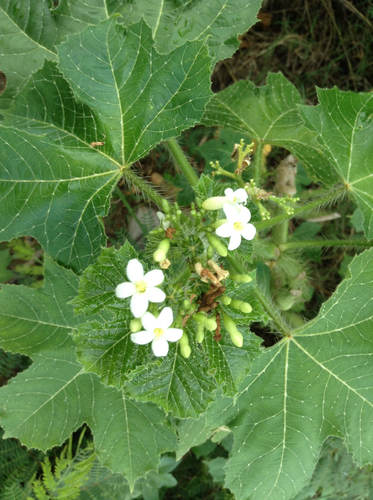
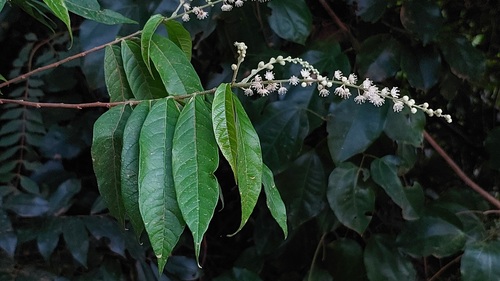
A shrub. It grows 3 m tall. The leaves are alternate and 4-8 cm long. They are white and hairy on top. The flowers are small and pale yellow. The fruit is green and has 3 lobes. The seeds are dull brown and 3-5 mm across.
Edible Uses
An extract from the oil-rich seeds is used to colour and flavour other foods, particularly as a saffron substitute.
Traditional Uses
An extract from the oil rich seeds is used to colour and flavour other foods.
This uses section is brief — help expand it
Distribution
It is a subtropical plant. It grows in semi-arid areas.
Where It Grows
Mexico,
Notes
It is used as a saffron substitute.
Nutrition
| Part | Moisture | kJ | kcal | Protein | Vit A | Vit C | Iron | Zinc |
|---|---|---|---|---|---|---|---|---|
| Seeds | 5.7 | — | — | 21.2 | — | — | — | — |
Synonyms
Also Known As
Azafran, Azafrancillo, Azafran de bolita
References (4)
- Espino-Sevilla, M. T. et al, 2013, Functional properties of Ditaxis heterantha proteins. Food Science and Nutrition. Wiley
- Kermath, B. M., et al, 2014, Food Plants in the Americas: A survey of the domesticated, cultivated and wild plants used for Human food in North, Central and South America and the Caribbean. On line draft. p 317
- Mendez-Robles, M. D., et al, 2003, Chemical Composition and Current Distribution of "Azafran de Bolita" (Ditaxis heterantha Zucc.; Euphorbiaceae): A Food Pigment Producing Plants. Economy Botany 58(4) pp. 530-535
- World Checklist of Useful Plant Species 2020. Royal Botanic Gardens, Kew