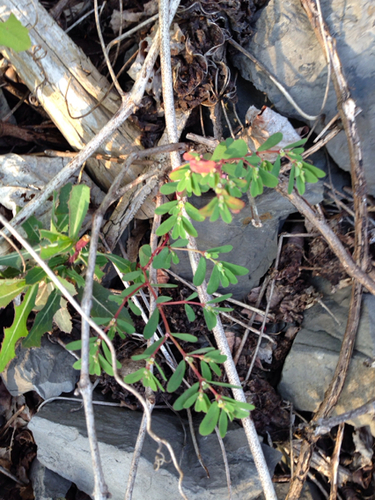
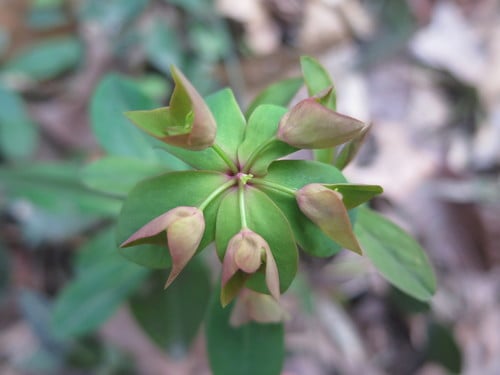
Erythrococca atrovirens
(Pax) Prain
gbif· cc-by
Royal Botanic Gardens, Kew
gbif· cc-by
Royal Botanic Gardens, Kew
gbif· cc-by
Royal Botanic Gardens, Kew
Description
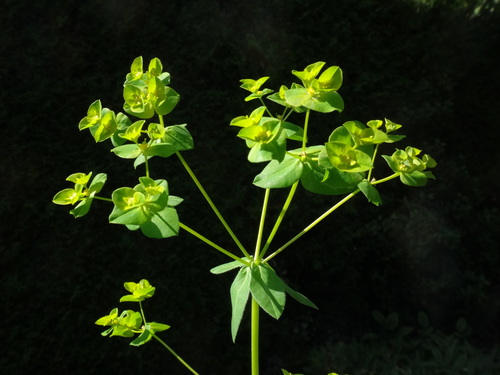
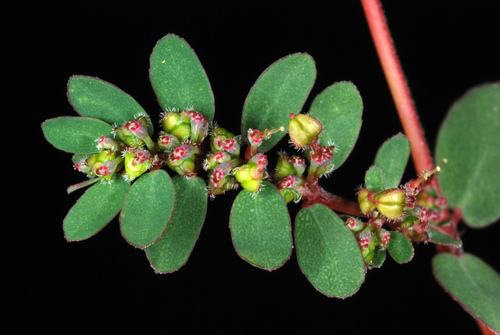
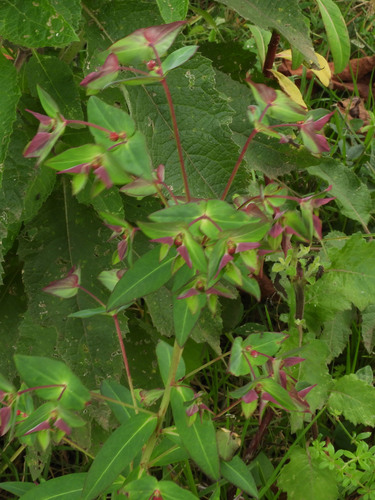
A shrub. It grows 2.5 m high. The wood is soft. Young growth has yellowish hair. The leaf blades are 5-10 cm long by 3-5 cm wide. There are hairs especially underneath. There are 4-6 pairs of side veins. Male flower shoots are 5 cm long. Female flower shoots are 2-3 cm long. The fruit are 4-6 mm long by 5-10 mm wide. The seeds are 3-4 mm across.
Edible Uses
The leaves are cooked and eaten as a leafy vegetable, adding flavor to dishes.
Traditional Uses
The leaves are cooked and eaten as a leafy vegetable. They add flavour.
This uses section is brief — help expand it
Medicinal Uses
The leaf sap or a paste from the roots, heated together with lemon juice, is applied to syphilitic sores. The leaf powder is applied to wounds.
Distribution
It is a tropical plant. It occurs in equatorial Africa. It grows in dry evergreen woodland.
Where It Grows
Africa, Cameroon, Central Africa, Central African Republic, CAR, Congo DR, East Africa, Kenya, Sudan, Tanzania, Uganda, Zambia,
Cultivation
A dioecious species, both male and female forms need to be grown if fruit and seed are required.
Production
In Central African Republic plants flower in December and fruit in March.
Synonyms
Also Known As
Esirietso, Likile, Mascha, Mbeteke, Mbileteke, Meteke, Ponyonyo
References (10)
- Abukutsa-Onyango, Mary, 2007, The diversity of cultivated African leafy vegetables in three communities in western Kenya. AJFAND, Volume 7, No. 3
- East African Herbarium records, 1981,
- Flora Zambesiaca. http://apps.kew.org/efloras
- Grubben, G. J. H. and Denton, O. A. (eds), 2004, Plant Resources of Tropical Africa 2. Vegetables. PROTA, Wageningen, Netherlands. p 299
- Newman, 1970,
Show all 10 references Hide references
- Oyen, L.P.A., 2008. Erythrococca bongensis Pax. [Internet] Record from Protabase. Schmelzer, G.H. & Gurib-Fakim, A. (Editors). PROTA (Plant Resources of Tropical Africa), Wageningen, Netherlands. < http://database.prota.org/search.htm>. Accessed 16 October 2009.
- Peters, C. R., O'Brien, E. M., and Drummond, R.B., 1992, Edible Wild plants of Sub-saharan Africa. Kew. p 110
- Seidemann J., 2005, World Spice Plants. Economic Usage, Botany, Taxonomy. Springer. p 148
- Termote, C., et al, 2011, Eating from the wild: Turumbu, Mbole and Bali traditional knowledge of non-cultivated edible plants, District Tshopo, DRCongo, Gen Resourc Crop Evol. 58:585-618 (var. flaccida)
- World Checklist of Useful Plant Species 2020. Royal Botanic Gardens, Kew