Cymopterus purpureus
S. Watson
iNaturalist· cc-by
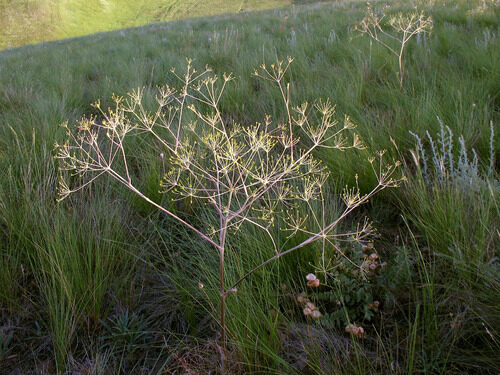
(c) Matt Berger, some rights reserved (CC BY), uploaded by Matt Berger
iNaturalist· cc-by-nc
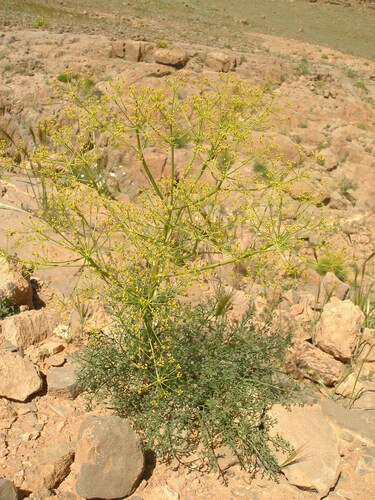
(c) Sequoia Janirella Wrens, some rights reserved (CC BY-NC), uploaded by Sequoia Janirella Wrens
iNaturalist· cc-by
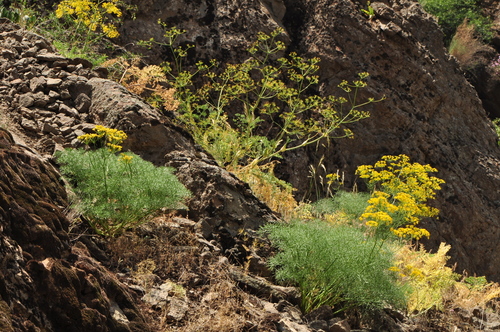
(c) Matt Lavin, some rights reserved (CC BY)
Summary
Perennial herb growing 0.3 m tall and wide, hardy to UK zone 5. Hermaphrodite flowers pollinated by bees and insects, attracts wildlife. Tolerates light sandy, medium loamy, and heavy clay soils with poor nutrition. Grows in mildly acid to basic soils, in semi-shade or full sun, prefers moist soil and tolerates drought.
Description
Perennial herb growing 0.3 m tall and wide, hardy to UK zone 5. Hermaphrodite flowers pollinated by bees and insects, attracts wildlife. Tolerates light sandy, medium loamy, and heavy clay soils with poor nutrition. Grows in mildly acid to basic soils, in semi-shade or full sun, prefers moist soil and tolerates drought.
Edible Uses
The leaves are used cooked as a potherb to season soups and similar dishes. Young leaves can sometimes be eaten raw when mild, but when resinous notes are present, blanching and incorporating them into mixed dishes is the wiser approach. Simmering can intensify the resinous flavour, sometimes producing a pronounced "parsley plus air freshener" aroma, occasionally with an unpleasant edge. For roots, peeling is recommended; steaming tends to preserve flavour better than boiling, which can wash it out, while baking risks toughening the texture. A traditional steam or earth-oven method suits this species well, providing the moisture retention and gentle heat the roots benefit from. Leaves are best harvested young while still hydrated. Those new to the plant should start with small tastings, favour cooked preparations, and avoid intense sun exposure after heavy handling due to genus-level phototoxin cautions. Allergic reactions have been noted in some wavywing species.
Traditional Uses
The leaves are used as a potherb to add flavour to soups.
This uses section is brief — help expand it
Medicinal Uses
Documented medicinal uses specific to this species are scarce. Some closely related Cymopterus species, such as C. newberryi, have been used as a wash or lotion for wounds, and other species in the genus have recorded ethnobotanical uses by Native American tribes including for food, flavouring, and medicine. No high-value or clinically validated medicinal application is widely recognised for this species.
Known Hazards
Genus-level phototoxin cautions apply, and you noted allergic reactions may be an issue in some wavywings. If you are new to this plant, start with small tastings, prefer cooked forms, and avoid intense sun exposure after heavy handling if you are sensitive.
Distribution
It is a temperate plant.
Where It Grows
North America, USA,
Cultivation
Purple wavywing is a worthwhile wavywing where it grows: leaves can be surprisingly usable, and roots can contribute real food if cooked in a way that respects their moderate fiber and flavor wash-out tendencies. Growing Conditions. Poor soils, often open and dry, with reliance on early moisture. Habitat & Range. You described it as widespread across the greater Intermountain Region in poor-quality soils. Size & Landscape Performance. Small, resilient spring perennial with good performance in marginal ground. Cultivation (Horticulture). Rare; potentially suitable to native dryland/rock gardens with careful seed establishment. Pests & Problems. Resinous/foul leaf notes in some populations; moderate root fiber; sand in leaves. Identification & Habit. Small perennial spring-parsley; dissected leaves; umbels; winged fruits confirm. Pollinators. Umbels attract a broad suite of small bees, flies, and wasps. Cymopterus purpureus (Purple springparsley) is a perennial wildflower native to the arid regions of the southwestern United States, specifically in Arizona, Colorado, New Mexico, Nevada, and Utah. Natural Habitat and Ecology Location: It thrives in arid and semi-arid environments, including desert shrublands, rocky canyons, and pinyon-juniper woodlands. Elevation: It is generally found at elevations between 1,200 and 2,100 meters (approx. 3,900 to 6,900 feet). Soil: The species prefers well-drained soil, often found in sandy, rocky, or gravelly locations. Conditions: It is adapted to dry conditions and is typically seen flowering in early spring, from March to June. Note: This species is sometimes referred to as Vesper purpureus in recent botanical classifications, and is a distinct species from the similar-looking C. purpurascens (Widewing springparsley). Purple Wavywing (Cymopterus purpureus). Family: Apiaceae. Genus: Cymopterus. Common names: Purple wavywing, purple spring-parsley. USDA Hardiness Zones: approximately Zones 4–8 (broad Intermountain cold tolerance; published zone data is sparse, and PFAF’s record for this species group does not provide a finished hardiness value). ? Approximate size: often 10–25 cm tall in flower, 10–25 cm spread.
Propagation
Seed requires cold stratification; establishment depends heavily on the timing of spring moisture.
Other Uses
The plant is a tough, persistent member of arid spring plant communities and provides early-season nectar and pollen for a broad range of small bees, flies, and wasps visiting its umbels. It is potentially suitable for native dryland or rock garden cultivation with careful seed establishment.
Synonyms
Also Known As
Purple springparsley, Purple Wavywing.
References (1)
- Kermath, B. M., et al, 2014, Food Plants in the Americas: A survey of the domesticated, cultivated and wild plants used for Human food in North, Central and South America and the Caribbean. On line draft. p 293