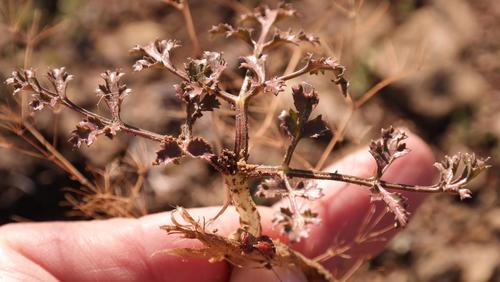
Eryngium paniculatum
Cav. & Dombet ex F. Delaroche
iNaturalist· cc-by-nc
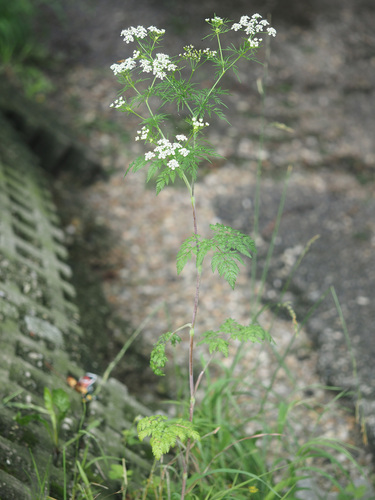
(c) Hederd Torres García, some rights reserved (CC BY-NC), uploaded by Hederd Torres García
iNaturalist· cc-by-nc-sa
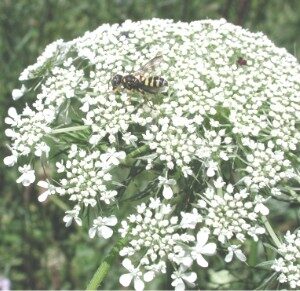
(c) Claudio Maureira, some rights reserved (CC BY-NC-SA), uploaded by Claudio Maureira
iNaturalist· cc-by-nc
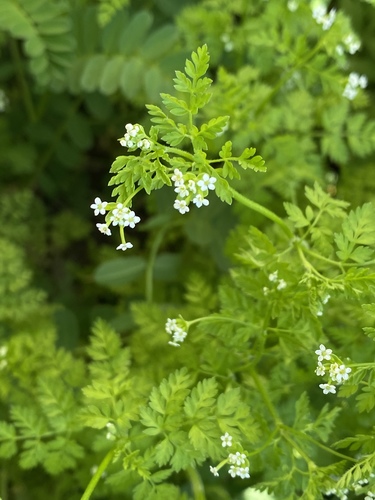
(c) Eduardo E. Zattara, some rights reserved (CC BY-NC), uploaded by Eduardo E. Zattara
Summary
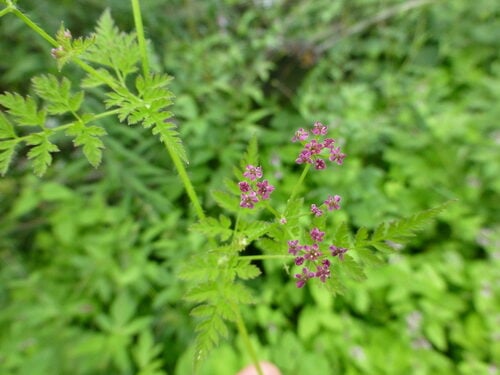
Source: WikipediaEryngium paniculatum is a flowering plant in the carrot family. It is native to Argentina, Brazil, and Chile. It was first described by Antonio José Cavanilles and Joseph Dombey in 1808. Plants of the World Online accepts this as the species name, while GBIF declares it a synonym of Eryngium humboldtii.
Description
A herb. It keeps growing from year to year. It grows 50-100 cm tall. The leaves are long and narrow and have spines along the edge.
This description is brief — help expand it
Edible Uses
The roots are eaten raw or cooked. The shoots are cooked and eaten. The stems and leaves are also edible.
Traditional Uses
The roots are eaten raw or cooked. The shoots are cooked and eaten.
This uses section is brief — help expand it
Distribution
It is a subtropical plant. In Argentina it grows between 100-1,000 m above sea level.
Where It Grows
Argentina, Bolivia, Brazil, Chile, Paraguay, South America*, Uruguay,
Synonyms
Also Known As
Anu-ducho, Caraguat, Cardilla, Cardoncillo, Chupalla, Pitillo, Quisco
References (6)
- Cordero, S. E., Abello, L. A., & Galvez, F. L., 2017, Plantas silvestres comestibles y medicinales de Chile y otras partes del mundo. CORMA p 174
- Kermath, B. M., et al, 2014, Food Plants in the Americas: A survey of the domesticated, cultivated and wild plants used for Human food in North, Central and South America and the Caribbean. On line draft. p 342
- Kinupp, V. F., 2007, Plantas alimenticias nao-convencionais da regiao metropolitana de Porto Alegre, RS, Brazil p 62
- Leon-Lobos, P., et al, 2022, Patterns of Traditional and Modern Uses of Wild Edible Native Plants of Chile: Challenges and Future Perspectives. Plants (Basel) v 11 (6) Table S1
- Malezas Comestibles del Cono Sur, INTA, 2009, Buernos Aires
Show all 6 references Hide references
- Rapoport, E. H. & Ladio, A. H., 1999, Plantas comestibles. Bosque Volume 20 No. 2. ISSN 0314-8799