Anthurium scandens
(Aubl.) Engl.
Pearl lace leaf
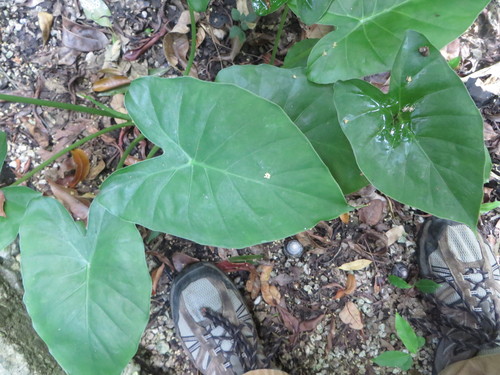
iNaturalist· cc-by-nc
(c) Nicolás Rozo, some rights reserved (CC BY-NC), uploaded by Nicolás Rozo
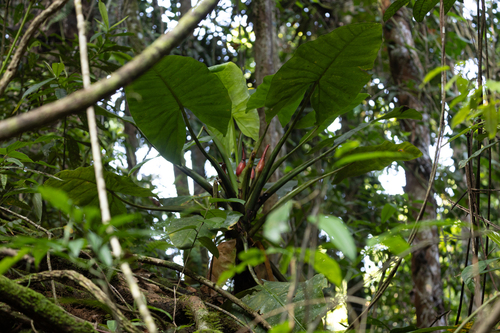
iNaturalist· cc-by-nc
(c) Sune Holt, some rights reserved (CC BY-NC), uploaded by Sune Holt
iNaturalist· cc-by-sa
(c) Vilseskogen, some rights reserved (CC BY-SA), uploaded by Vilseskogen
Summary
Source: WikipediaAnthurium scandens is a species of plant in the genus Anthurium. Native from Mexico to Southeast Brazil, it is the most widely distributed species of Anthurium in the Americas, and also extends to the Caribbean including Haiti, Puerto Rico, Jamaica, and other nations. An epiphyte with green, elliptical foliage and white berries, its botanical name refers to its scandent (i.e. climbing) growth habit. It is the most common and variable species in the genus with a number of subspecies across its range. It is most often confused with Anthurium trinerve, but can be distinguished by the fact that its spathe is reflexed when flowering, whereas on A. trinerve it stays erect. In some areas the plant is used medicinally as folk medicine from a tincture prepared from its roots.
Description
A vine that grows attached to other plants or on rocks. It climbs by roots that attach to other plants and it grows 1-2 m long. The stems hang down. There is a fibrous sheath between the nodes. The leaves are simple and alternate. The leaf blades are narrowly oval to sword shaped and 8-13 cm long by 3-5 cm wide. The flowering groups are erect in the axils of the leaves. The flower spadix is 1-2 cm long. There is a spathe around the flower that curves back. The fruit are flattened berries. They are 5 mm across. They are juicy and white when ripe. The seeds are 1 mm long.
Edible Uses
The ripe berries are eaten.
Traditional Uses
The ripe berries are eaten.
This uses section is brief — help expand it
Distribution
It is a tropical plant. It grows attached to other plants in wet forests up to 1,800 m above sea level.
Where It Grows
Belize, Brazil, Central America, Colombia, Costa Rica, Dominican Republic, Guatemala, Mexico, Panama, Puerto Rico, South America, West Indies,
Production
It flowers and fruits throughout the year.
Synonyms
Also Known As
Elotillo, Elotico, Maicillo
References (5)
- Kermath, B. M., et al, 2014, Food Plants in the Americas: A survey of the domesticated, cultivated and wild plants used for Human food in North, Central and South America and the Caribbean. On line draft. p 76
- Piedra-Malagón, E. M. et al, 2022, Edible native plants of the Gulf of Mexico Province. Biodiversity Data Journal 10: e80565 p 10
- Roa, J. A. G. & Boada, D. S. G., 2018, Fundación para el Fortalecimiento de la Fruticultura y Plantas Alimenticias no Convencionales en Colombia.
- Standley, P. & Steyermark, J., 1958, Flora of Guatemala. Fieldiana: Botany, Volume 24 part 1 p 315
- www.colecionandofrutas.org