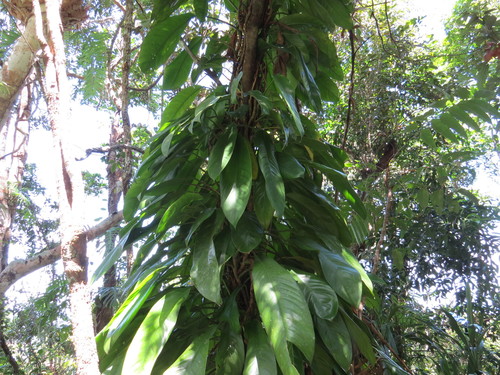
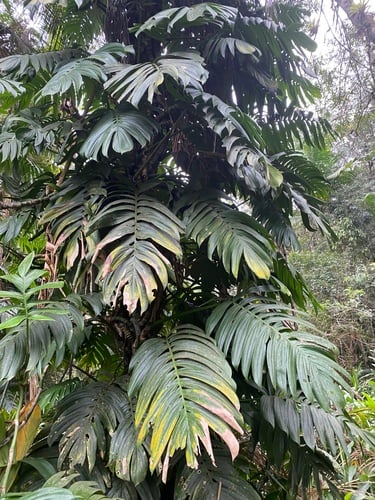
Amorphophallus commutatus
(Schott) Engl. in DC.
Dragon stalk yam
iNaturalist· cc0
no rights reserved, uploaded by S.MORE
iNaturalist· cc-by-nc
(c) Shiwalee Samant, some rights reserved (CC BY-NC)
Summary
Source: WikipediaAmorphophallus commutatus, or dragon stalk yam (Marathi- shevale, mogari kanda; Hindi- jungli suran), is a plant species in the family Araceae. Amorphophallus is a large genus of some 170 tropical and subtropical tuberous herbaceous plants, which includes the world's largest flower, titan arum.
Description
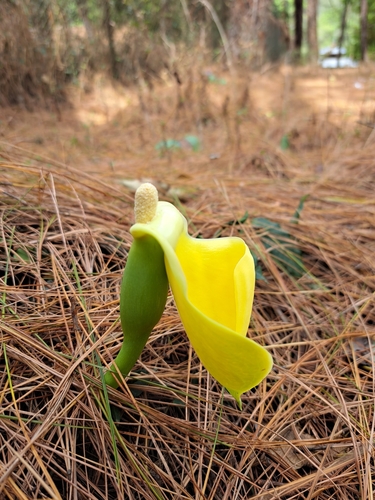
A herb which forms a large tuber. The plant keeps growing from year to year. It develops flowers before it forms leaves. There is a single leaf divided into 3 parts. The mature flower has a bad smell.
Edible Uses
The tuber, leaves, leaf stalks, and flowers are all used as vegetables; the leaf stalk and blade are typically mixed with sour plants like tamarind before eating.
Traditional Uses
The leaf stalk and blade are mixed with sour plants like tamarind then used as a vegetable. The tuber needs a lot of processing to remove toxic elements before eating. The flowers is used as a vegetable.
Known Hazards
The tuber requires extensive processing to remove toxic elements before it is safe to eat.
Distribution
A tropical plant.
Where It Grows
Asia, India,
Notes
There are about 170-200 Amorphophallus species.
Also Known As
Jangali-suran, Jangli suran, Sherla, Sheval, Shevalkand
References (7)
- Bandana, P. & Debabrata, P., 2015, Wild Edible Plant Diversity and its Ethno-medicinal use by Indigenous Tribes of Koraput, Odisha, India. Research Journal of Agriculture and Forestry Sciences. Vol. 3(9), 1-10, October (2015)
- Dobriyal, M. J. R. & Dobriyal, R., 2014, Non Wood Forest Produce an Option for Ethnic Food and Nutritional Security in India. Int. J. of Usuf. Mngt. 15(1):17-37
- Jadhav, V. D. et al, 2011, Documentation and ethnobotanical survey of wild edible plants from Kolhapur district. Recent Research in Science and Technology. 3(12): 58-63
- Kuvar, S. D. & Shinde, R. D., 2019, Wild Edible Plants used by Kokni Tribe of Nasik District, Maharashtra. Journal of Global Biosciences. Volume 8, Number 2, 2019, pp. 5936-5945
- Nilegaonkar, S., et al, 1985, Nutritional Evaluation of some wild food plants from the Pune and Nieghbouring districts, Maharashtra state: Part 1. J. Econ. Tax. Bot. Vol. 6 No. 3 pp 629-635
Show all 7 references Hide references
- Patil, M. V. & Patil, D. A., 2000, Some More Wild Edible Plants of Nasik District (Maharashtra). Ancient Science of Life Vol. X1X (3&4): 102-104
- Shah, G.L., 1984, Some economically important plant of Salsette Island near Bombay. J. Econ. Tax. Bot. Vol. 5 No. 4 pp 753-765