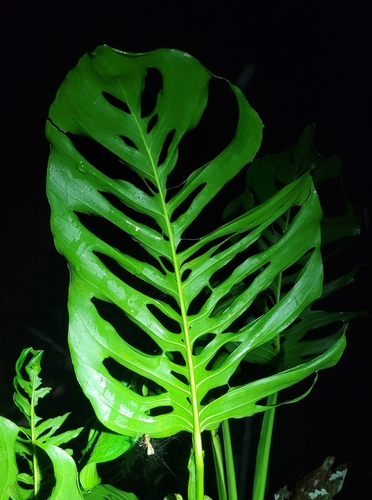
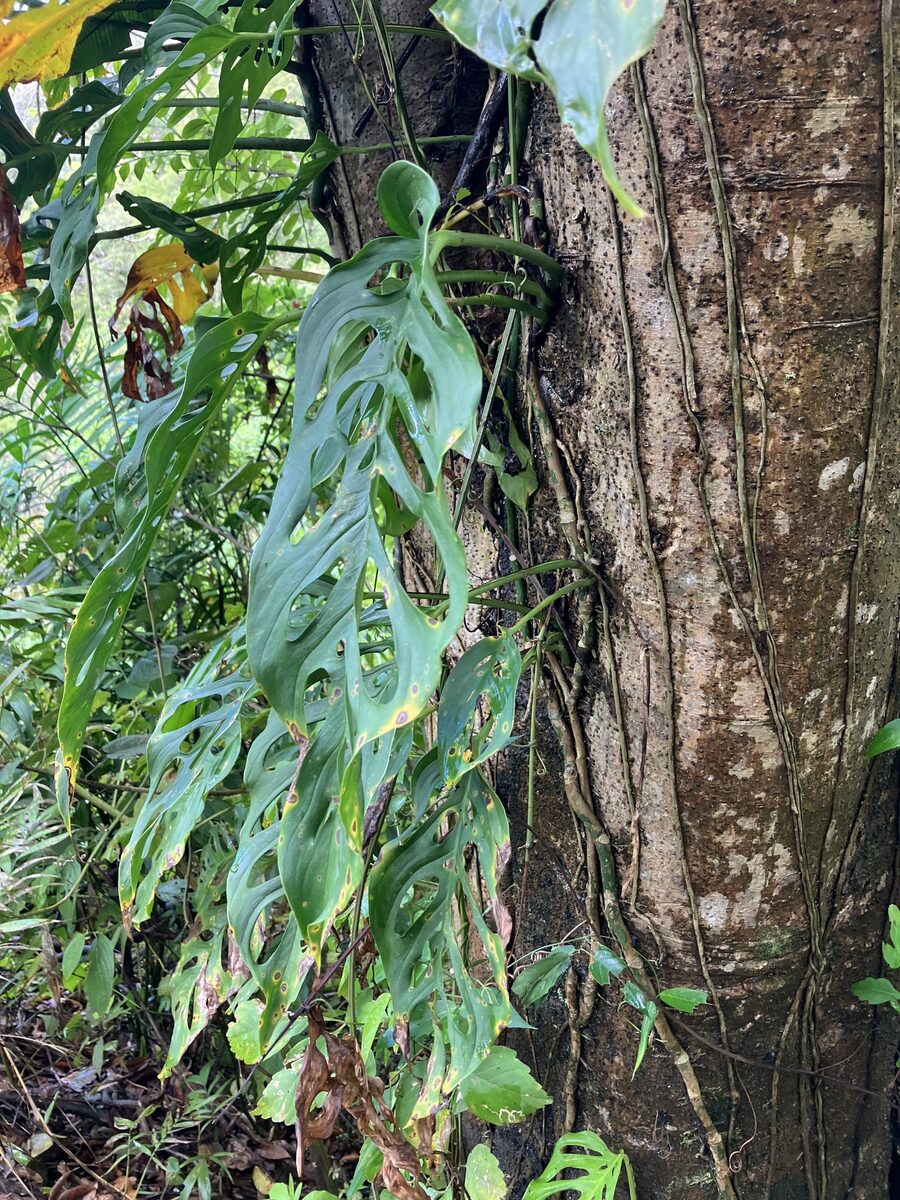
Amorphophallus gallaensis
(Engl.) N. E. Br.
Bagana, Qolto
iNaturalist· cc-by-nc
(c) grantburden, some rights reserved (CC BY-NC)
iNaturalist· cc-by-nc
(c) grantburden, some rights reserved (CC BY-NC)
Description
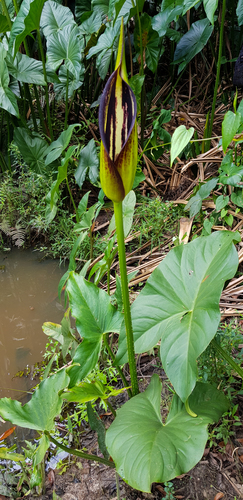
A herb. It has round flattened tubers. They are 6-15 cm across and 3-8 cm high. They are red brown. The flower appears before the leaf. The leaf is 1 m tall. The leaf stalk is 30-50 cm long and red-green with mottles. The leaf blade is 1 m across and divided into leaflets. These are 3-12 cm long by 1-3 cm wide. They have a long tip. The flowering stalk is smooth and 20-45 cm long. It is pale green with white and black markings. The spathe is 16-40 cm long. It has a slight constriction and then is open. The spadix is 30-70 cm long and at an angle. The flower has an unpleasant smell.
Edible Uses
The tubers are cooked and eaten.
Traditional Uses
The tuber is cooked and eaten.
This uses section is brief — help expand it
Medicinal Uses
The tuber is traditionally used for food purposes.
Distribution
It is a tropical plant.
Where It Grows
Africa, East Africa, Ethiopia,
Cultivation
Plants can be grown from tubers.
Synonyms
Also Known As
Luyano
References (3)
- Asfaw, Z. and Tadesse, M., 2001, Prospects for Sustainable Use and Development of Wild Food Plants in Ethiopia. Economic Botany, Vol. 55, No. 1, pp. 47-62
- Ethiopia: Famine Food Field Guide. http://www.africa.upenn.edu/faminefood/category1.htm
- Lulekal, E., et al, 2011, Wild edible plants in Ethiopia: a review on their potential to combat food insecurity. Afrika Focus - Vol. 24, No 2. pp 71-121