Cirsium ochrocentrum
A. Gray
Yellow spined thistle
iNaturalist· cc-by-nc
(c) ellen hildebrandt, some rights reserved (CC BY-NC), uploaded by ellen hildebrandt
iNaturalist· cc-by-nc
(c) ellen hildebrandt, some rights reserved (CC BY-NC), uploaded by ellen hildebrandt
iNaturalist· cc-by
(c) Eric Watts, some rights reserved (CC BY), uploaded by Eric Watts
Summary
Source: WikipediaCirsium ochrocentrum is a species of thistle known by the common name yellowspine thistle. It is native to the Great Plains of the Central United States and to the desert regions of the western United States and northern Mexico. Its range extends from eastern Oregon east to the Black Hills of South Dakota, south as far as the Mexican State of Durango.
Description
A perennial thistle reaching 1 m tall by 0.3 m wide, hardy to UK zone 5. Hermaphroditic, pollinated by bees, flies, moths, butterflies, and beetles. Self-fertile and adaptable to light, medium, or heavy well-drained soils across mildly acid to basic pH ranges. Requires full sun and tolerates dry or moist soil.
Edible Uses
The taproot and young peeled stems are the most valued edible parts. The taproot is white to pale cream inside, mildly sweet and starchy, with a flavour reminiscent of burdock and potato. Outer portions are tender while inner cores may become fibrous with age; cooking improves texture but is not strictly necessary for young roots. Young stems, harvested in early spring while still elongating, are crisp, juicy, and lightly sweet when peeled, with relatively soft strings. Roots are best harvested from late autumn through early spring before flowering. The root is likely rich in inulin, a starch the human body cannot digest, which passes straight through the digestive system and may ferment in some people, causing flatulence. Leaves are technically edible but are bitter and spiny even after cooking. Flower receptacles have an artichoke-like flavour but are small and of limited caloric return. Thistle seeds also yield an oil by expression.
Medicinal Uses
The entire plant is diaphoretic and diuretic. It is infused overnight in cold water and the resulting liquid drunk as a treatment for syphilis. A liquid from boiled blossoms has been used to treat burns and skin sores. A decoction of the root has been taken by both partners as a contraceptive, and has also been taken five times a day in the treatment of diabetes.
Distribution
It is a temperate plant.
Where It Grows
North America, USA,
Cultivation
Yellowspine thistle is a rugged, reliable wild food plant offering nutritious roots and high-quality stems. Its abundance in open landscapes and similarity to other edible thistles make it a valuable species for knowledgeable foragers. Growing Conditions: Yellowspine thistle thrives in open, sunny environments with well-drained soils. It tolerates sandy, rocky, and disturbed substrates and often appears in grasslands, foothills, and desert margins. Habitat & Range: This species is native to the southwestern United States, particularly Arizona, New Mexico, Utah, and Colorado. It is common in semi-arid regions, foothills, and open woodlands. Size & Landscape Performance: Plants typically reach 60–100 cm tall in flower but may be smaller in harsher conditions. It occurs as scattered individuals or loose colonies and does not form dense infestations. Cultivation (Horticulture): Yellowspine thistle has no horticultural use and is not cultivated. It poses little threat as a weed in managed landscapes. Pests & Problems: Few pests affect yellowspine thistle. Spines deter most grazing animals, and the plant is generally resilient. Pollination Pollinated by bees, butterflies, and other generalist insects. Identification & Habit: In its first year, yellowspine thistle forms a low rosette of deeply lobed, spiny leaves with conspicuous yellowish spines along the margins and midribs. During its second year, it sends up one or more erect flowering stems. The leaves along the stems are alternate, progressively smaller upward, and remain strongly spined. Flower heads are medium to large, composed entirely of disk flowers that range from pale lavender to pinkish-purple. The involucral bracts are stiff and tipped with sharp, yellowish spines that give the plant its common name. FAMILY: Sunflower family (Asteraceae) – Cirsium genus. COMMON NAMES: Yellowspine thistle. USDA Hardiness Zones: Approx. Zones 4–8. Typical Size: 30–120 cm tall; biennial or short-lived perennial.
Propagation
Sow seed in early spring or autumn directly in situ. Germination typically occurs within 2–8 weeks at 20°C. Can also be propagated by division in spring or autumn.
Other Uses
The seeds yield a good oil by expression. No details on potential yields are available. The flowers attract bees, butterflies, and other pollinators, seeds are consumed by birds, and the plant contributes to native pollinator networks in arid and semi-arid ecosystems.
Notes
There are about 150-250 Cirsium species. They grow in temperate regions.
Synonyms
Also Known As
Yellowspine thistle
References (3)
- Kermath, B. M., et al, 2014, Food Plants in the Americas: A survey of the domesticated, cultivated and wild plants used for Human food in North, Central and South America and the Caribbean. On line draft. p 231
- Mem. Amer. Acad. Arts ser. 2, 4:110. 1849 (Pl. fendler.)
- Plants for a Future database, The Field, Penpol, Lostwithiel, Cornwall, PL22 0NG, UK. http://www.scs.leeds.ac.uk/pfaf/
More from Asteraceae
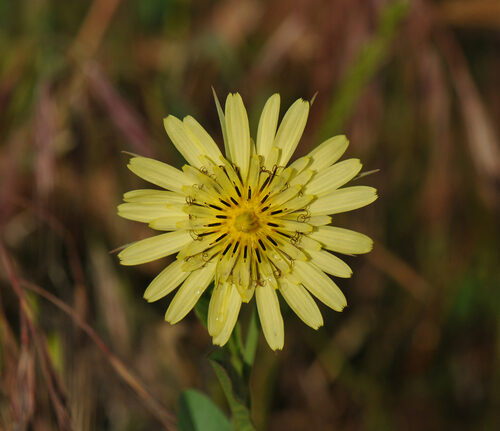
Tragopogon latifolius
Salsify
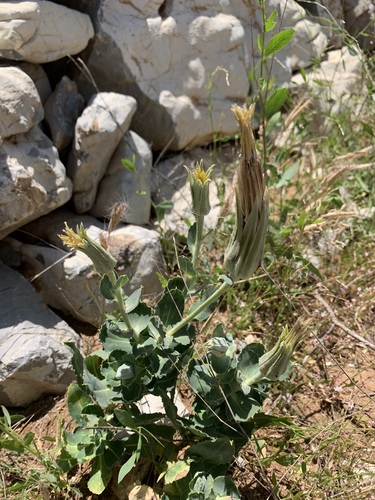
Tragopogon latifolius var. angustifolius
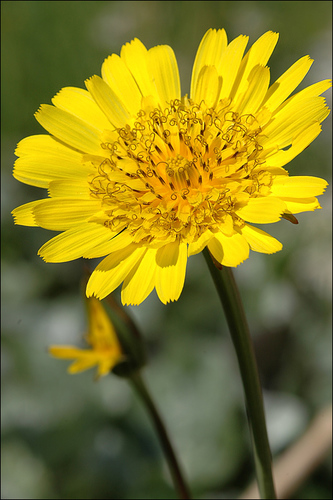
Tragopogon orientalis
Kozija brada
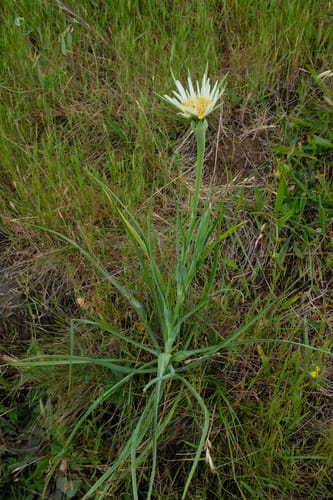
Tragopogon porrifolius
Salsify, Oyster plant, Vegetable oyster, Jerusalem star
Tragopogon porrifolius subsp. longirostris
Long-beaked goat's beard, Purple salsify
Tragopogon pratensis
Goatsbeard, Yellow goats beard