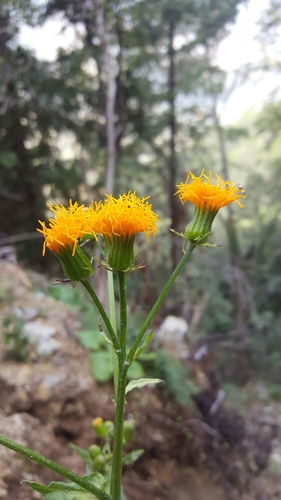
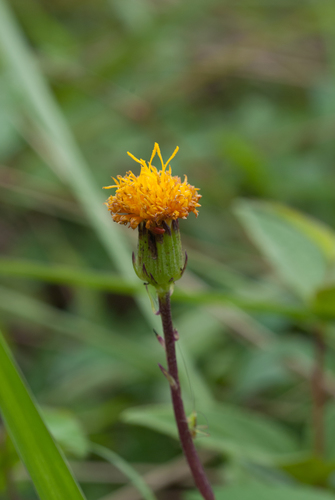
Heliopsis helianthoides
(L.) Sweet
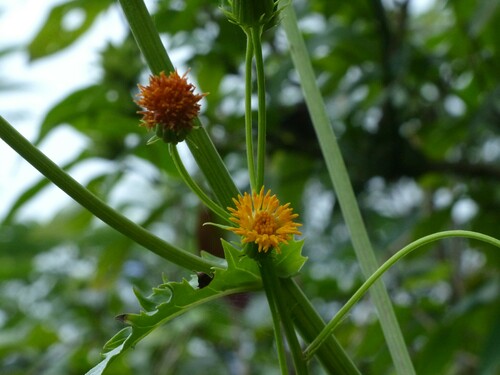
iNaturalist· cc-by-nc
(c) Chuck Cantley, some rights reserved (CC BY-NC), uploaded by Chuck Cantley
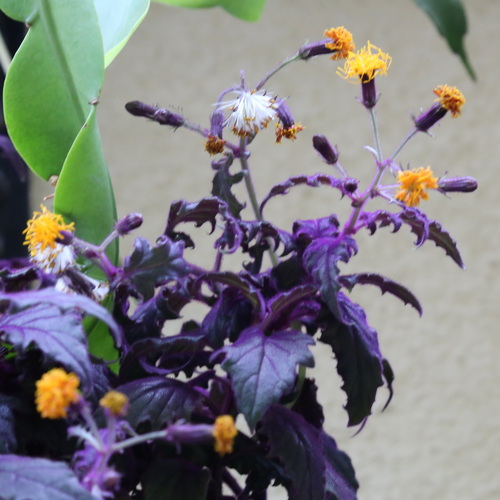
iNaturalist· cc-by-nc
(c) Michael Stanton, some rights reserved (CC BY-NC), uploaded by Michael Stanton
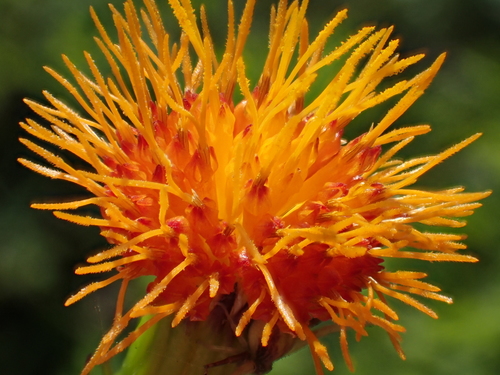
iNaturalist· cc-by-nc
(c) sith_l0rd, some rights reserved (CC BY-NC)
Summary
Source: WikipediaHeliopsis helianthoides is a species of flowering plant in the family Asteraceae, known by the common names rough oxeye, smooth oxeye and false sunflower. It is native to eastern and central North America from Saskatchewan east to Newfoundland and south as far as Texas, New Mexico, and Georgia. Heliopsis helianthoides is a rhizomatous herbaceous perennial growing 40–150 cm (16–59 in) tall. The toothed leaf blades are oval to triangular or lance-shaped and may be smooth or hairy or rough in texture. The flowers are produced from midsummer to early autumn (fall). The inflorescence contains one to many composite flowerheads. Each head contains yellow ray florets which are generally 2–4 cm (3⁄4–1+1⁄2 in) long. The rays are fertile, having a small forked pistil at the base; this distinguishes them from true sunflowers. At the center are many yellow to brownish disc florets. The fruit is an achene about 5 mm (0.20 in) long. In the wild, H. helianthoides may be found in wooded areas and tallgrass prairie, and sometimes along roadsides. It is a popular garden plant for moist, fertile soil in full sun. Plants grow stiff and tall, so may require staking. Several cultivars are available with flowers of varying colors and shades. These include 'Summer Sun', 'Golden Plume', and 'Prairie Sunset'. The following cultivars of H. helianthoides var. scabra ("rough") have gained the Royal Horticultural Society's Award of Garden Merit: 'Benzinggold' 'Light of Loddon' 'Loraine Sunshine'='Helhan' 'Sonnenglut' 'Spitzentänzerin' 'Waterperry Gold' The Botanical Latin species name helianthoides means “resembling sunflowers”.
Description
A fast-growing perennial reaching 1.5 m tall and 1.2 m wide. Hardy to UK zone 4. Produces flowers pollinated by bees, insects, and birds. Adapts to light sandy, medium loamy, and heavy clay soils, preferring well-drained conditions even in heavy clay. Tolerates mildly acidic to mildly alkaline pH, grows in semi-shade to full sun, and handles both dry and moist soils including drought conditions. Notable for attracting wildlife.
Edible Uses
The flowers have a mild taste and can be used as a garnish or added to salads.
Medicinal Uses
Ox-eye has been used in medicinal drinks for treating lung troubles. A strong tea made from the leaves can reduce fevers and loosen phlegm. The stems have been used to treat malaria.
Distribution
It is a temperate plant. It suits hardiness zones 4-9.
Where It Grows
Asia, Korea, USA,
Propagation
Heliopsis helianthoides establishes readily from seed sown in winter, fall, or early spring (March to April). Germination typically begins four weeks after sowing when soil temperatures stay in the 60–70°F range. Seeds ripen approximately one month after flowering, though like many Asters, plants are self-sterile — cracking open a few seeds to check viability is advisable. For cuttings, take five- to seven-node sections from the top 12 inches of growth in late spring; these root easily but can be reluctant to overwinter. For best results, divide plants in the fall.
Other Uses
The plant's fibrous deep roots make it potentially useful for erosion control. The flowers attract a range of insects including long-tongued bees, Halictine bees, bee flies, butterflies, Chauliognathus pennsylvanicus (Goldenrod Soldier Beetle), and others. Among the long-tongued bee visitors is the oligolege Holcopasites heliopsis (False Sunflower Bee). Caterpillars of Papaipoma rigida (Rigid Sunflower Borer Moth) sometimes bore through the stems. The plant also attracts birds and painted lady butterflies. Selected cultivars are shorter and well-suited to more formal garden settings. Smooth oxeye is considered one of the best hardy plants for a wildflower garden border.
Synonyms
References (1)
- Jackes, D. A., Edible Forest Gardens